
Mount Nachi in Kii Province, No. 1 on the Saikoku Pilgrimage Route (Saikoku junrei ichiban Kishu Nachisan), from the series "The Miracles of Kannon (Kannon reigenki)"
- Date:
- 1858
- Medium:
- Color woodblock print; oban
- Source:
- Art Institute of Chicago
Description
Dated 1858, this print by Utagawa Kunisada (also signing as Toyokuni III in his late career) opens the series "The Miracles of Kannon (Kannon reigenki)," which dramatizes legendary acts of compassion attributed to the Bodhisattva Kannon along Japan's Saikoku pilgrimage circuit. As its title indicates, the design depicts Mount Nachi in Kii Province, the first of the thirty-three sanctioned stations on the western pilgrimage route, a destination long revered for its towering waterfall and its Tendai-affiliated shrine-temple complex. Working at the very end of his career, Kunisada brought the storytelling vocabulary of Edo ukiyo-e to a devotional subject more often associated with earlier religious painting: figures, costume, and atmospheric setting are arranged with the narrative clarity he had refined across decades of yakusha-e and beauty prints. The composition typifies how late-Edo woodblock publishers extended ukiyo-e beyond the floating world of theater and pleasure quarters into pilgrimage tourism, treating sacred geography as serial popular content. This impression is preserved at the Art Institute of Chicago (artwork 92256), where it is catalogued as part of the museum's substantial holdings of Kunisada-Toyokuni III sheets. The print is a useful index of how the Utagawa school's dominant designer adapted his commercial sensibility to support a religious narrative cycle aimed at lay devotees and travelers in the final decade of the Tokugawa era.
More Prints by Utagawa Kunisada

The actors Ichikawa Danjuro VII as Takamoto no kitsune and Segawa Kikunojo V as Izumi no Chieda-gitsune
1818
Color woodblock print; shikishiban, surimono

Basketry Work: By the Craftsman Ichida Shōshichirō of Naniwa (Kagozaiku Naniwa saikunin Ichida Shōshichirō)
1819
Woodblock print; ink and color on paper
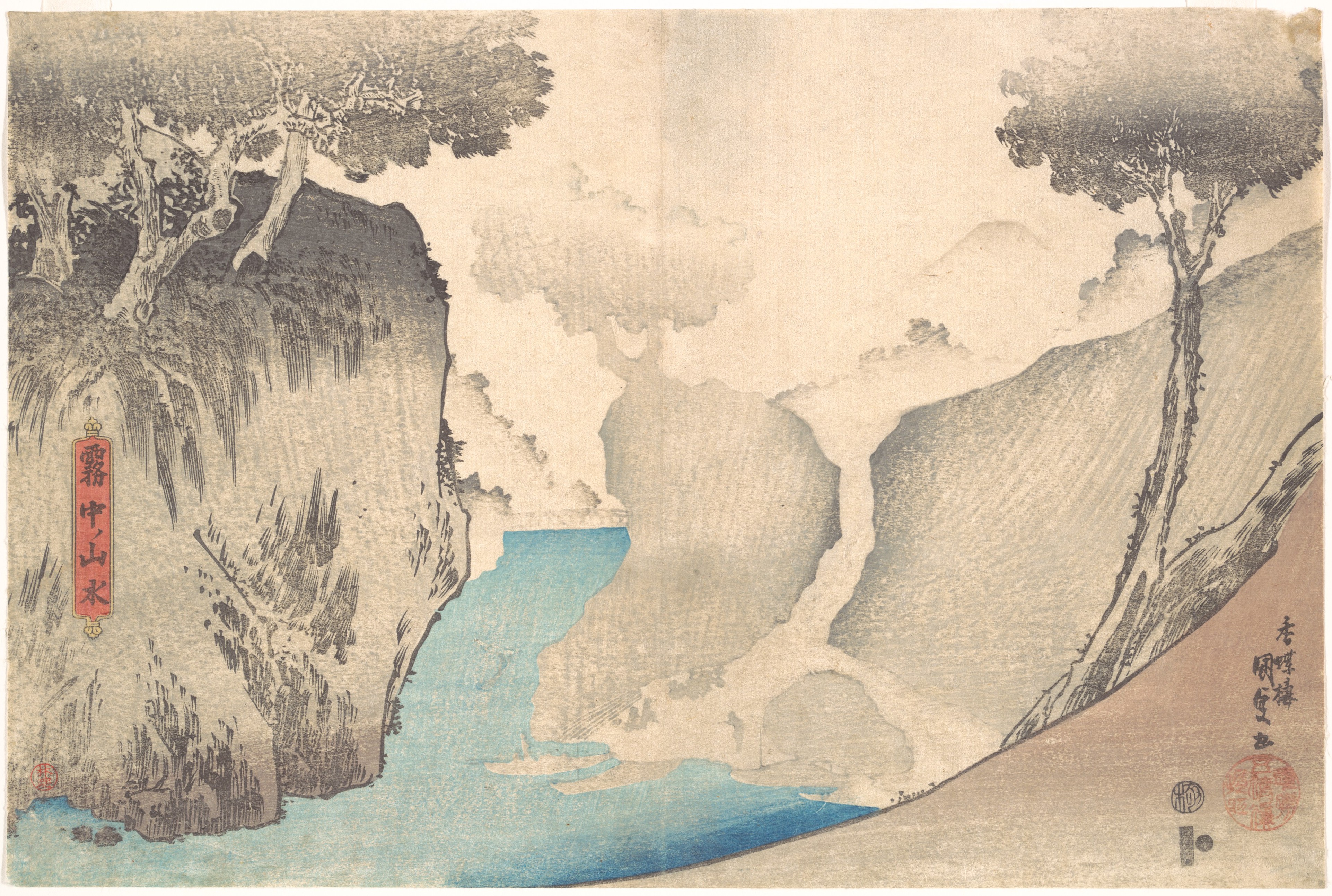
Ochanomizu in the Mist
mid-19th century
Woodblock print; ink and color on paper
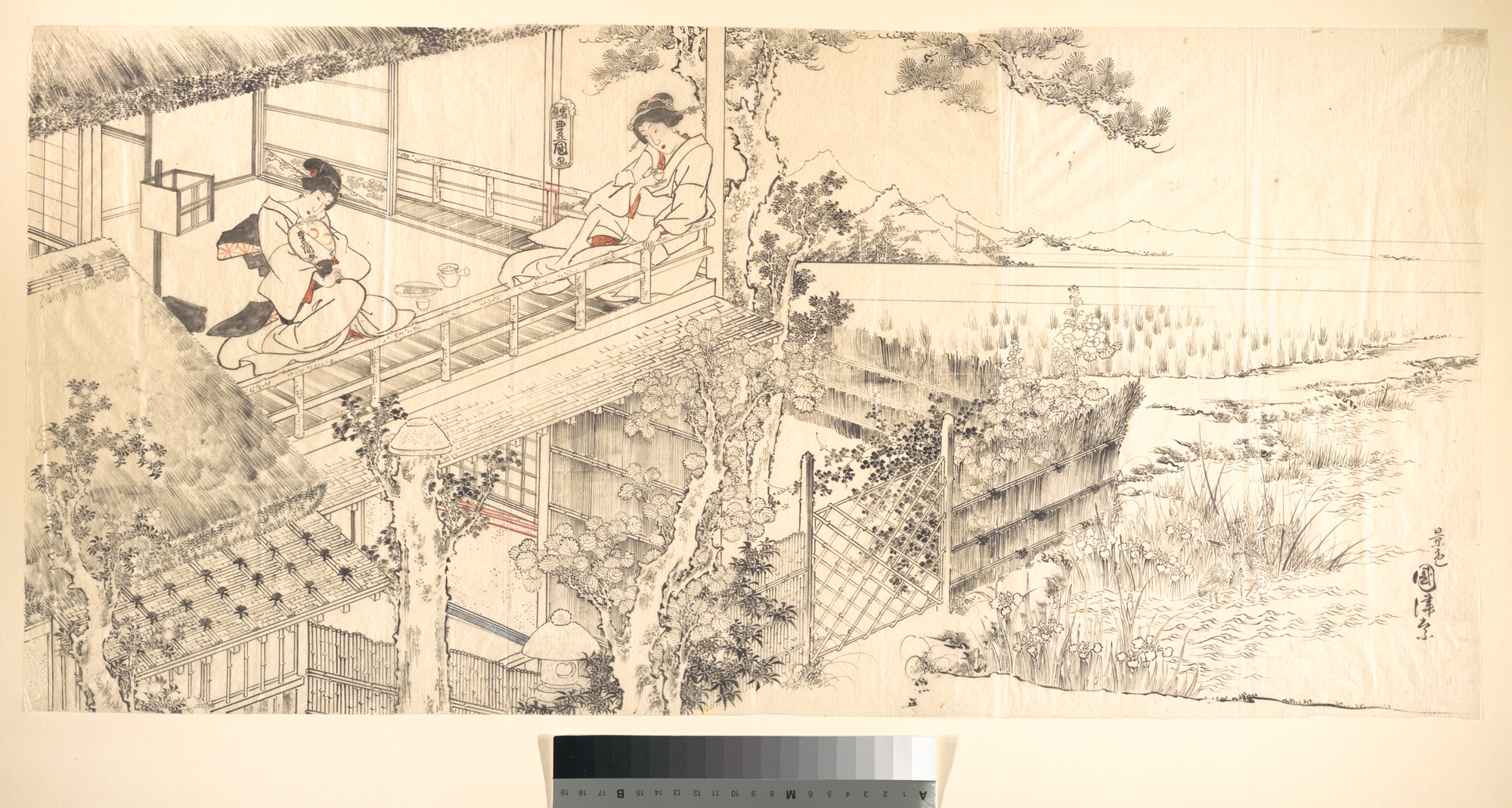
Two Courtesans Enjoying the View from a Teahouse
after 1844
Drawings intended as design for woodblock prints (triptych); ink and color on paper
Frequently Asked Questions
Mount Nachi in Kii Province, No. 1 on the Saikoku Pilgrimage Route (Saikoku junrei ichiban Kishu Nachisan), from the series "The Miracles of Kannon (Kannon reigenki)" was created by Utagawa Kunisada (歌川国貞) in 1858.