
Narukami
- Date:
- 1855
- Medium:
- Source:
- Victoria and Albert Museum
Description
Narukami is an 1855 woodblock print by Utagawa Kunisada (Toyokuni III), drawn from one of the most famous plays in the kabuki repertoire and a centrepiece of his late yakusha-e production. The play Narukami belongs to the eighteen 'great plays' (kabuki jūhachiban) curated by the Ichikawa Danjūrō family, and centres on the priest Narukami who has trapped the rain-bringing dragon god in a waterfall to revenge himself on the imperial court. The plot turns on his seduction by the court lady Taema-no-Mae, who tricks him into breaking his vows and releasing the dragon; Narukami's subsequent furious transformation is one of the great aragoto set pieces of the Edo stage. Kunisada designs the moment for maximum visual impact: the priest is rendered in the bold red kumadori makeup of aragoto, with exaggerated brows and a clenched mouth, and the body twists in the conventionalised mie pose that compresses dramatic intensity into a single image. As a senior Utagawa-school designer Kunisada had spent decades observing Ichikawa Danjūrō VII and VIII in this role, and his print depends on the close cooperation between the print market and the kabuki theatres of Edo. The mid-1850s palette is dense and saturated, with reds and blacks dominating the figure against a quieter ground, and the surface shows the woodblock printer's skill with overprinted gradations. The Victoria and Albert Museum holds the impression and dates it to 1855, situating the sheet within the late wave of Kunisada's yakusha-e at the close of the Edo period.
More Prints by Utagawa Kunisada

The actors Ichikawa Danjuro VII as Takamoto no kitsune and Segawa Kikunojo V as Izumi no Chieda-gitsune
1818
Color woodblock print; shikishiban, surimono

Basketry Work: By the Craftsman Ichida Shōshichirō of Naniwa (Kagozaiku Naniwa saikunin Ichida Shōshichirō)
1819
Woodblock print; ink and color on paper
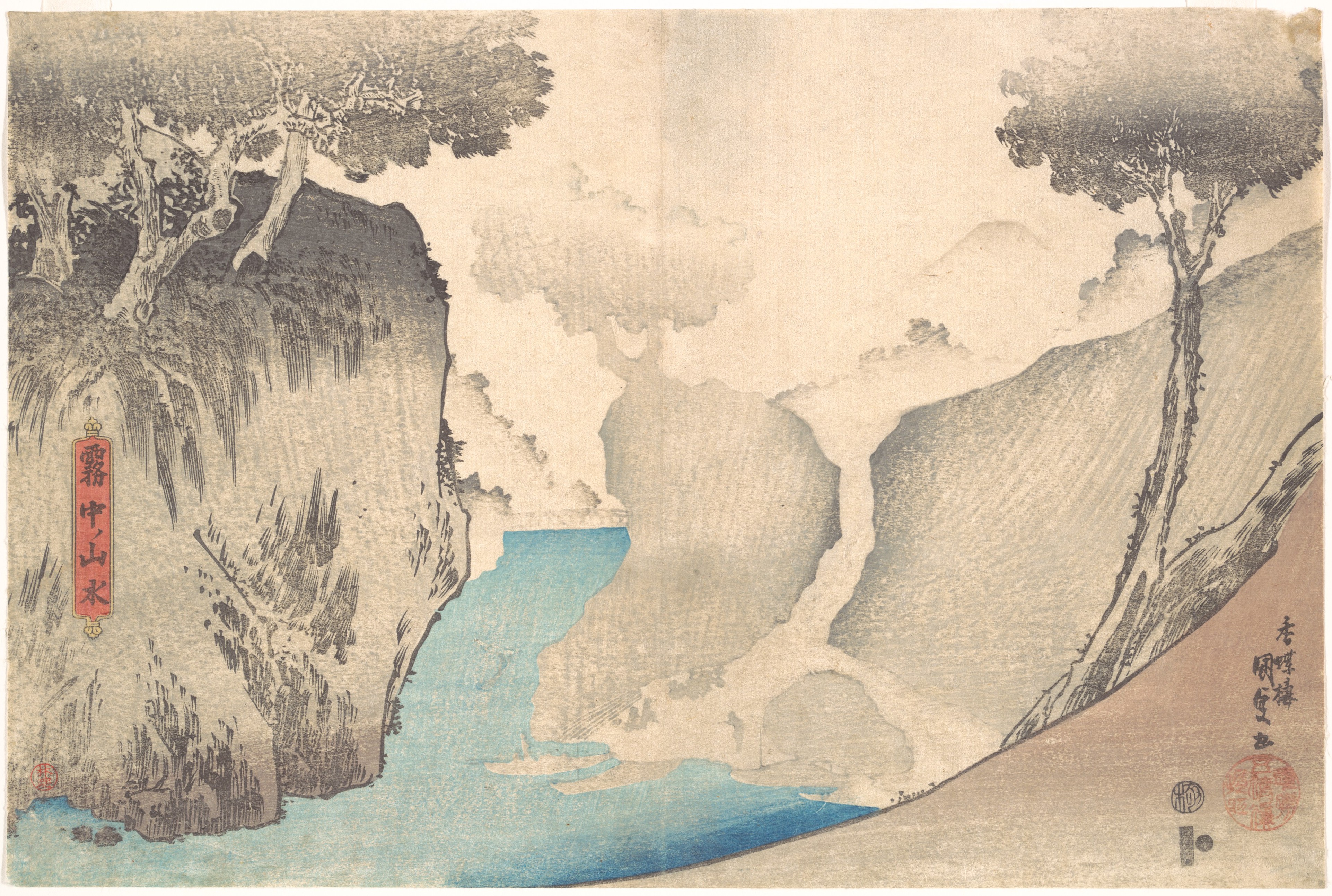
Ochanomizu in the Mist
mid-19th century
Woodblock print; ink and color on paper
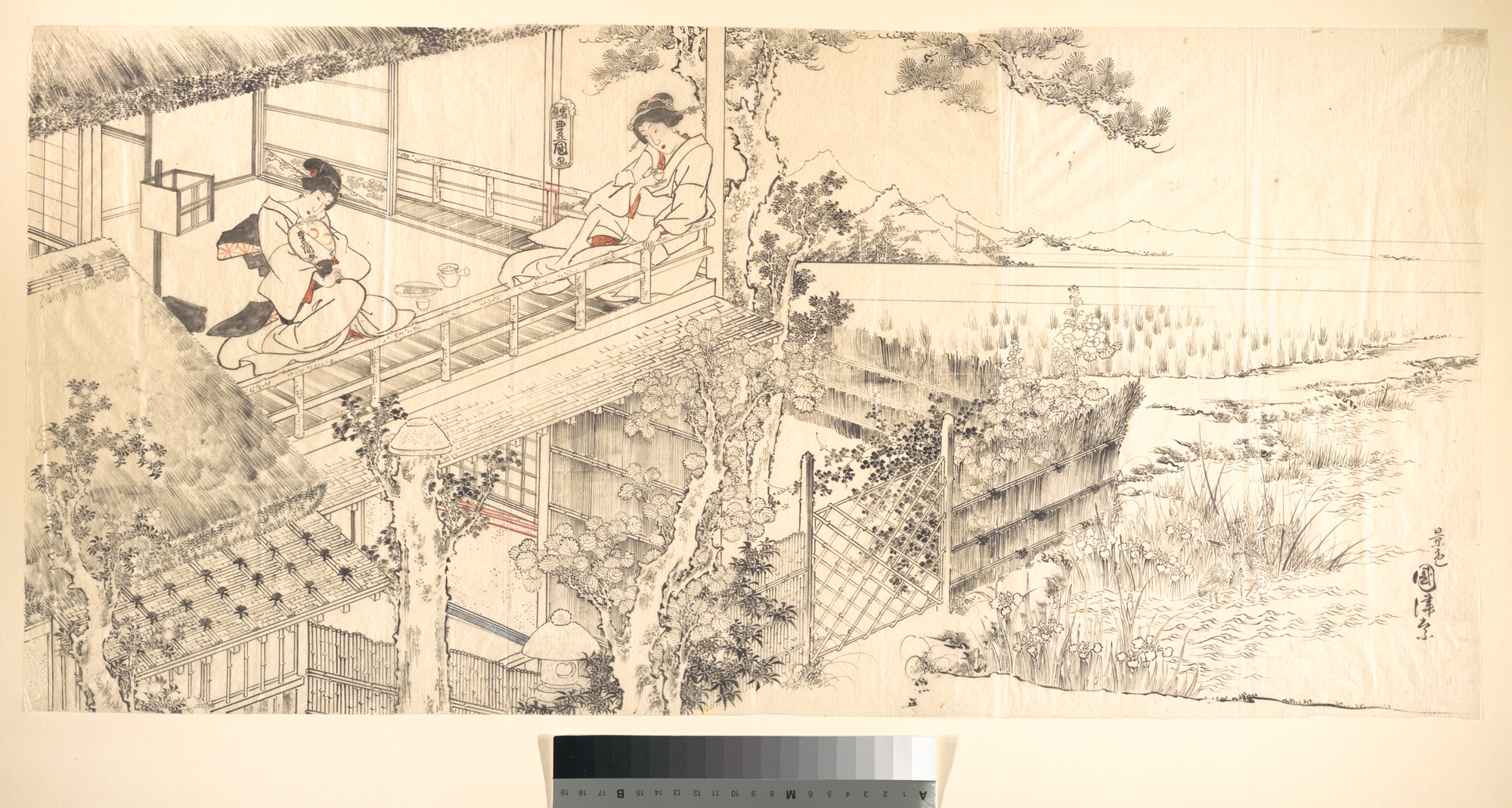
Two Courtesans Enjoying the View from a Teahouse
after 1844
Drawings intended as design for woodblock prints (triptych); ink and color on paper
Frequently Asked Questions
Narukami was created by Utagawa Kunisada (歌川国貞) in 1855.