
Narumi (Narumi)
- Date:
- 1845-1846
- Medium:
- Source:
- Victoria and Albert Museum
Description
Narumi, designed by Utagawa Kunisada in 1845, depicts the Tōkaidō post station at Narumi in Owari Province, the fortieth of the fifty-three stations on the great Edo-to-Kyoto highway. Narumi was famous for its shibori (tie-dye) textiles, a local craft so distinctive that prints of the station almost always foreground travelers examining bolts of cloth at one of the roadside shops. Kunisada's contribution to the long tradition of Tōkaidō prints — a tradition most closely associated with Hiroshige's landscape series — characteristically focuses on figures rather than scenery. Where Hiroshige's Narumi shows the shop and the road in deep perspective, Kunisada's typically brings forward an elegant female figure or a pair of conversing travelers, with the shibori textiles serving both as a local marker and as a vehicle for the artist's pattern-making skill. The 1845 dating situates the print just after the Tenpō Reforms had loosened slightly, allowing more fashionable subjects back into the marketplace. As the leading Edo ukiyo-e designer of the mid-nineteenth century, Kunisada produced multiple Tōkaidō series in collaboration with publishers seeking to compete with or supplement Hiroshige's dominant landscape output. The Victoria and Albert Museum preserves this impression as O425079. The print is useful for understanding how the Tōkaidō genre accommodated different visual priorities and how a single station like Narumi generated dozens of variant designs across the century.
More Prints by Utagawa Kunisada

The actors Ichikawa Danjuro VII as Takamoto no kitsune and Segawa Kikunojo V as Izumi no Chieda-gitsune
1818
Color woodblock print; shikishiban, surimono

Basketry Work: By the Craftsman Ichida Shōshichirō of Naniwa (Kagozaiku Naniwa saikunin Ichida Shōshichirō)
1819
Woodblock print; ink and color on paper
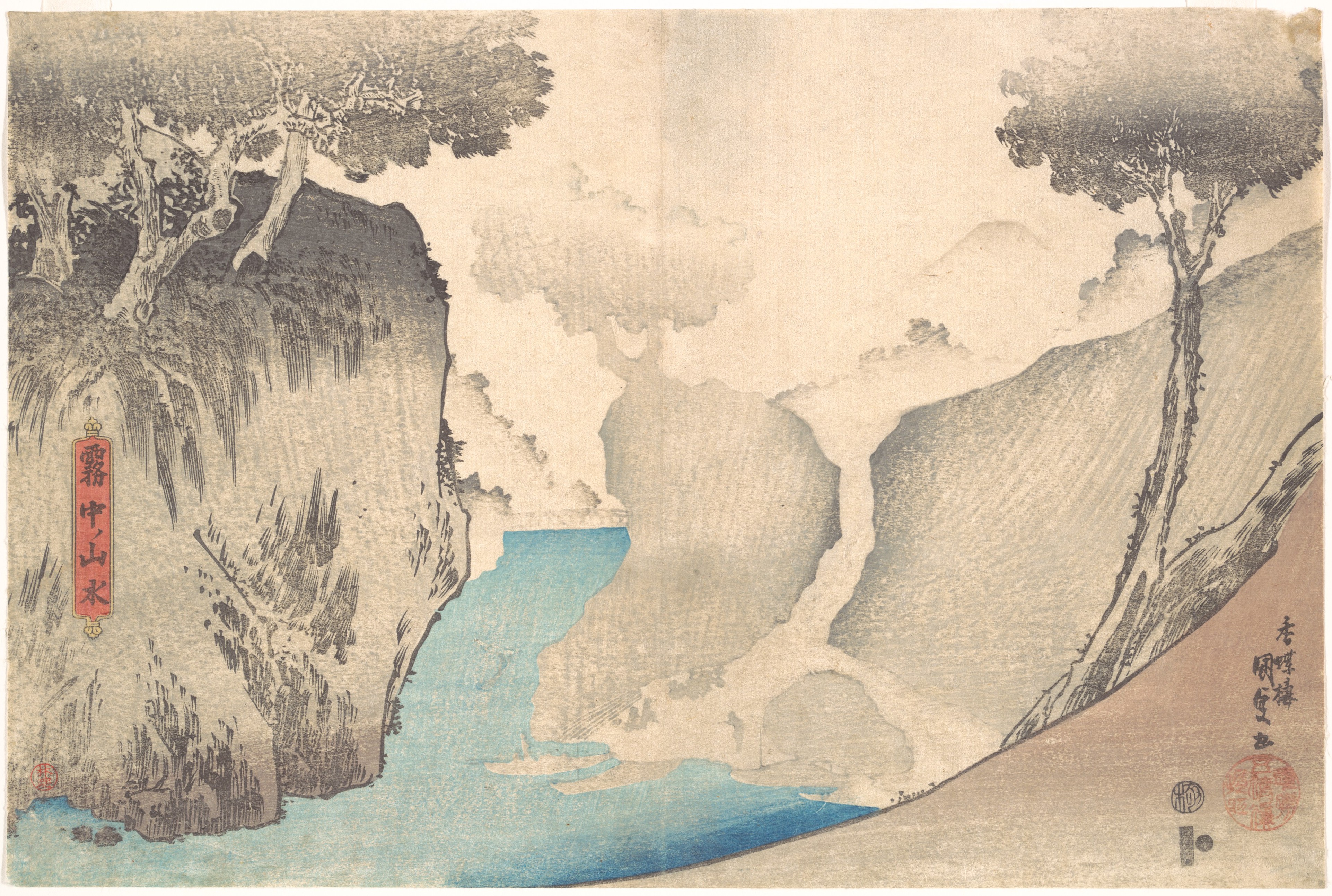
Ochanomizu in the Mist
mid-19th century
Woodblock print; ink and color on paper
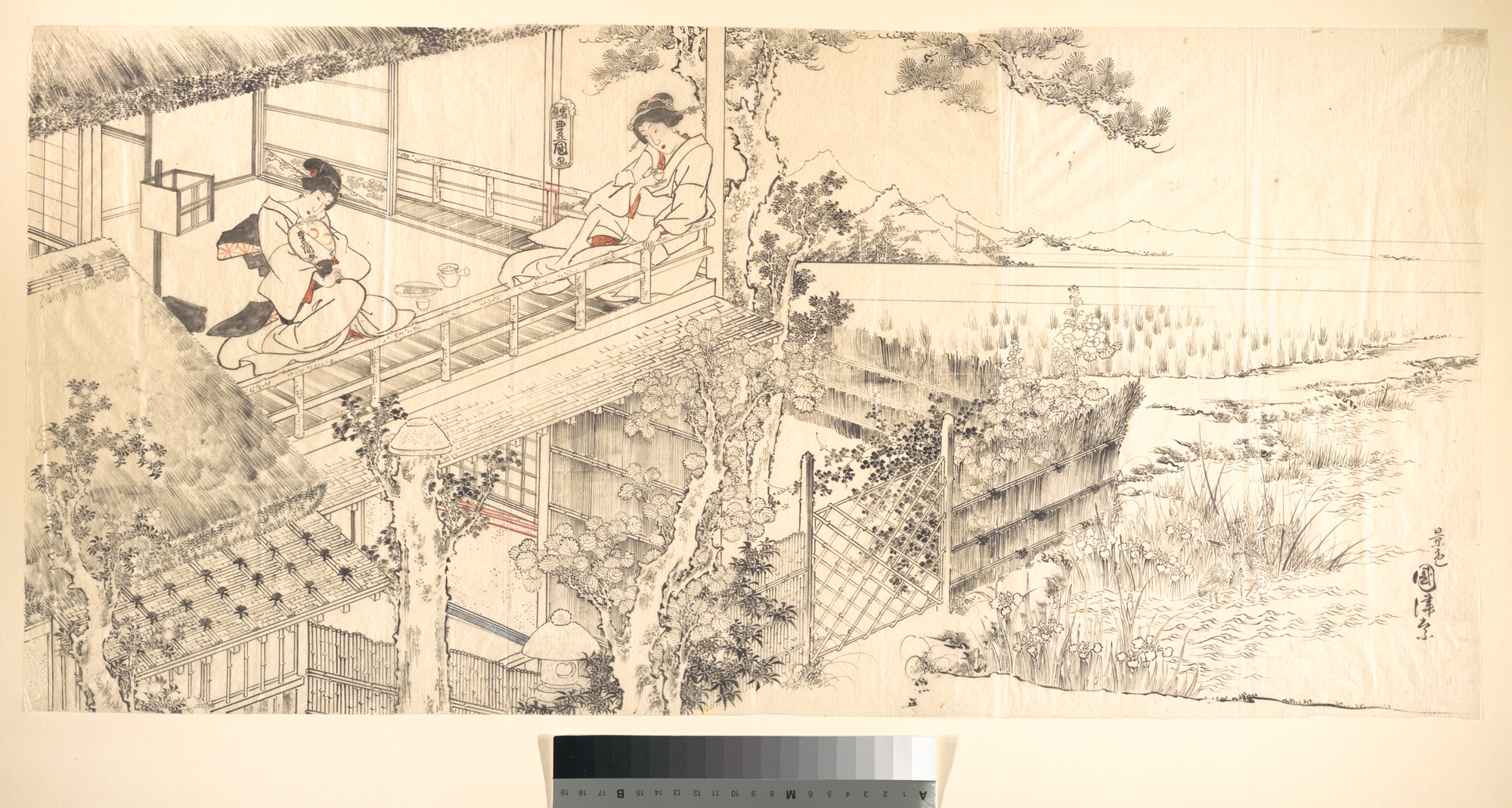
Two Courtesans Enjoying the View from a Teahouse
after 1844
Drawings intended as design for woodblock prints (triptych); ink and color on paper
Frequently Asked Questions
Narumi (Narumi) was created by Utagawa Kunisada (歌川国貞) in 1845-1846.