
Poem by Lady Horikawa
- Date:
- ca. 1845-48
- Medium:
- Source:
- Victoria and Albert Museum
Description
Poem by Lady Horikawa, designed by Utagawa Kunisada in 1845, is one sheet from a mitate series pairing poems from the Ogura Hyakunin Isshu with figures from the contemporary Edo kabuki stage. Lady Horikawa (Horikawa no Tsubone) was a court attendant to Empress Taikenmon'in in the early twelfth century, and her single poem in the Hyakunin Isshu reflects on the uncertainty of a lover's continued affection. Kunisada's mitate approach yokes this classical Heian voice to a recognizable Edo theatrical figure, typically a young female role on the kabuki stage, allowing the print to operate simultaneously as poetic anthology illustration and as fashionable celebrity portrait. The 1845 dating places the print at the height of Kunisada's mid-career production, just after he had assumed the Toyokuni name; the series was part of his broader effort, with publishers, to commercialize the Hyakunin Isshu as a renewable framework for new designs. The composition combines a poem cartouche, a small inset image of the poet herself, and a larger figural scene drawn from contemporary life. The Victoria and Albert Museum preserves this impression as O424739. Within Edo ukiyo-e, prints of this kind document how thoroughly classical Japanese literature was woven into the visual culture of the nineteenth-century city, and how Kunisada's studio served as a key conduit for that integration.
More Prints by Utagawa Kunisada

The actors Ichikawa Danjuro VII as Takamoto no kitsune and Segawa Kikunojo V as Izumi no Chieda-gitsune
1818
Color woodblock print; shikishiban, surimono

Basketry Work: By the Craftsman Ichida Shōshichirō of Naniwa (Kagozaiku Naniwa saikunin Ichida Shōshichirō)
1819
Woodblock print; ink and color on paper
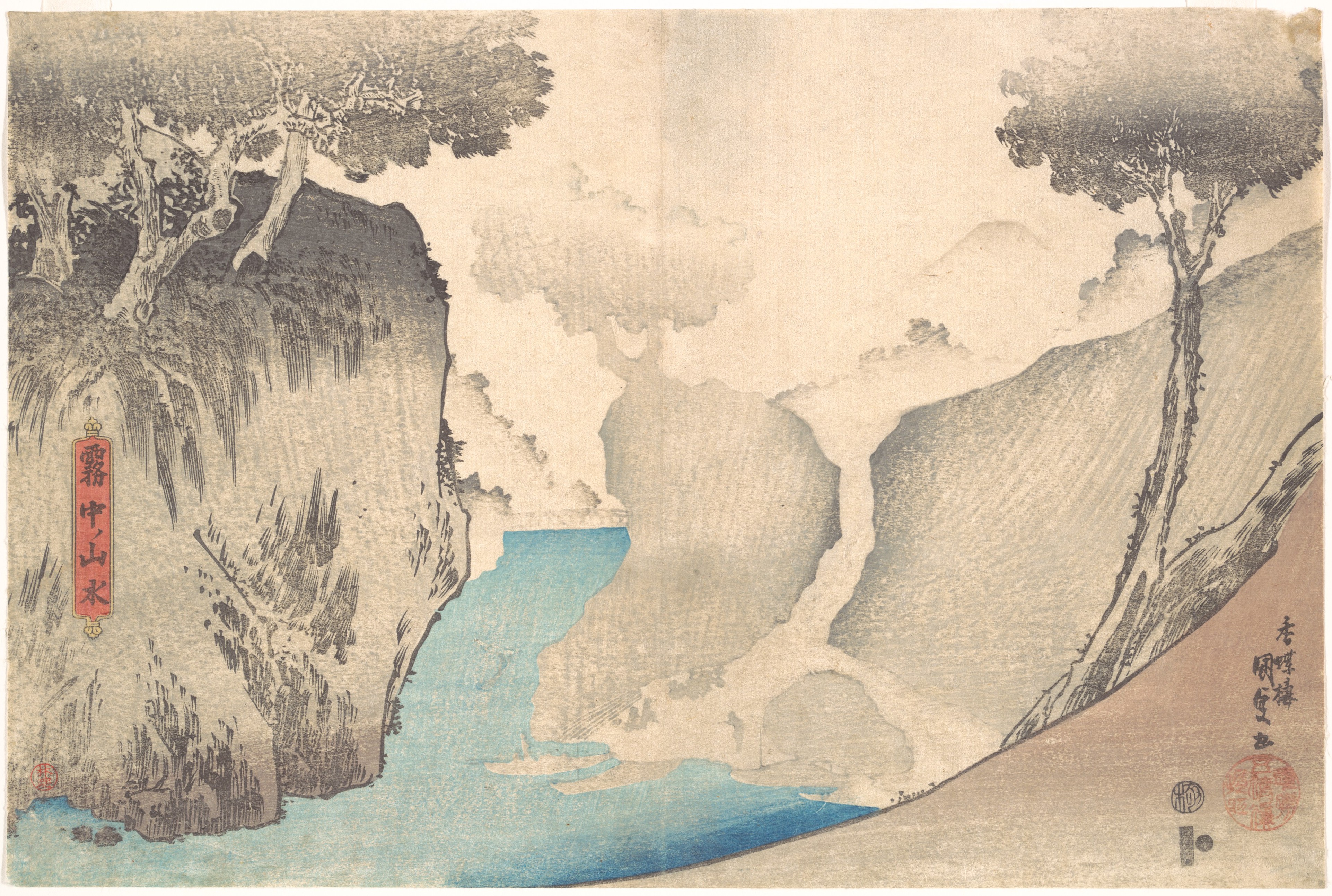
Ochanomizu in the Mist
mid-19th century
Woodblock print; ink and color on paper
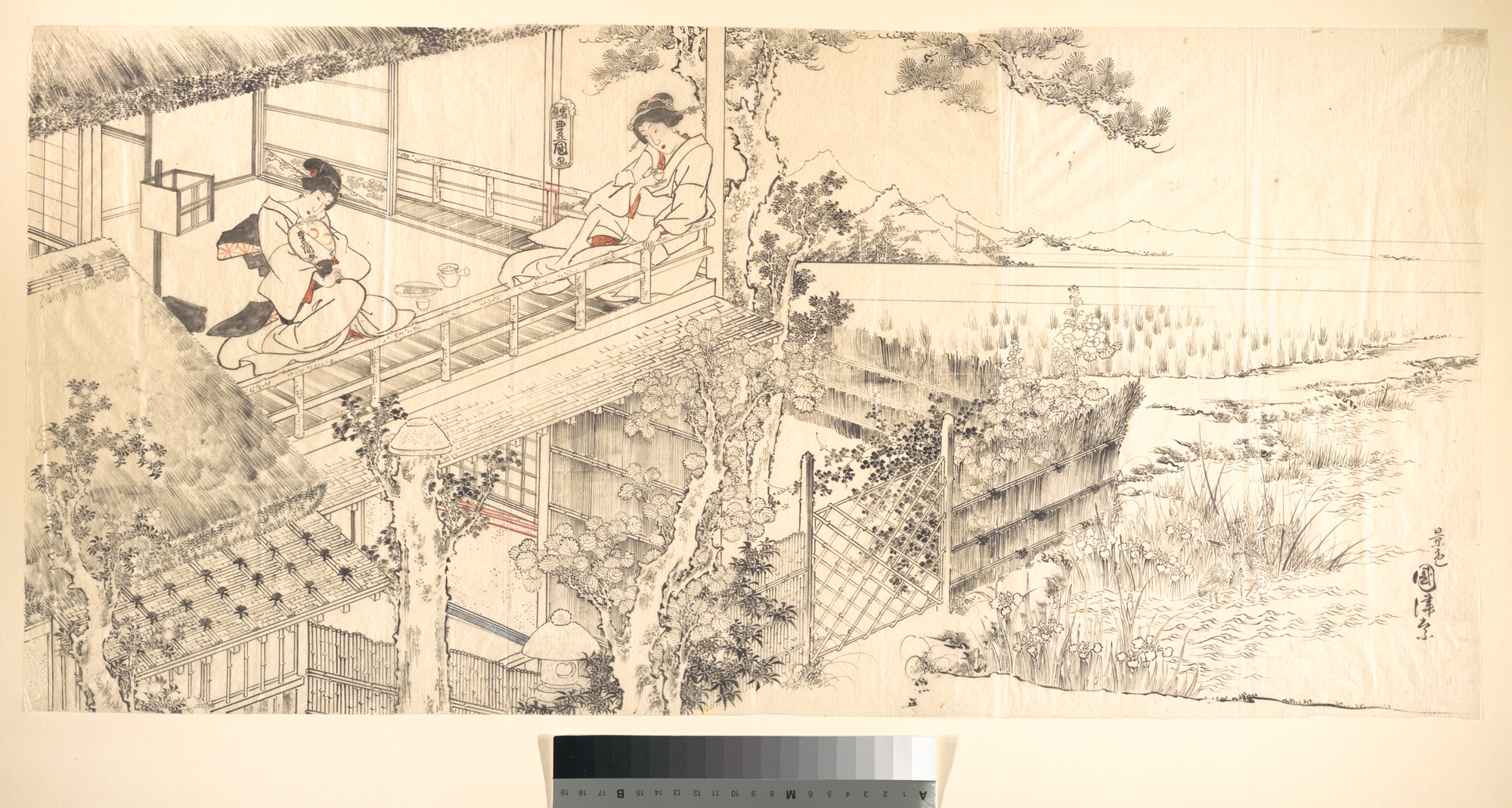
Two Courtesans Enjoying the View from a Teahouse
after 1844
Drawings intended as design for woodblock prints (triptych); ink and color on paper
Frequently Asked Questions
Poem by Lady Horikawa was created by Utagawa Kunisada (歌川国貞) in ca. 1845-48.