
Poem by Minamoto Toshiyori Ason: Narukami Shōnin and Kumo no Taema
- Date:
- ca. 1845-48
- Medium:
- Source:
- Victoria and Albert Museum
Description
Poem by Minamoto Toshiyori Ason: Narukami Shōnin and Kumo no Taema, designed by Utagawa Kunisada in 1845, brings together classical waka and one of the most celebrated kabuki dramas in the same sheet. Minamoto no Toshiyori (Shunrai, c. 1055-1129) was a major late-Heian poet whose work was included in the Hyakunin Isshu anthology. Narukami Shōnin and Princess Kumo no Taema are the central figures of the kabuki play Narukami, one of the Ichikawa Danjūrō line's Eighteen Great Plays (Kabuki Jūhachiban), in which the ascetic priest Narukami imprisons the rain dragon and is undone by the beautiful princess sent to seduce him. The mitate format pairs a Heian poem with this nineteenth-century theatrical scene, creating a sophisticated layered reference that demanded literacy in both classical literature and current kabuki repertoire. Kunisada, the dominant Edo ukiyo-e designer of his generation and successor to the Toyokuni name, produced the print at a productive moment in 1845, just after the Tenpō Reforms had relaxed slightly enough to allow named actor depictions back into the print marketplace. The composition typically combines a cartouche with the classical poem, a small inset portrait of the poet, and a larger scene of Narukami and Kumo no Taema. The Victoria and Albert Museum preserves this impression as O424753. The print is a particularly rich example of how Kunisada's yakusha-e operated as more than celebrity portraiture: it functioned as a node in a dense cultural network that linked Heian poetry, Edo theater, and the print marketplace into a single ongoing conversation.
More Prints by Utagawa Kunisada

The actors Ichikawa Danjuro VII as Takamoto no kitsune and Segawa Kikunojo V as Izumi no Chieda-gitsune
1818
Color woodblock print; shikishiban, surimono

Basketry Work: By the Craftsman Ichida Shōshichirō of Naniwa (Kagozaiku Naniwa saikunin Ichida Shōshichirō)
1819
Woodblock print; ink and color on paper
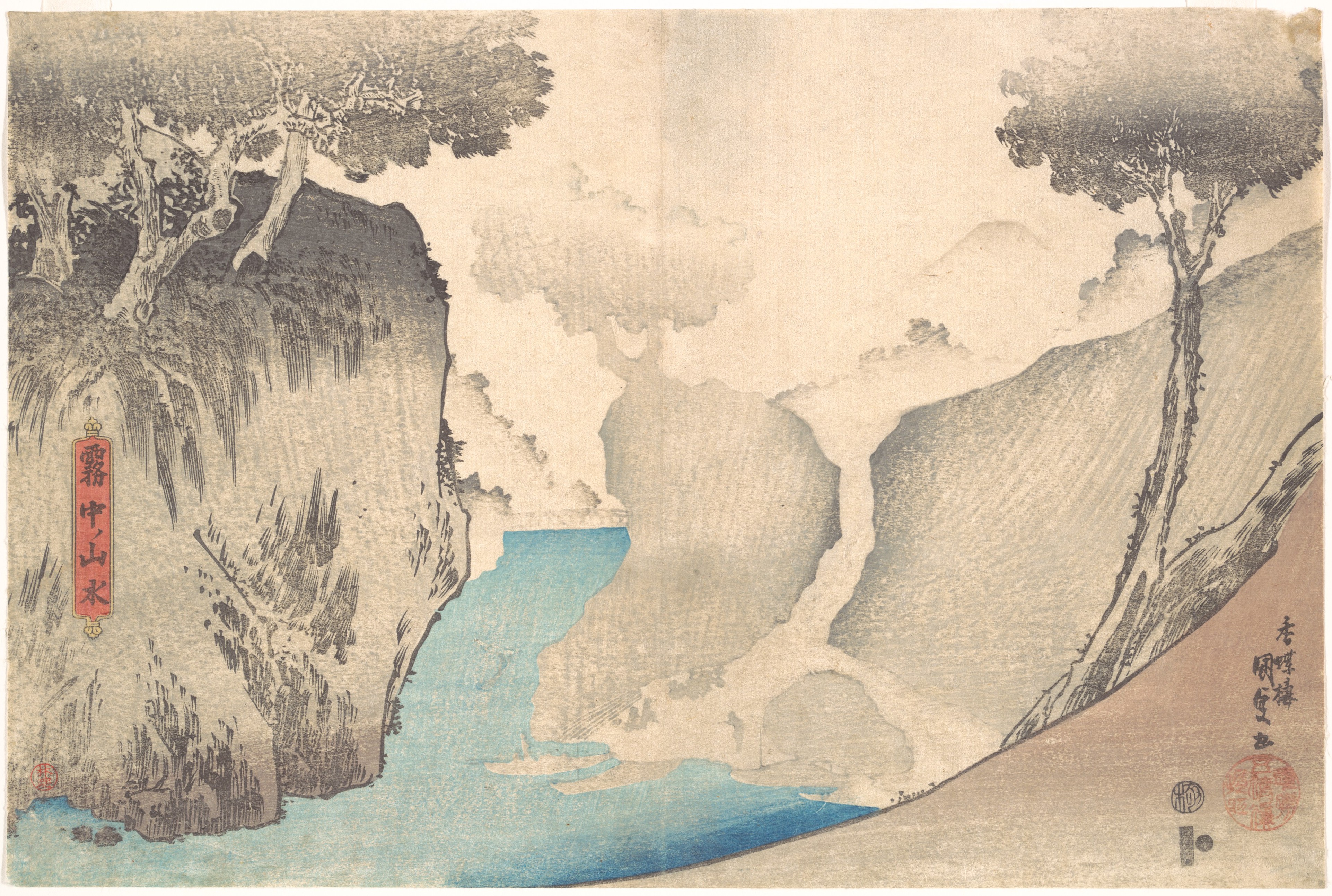
Ochanomizu in the Mist
mid-19th century
Woodblock print; ink and color on paper
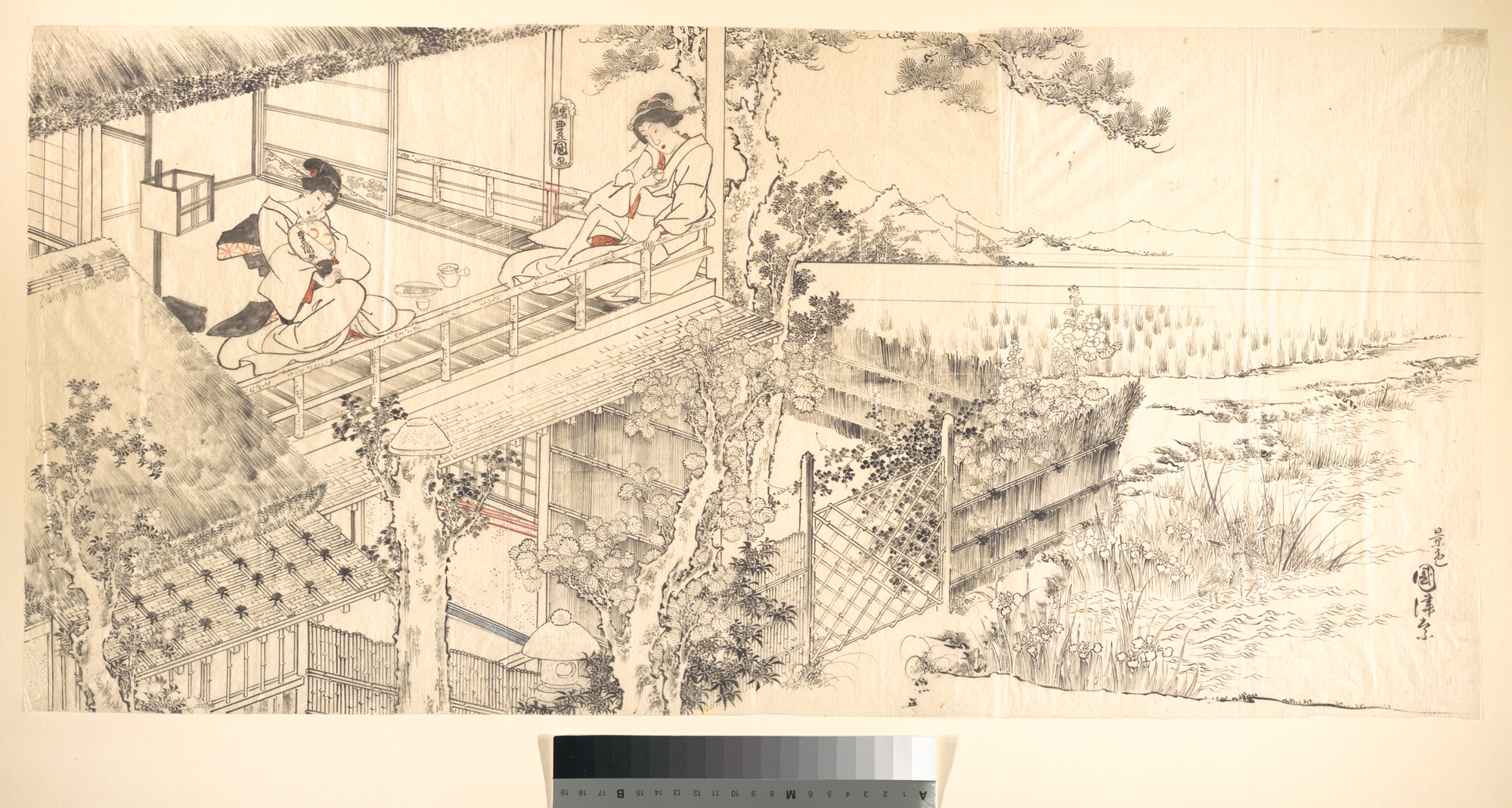
Two Courtesans Enjoying the View from a Teahouse
after 1844
Drawings intended as design for woodblock prints (triptych); ink and color on paper
Frequently Asked Questions
Poem by Minamoto Toshiyori Ason: Narukami Shōnin and Kumo no Taema was created by Utagawa Kunisada (歌川国貞) in ca. 1845-48.