
Poem by Suō no Naishi: Shirai Gonpachi
- Date:
- ca. 1845-48
- Medium:
- Source:
- Victoria and Albert Museum
Description
Poem by Suō no Naishi: Shirai Gonpachi is an 1845 woodblock print by Utagawa Kunisada from a mitate series pairing poems of the Hyakunin Isshu with figures drawn from kabuki and Edo legend. Here the classical voice is Suō no Naishi, a late Heian court lady-in-waiting whose poem about the impermanence of a spring night's dream of love supplies the print's literary register. Kunisada's modern counterpart is Shirai Gonpachi, the romantic samurai of the popular Gonpachi–Komurasaki story, a figure rendered famous in kabuki and gōkan fiction for his doomed love affair with the Yoshiwara courtesan Komurasaki and his eventual execution. The print belongs squarely within yakusha-e in spirit, since Edo audiences would have recognised the specific actor performing Gonpachi in posture, makeup and crest, even when censorship after the Tenpō Reforms made naming actors openly difficult. Kunisada designs the figure in three-quarter pose with sword and travelling costume, allowing the patterned fabrics to carry the bolder color, while a poem cartouche occupies the upper portion of the sheet. The line is firm and economical, with the strong black outlines and saturated mineral pigments typical of his mid-1840s sheets. As the leading designer of late Edo ukiyo-e, Kunisada used the mitate framework both to satisfy classical taste and to keep popular subjects circulating during a period of heavy publishing regulation. The Victoria and Albert Museum holds the impression and dates it to 1845, situating it within a Hyakunin Isshu mitate set distinct from those issued slightly later by his pupil Toyokuni III's other students.
More Prints by Utagawa Kunisada

The actors Ichikawa Danjuro VII as Takamoto no kitsune and Segawa Kikunojo V as Izumi no Chieda-gitsune
1818
Color woodblock print; shikishiban, surimono

Basketry Work: By the Craftsman Ichida Shōshichirō of Naniwa (Kagozaiku Naniwa saikunin Ichida Shōshichirō)
1819
Woodblock print; ink and color on paper
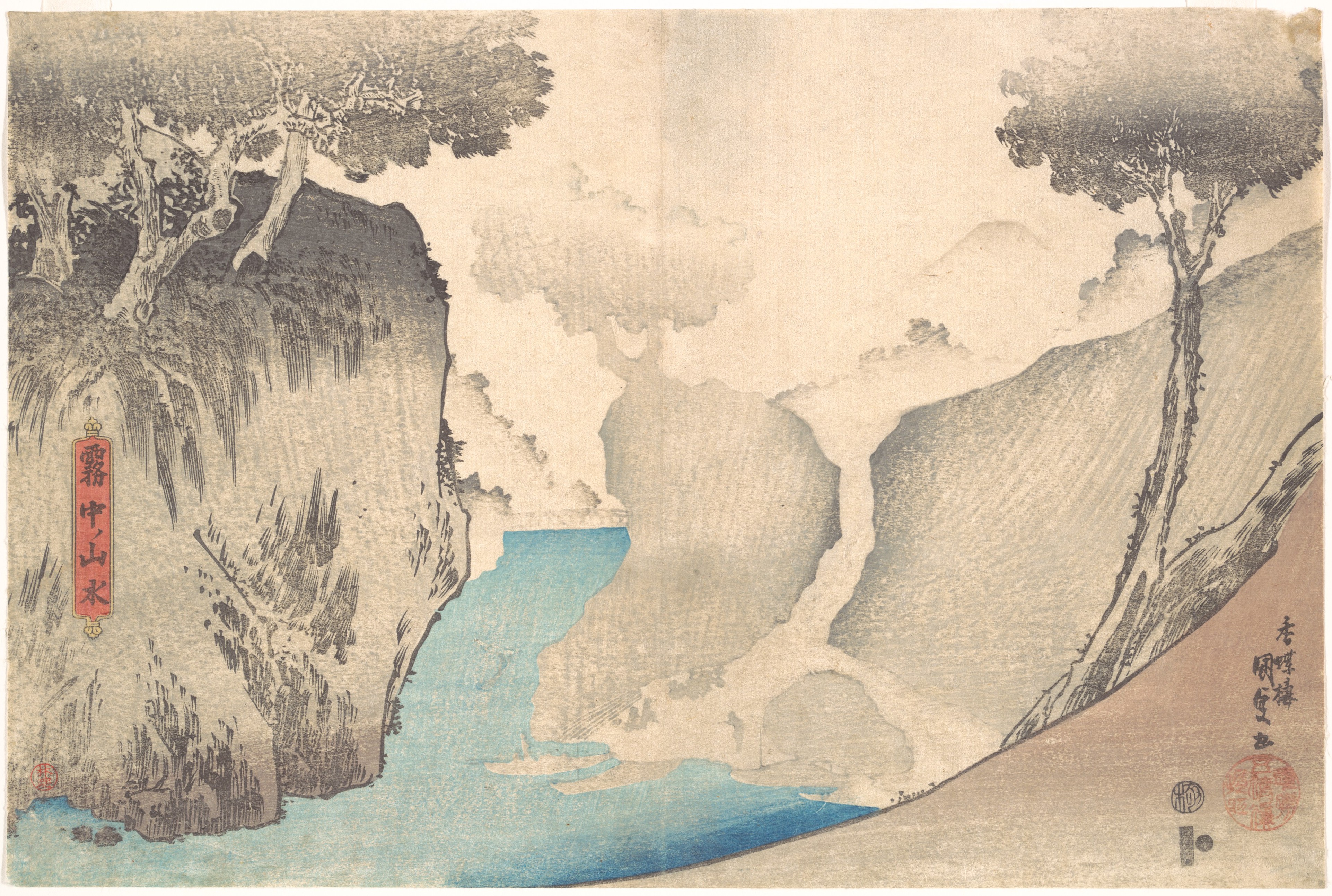
Ochanomizu in the Mist
mid-19th century
Woodblock print; ink and color on paper
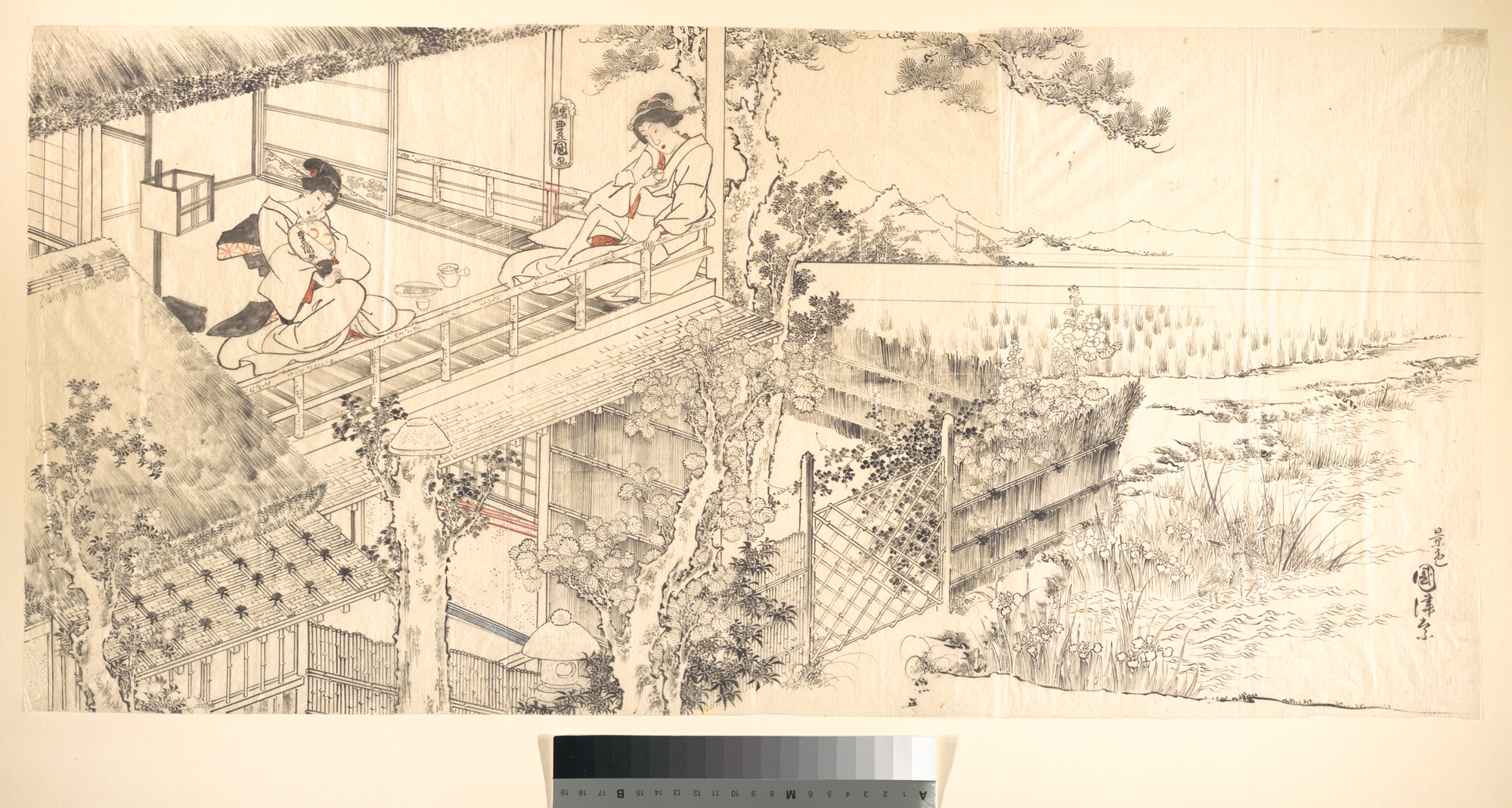
Two Courtesans Enjoying the View from a Teahouse
after 1844
Drawings intended as design for woodblock prints (triptych); ink and color on paper
Frequently Asked Questions
Poem by Suō no Naishi: Shirai Gonpachi was created by Utagawa Kunisada (歌川国貞) in ca. 1845-48.