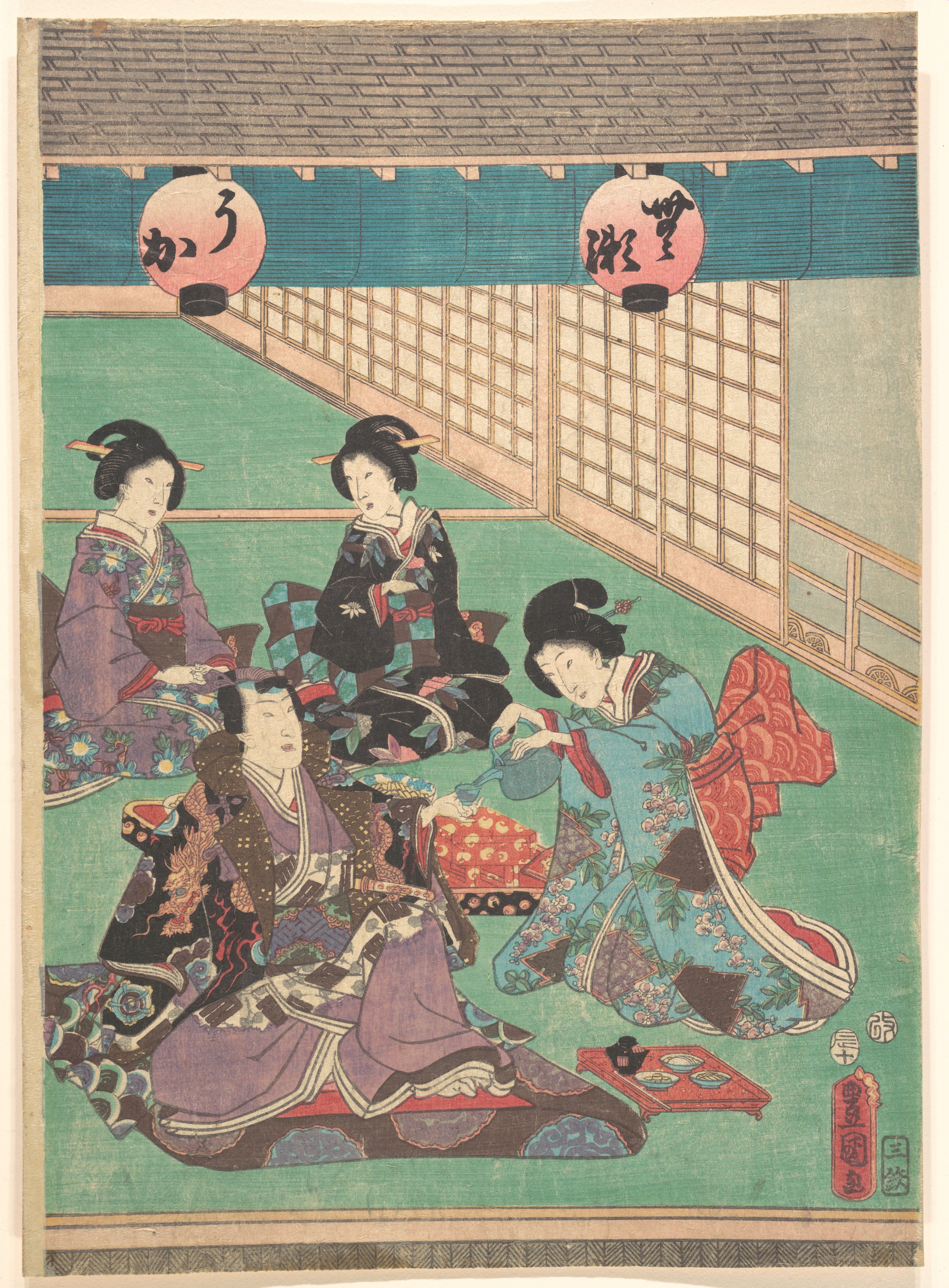
- Medium:
- Woodblock print; ink and color on paper
- Source:
- Metropolitan Museum of Art
Description
The Metropolitan Museum of Art's catalogue lists this sheet simply as "Print" with a date of 1786, a year that predates Utagawa Kunisada's own birth and that almost certainly reflects an imprecise legacy record rather than the actual moment of design. The work, however, is recognizable as a characteristic example of Kunisada's Edo ukiyo-e production. As the principal pupil of Utagawa Toyokuni I and the eventual holder of the Toyokuni III name, Kunisada designed several thousand prints across yakusha-e, bijinga, musha-e, and miscellaneous narrative subjects, and untitled or under-documented impressions like this one circulated widely through both the original Edo trade and later collector channels. Without a precise series or subject identification, the most that can be said with confidence is what the sheet itself shows: figures rendered in Kunisada's mature line, with the elongated, gently angular bodies that he favored, set against the densely patterned textiles and discreet background washes characteristic of his style. The signature, publisher's mark, and censor seals on the print would, if read carefully, yield a more precise date in the conventional Edo print chronology, typically the 1820s through the 1850s for Kunisada's main career. The Metropolitan Museum of Art holds this impression as part of its broad survey of Edo ukiyo-e by the Utagawa school, where it functions both as an autonomous design and as a reference point for the larger study of Kunisada's prolific workshop and his role in shaping the visual culture of late Edo Japan.
More Prints by Utagawa Kunisada

The actors Ichikawa Danjuro VII as Takamoto no kitsune and Segawa Kikunojo V as Izumi no Chieda-gitsune
1818
Color woodblock print; shikishiban, surimono

Basketry Work: By the Craftsman Ichida Shōshichirō of Naniwa (Kagozaiku Naniwa saikunin Ichida Shōshichirō)
1819
Woodblock print; ink and color on paper
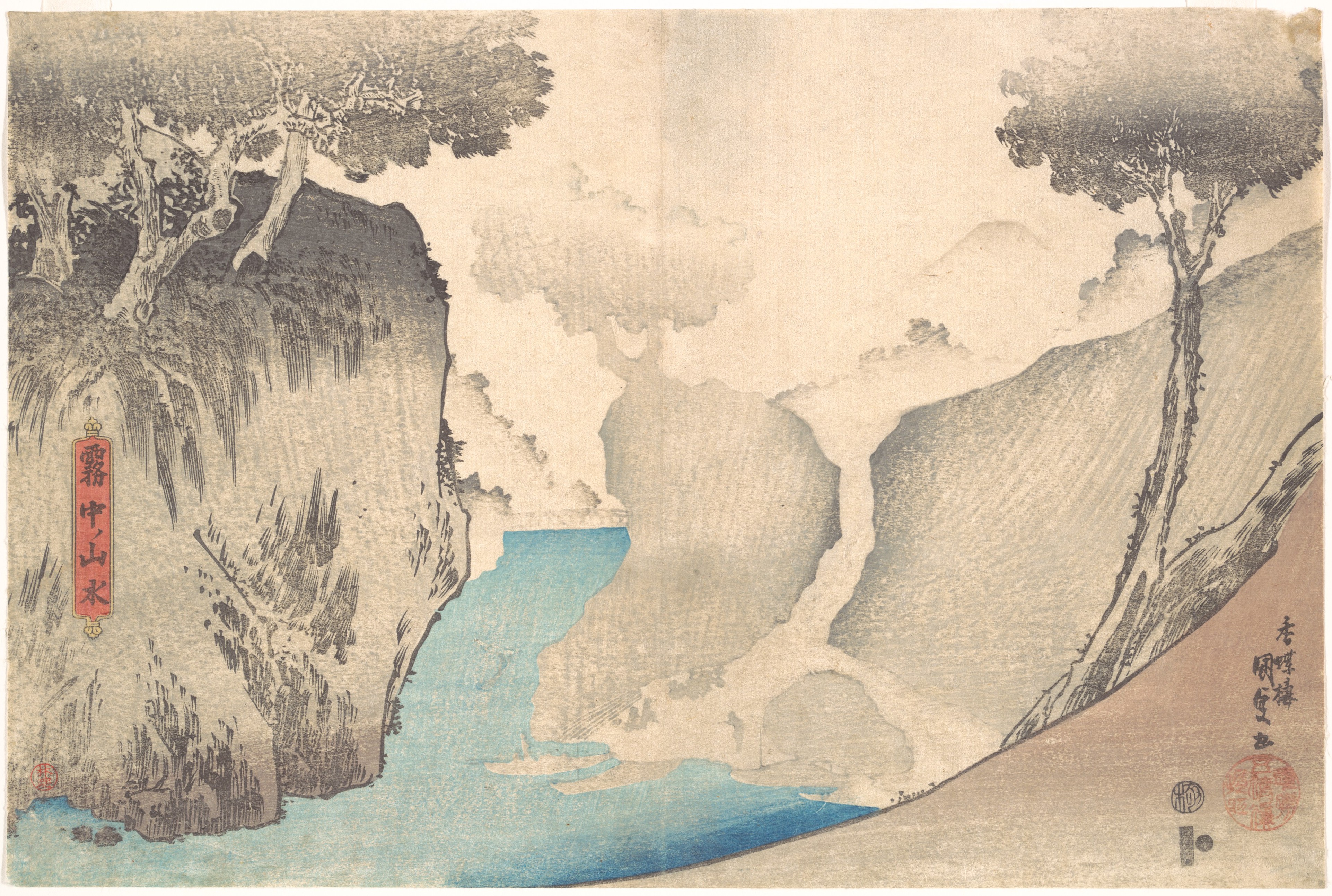
Ochanomizu in the Mist
mid-19th century
Woodblock print; ink and color on paper
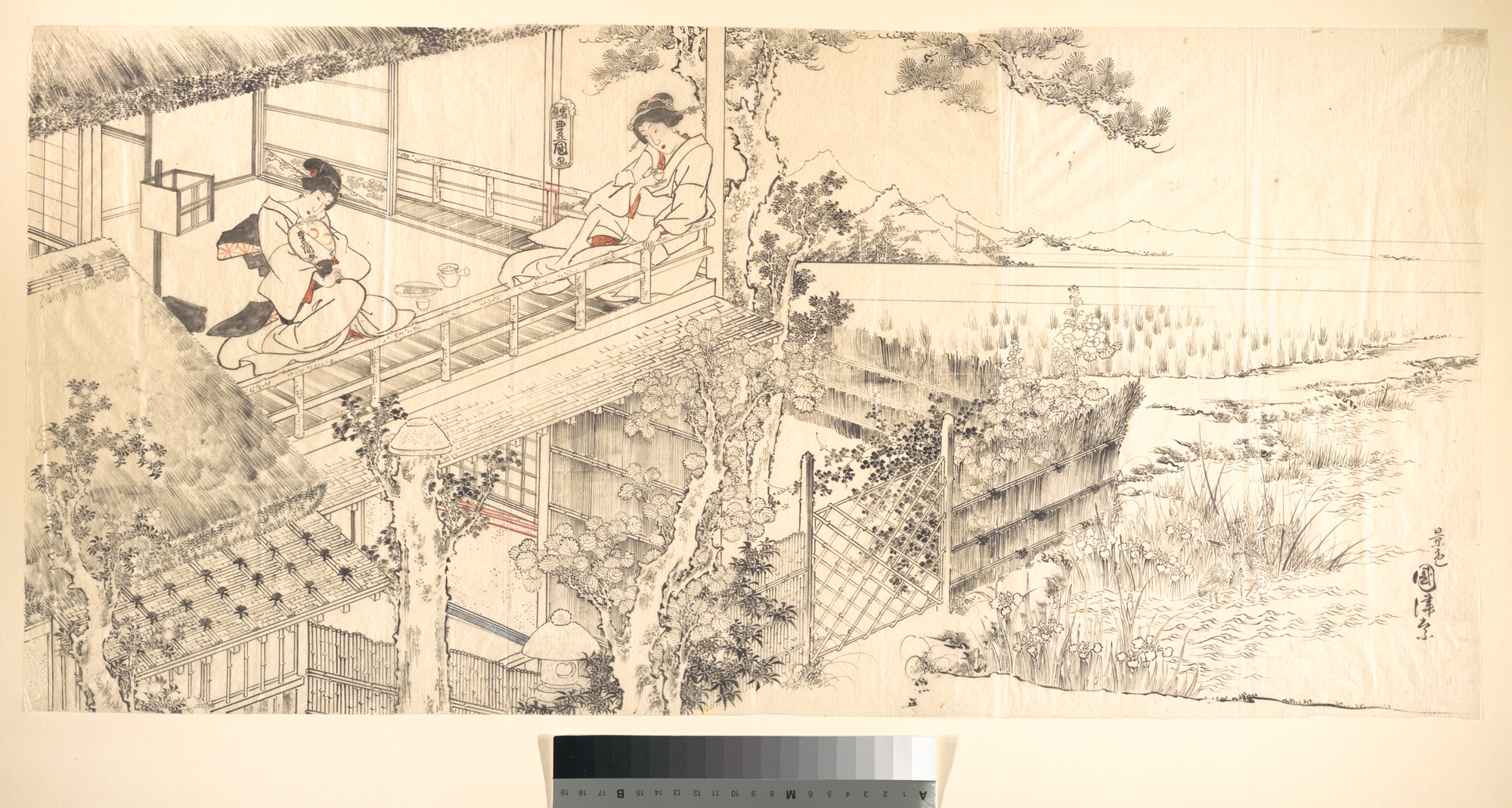
Two Courtesans Enjoying the View from a Teahouse
after 1844
Drawings intended as design for woodblock prints (triptych); ink and color on paper
Frequently Asked Questions
Print was created by Utagawa Kunisada (歌川国貞).