
Shiki no sugatami (0016)
- Date:
- 1842
- Medium:
- Color woodblock printed book, 3 volumes
- Source:
- Art Institute of Chicago
Description
This 1837 woodblock print by Utagawa Kunisada belongs to the series Shiki no sugatami ('A Mirror of Figures in the Four Seasons'), a bijin-ga set in which contemporary women are organised through the seasonal calendar that structured Edo social and aesthetic life. The kagami — 'mirror' — convention in late Edo ukiyo-e announces a comparative survey, and arranging fashionable women across spring, summer, autumn and winter allowed Kunisada to display the full range of his mature bijin manner against the seasonal vocabulary of cherry blossoms, fans and cool waters, maples and chrysanthemums, and snow. By 1837 Kunisada had been working at the head of the Utagawa school for years and was producing prodigious quantities of bijin-ga alongside his more visible yakusha-e. The figural type here is fully mature: a long oval face, narrow eyes set high, a calligraphic mouth and an elongated body whose proportions are exaggerated by the tall print format. Costume is the principal pictorial event, with the woodblock printer's skill in overprinting, embossing and bokashi gradation giving substance to the patterned silk. The palette of mineral reds, indigos and ochres balances against the white of the washi, and the strong black contour holds the figure firmly within the picture plane. As often in Kunisada's bijin sheets, Edo viewers were practised at reading a specific kabuki onnagata into the idealised woman. The Art Institute of Chicago holds the impression and records the 1837 date, situating the print within his prolific bijin-ga production of the late 1830s.
More Prints by Utagawa Kunisada

The actors Ichikawa Danjuro VII as Takamoto no kitsune and Segawa Kikunojo V as Izumi no Chieda-gitsune
1818
Color woodblock print; shikishiban, surimono

Basketry Work: By the Craftsman Ichida Shōshichirō of Naniwa (Kagozaiku Naniwa saikunin Ichida Shōshichirō)
1819
Woodblock print; ink and color on paper
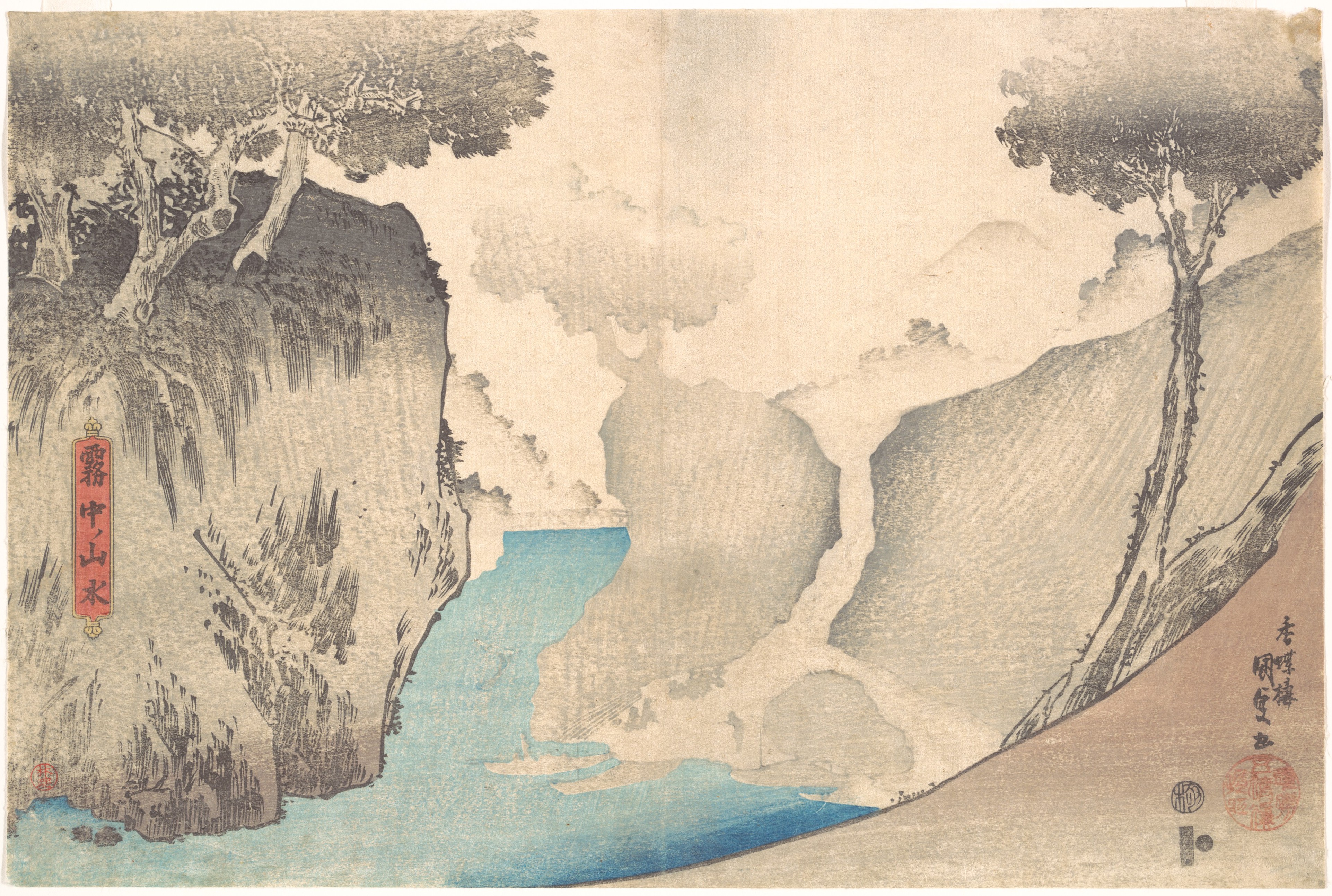
Ochanomizu in the Mist
mid-19th century
Woodblock print; ink and color on paper
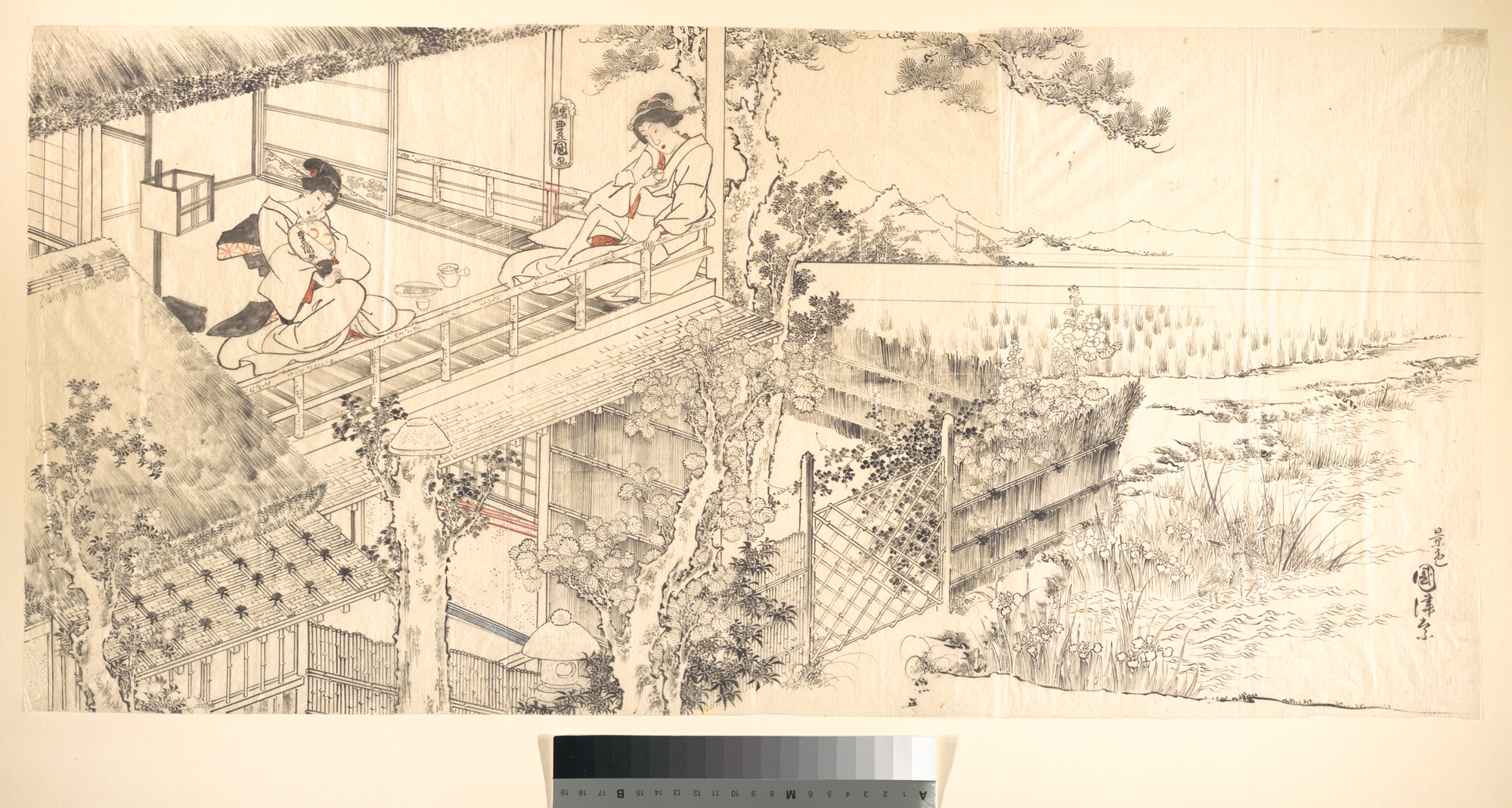
Two Courtesans Enjoying the View from a Teahouse
after 1844
Drawings intended as design for woodblock prints (triptych); ink and color on paper
Frequently Asked Questions
Shiki no sugatami (0016) was created by Utagawa Kunisada (歌川国貞) in 1842.