
Shimada Station: The Ōi River (Shimada no eki Ōigawa)
- Medium:
- Source:
- Victoria and Albert Museum
Description
Shimada Station: The Ōi River (Shimada no eki Ōigawa) is an undated woodblock print by Utagawa Kunisada designed within the tradition of the Tōkaidō station print, where the road from Edo to Kyoto is filtered through figures from kabuki, bijin culture and historical legend. Shimada was the 23rd of the 53 stations and stood on the eastern bank of the Ōi River, a wide, swift watercourse with no permanent bridge in the Edo period; travellers were carried across on the shoulders of professional porters, which made the Ōi crossing one of the most recognised images on the highway. Kunisada and his pupils produced several station series in the 1840s and 1850s — most famously in collaboration with other Utagawa designers — in which a foreground figure occupies the picture plane while a small inset or cartouche shows the actual landscape associated with the station. This print follows that pattern, with the river and its porters relegated to a topographical reference while the principal subject is a contemporary figure designed in the manner of yakusha-e or bijin-ga. The mineral palette and strong black contour are typical of his mid-career sheets, and the surface depends on the cooperation of the carver and printer who realised the design. The Victoria and Albert Museum holds the impression and records the title and station identification, situating it within the broader corpus of Kunisada's Tōkaidō-themed work and within late Edo ukiyo-e's flexible reinterpretation of Hiroshige's earlier landscape vocabulary.
More Prints by Utagawa Kunisada

The actors Ichikawa Danjuro VII as Takamoto no kitsune and Segawa Kikunojo V as Izumi no Chieda-gitsune
1818
Color woodblock print; shikishiban, surimono

Basketry Work: By the Craftsman Ichida Shōshichirō of Naniwa (Kagozaiku Naniwa saikunin Ichida Shōshichirō)
1819
Woodblock print; ink and color on paper
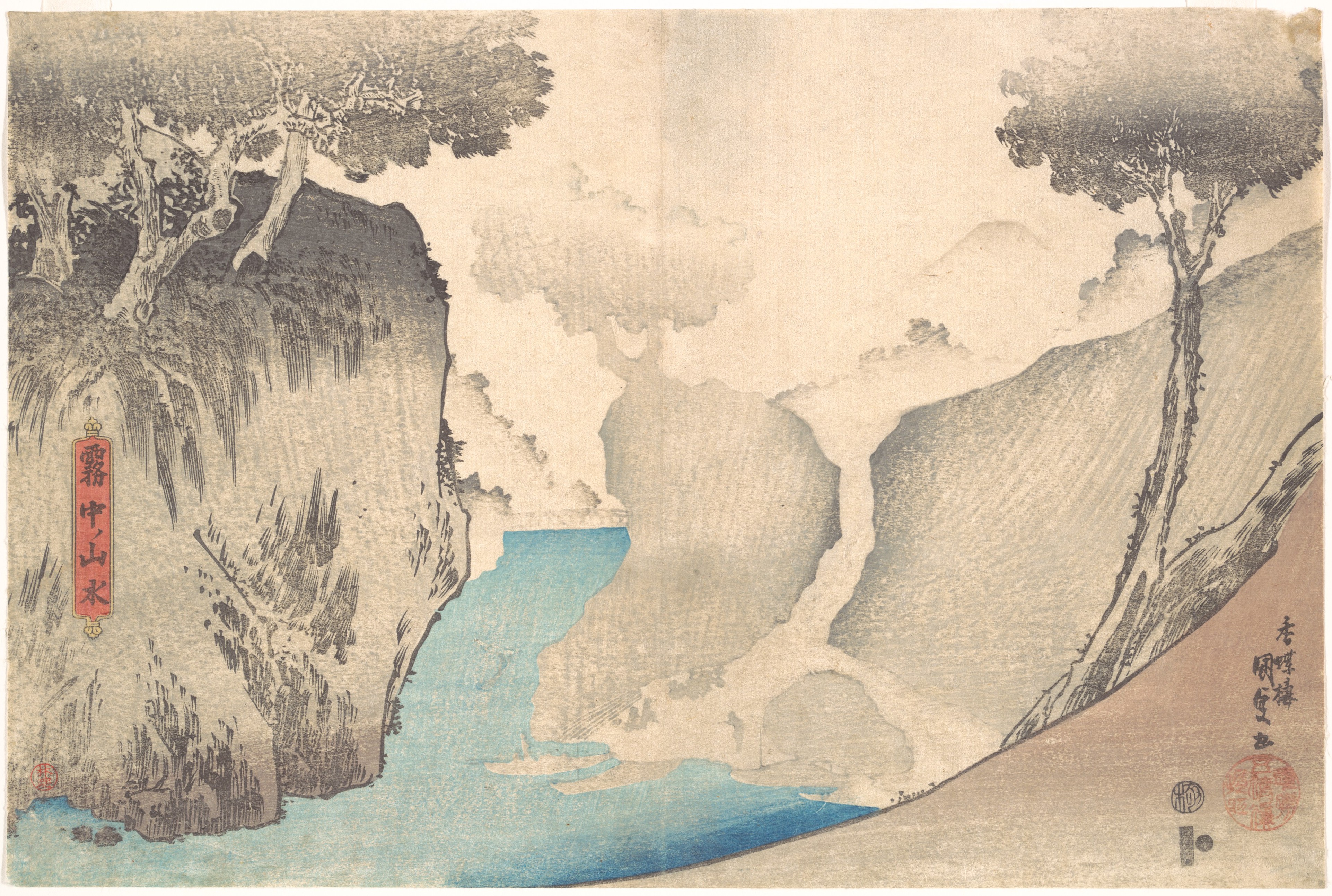
Ochanomizu in the Mist
mid-19th century
Woodblock print; ink and color on paper
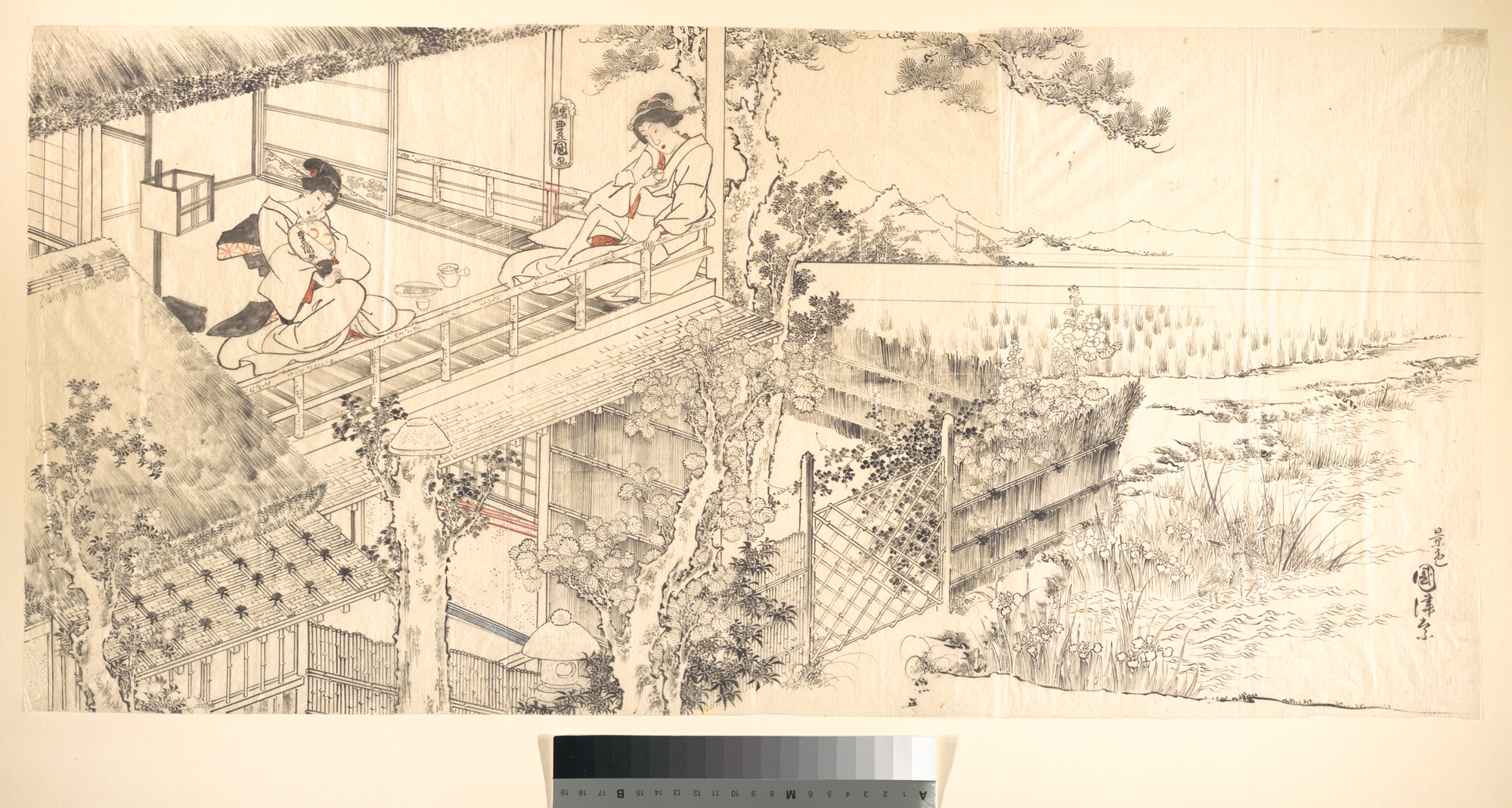
Two Courtesans Enjoying the View from a Teahouse
after 1844
Drawings intended as design for woodblock prints (triptych); ink and color on paper
Frequently Asked Questions
Shimada Station: The Ōi River (Shimada no eki Ōigawa) was created by Utagawa Kunisada (歌川国貞).