The actor Ichikawa Dajuro VII and a woman watching boy write first calligraphy of the New Year
- Date:
- 1831
- Medium:
- Color woodblock print; shikishiban, surimono
- Source:
- Art Institute of Chicago
Description
Dated 1831, this Utagawa Kunisada print depicts the actor Ichikawa Danjūrō VII and a woman watching a boy write the first calligraphy of the New Year - kakizome, the auspicious first writing performed on the second day of the lunar new year. The scene blends yakusha-e and genre painting: the star actor is identifiable, but the staged domesticity emphasizes ritual practice rather than a specific role. New Year prints of this kind functioned partly as auspicious imagery (kichijōga) and partly as commercial product for a market hungry for prints to accompany seasonal celebrations. Kunisada designed numerous Danjūrō VII portraits across the 1820s and 1830s, and his familiarity with the actor's likeness allows him to integrate the star naturally into a household scene without disrupting the ritual content. The Art Institute of Chicago preserves the impression (artwork 89718). The print sits at a productive intersection in Edo ukiyo-e: a celebrity actor lending presence to a household ritual, a designer working at the height of his powers before assuming the Toyokuni III name, and a publisher capitalizing on the calendar's most reliable seasonal market.
More Prints by Utagawa Kunisada

The actors Ichikawa Danjuro VII as Takamoto no kitsune and Segawa Kikunojo V as Izumi no Chieda-gitsune
1818
Color woodblock print; shikishiban, surimono

Basketry Work: By the Craftsman Ichida Shōshichirō of Naniwa (Kagozaiku Naniwa saikunin Ichida Shōshichirō)
1819
Woodblock print; ink and color on paper
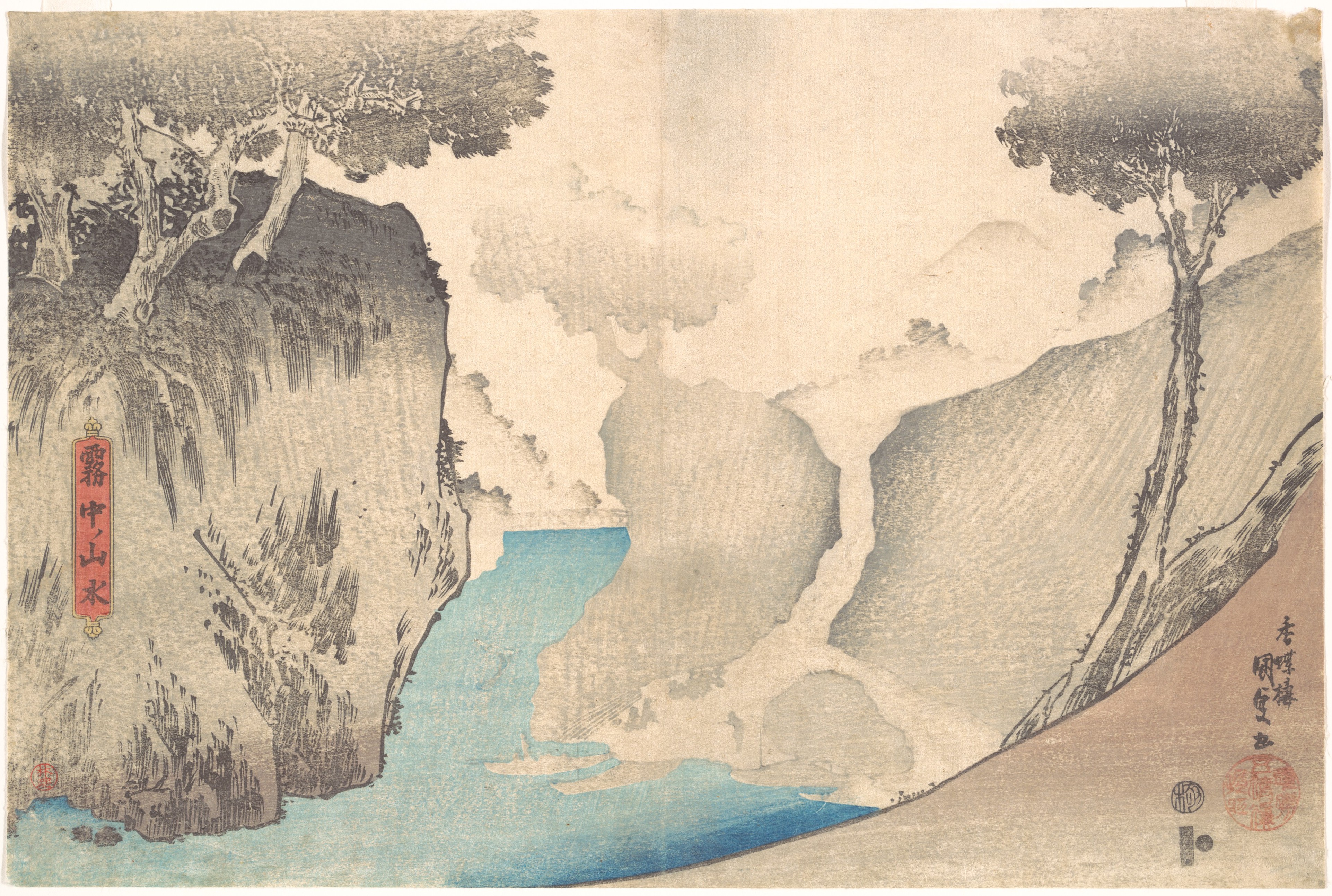
Ochanomizu in the Mist
mid-19th century
Woodblock print; ink and color on paper
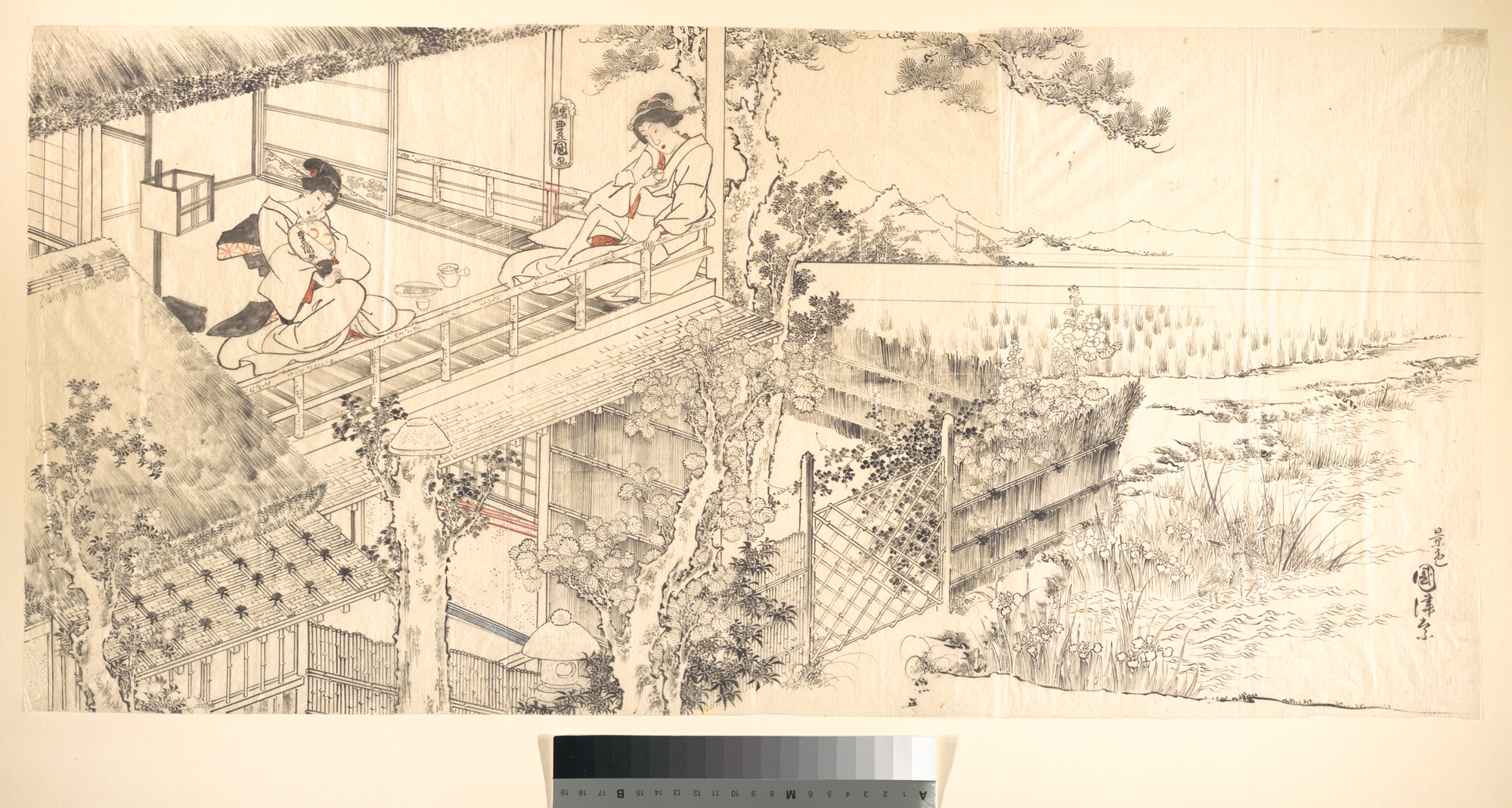
Two Courtesans Enjoying the View from a Teahouse
after 1844
Drawings intended as design for woodblock prints (triptych); ink and color on paper
More Children Prints
Frequently Asked Questions
The actor Ichikawa Dajuro VII and a woman watching boy write first calligraphy of the New Year was created by Utagawa Kunisada (歌川国貞) in 1831.
The actor Ichikawa Dajuro VII and a woman watching boy write first calligraphy of the New Year depicts children.