
The actor Ichikawa Danjuro VIII as Mashiba Hisatsugu
- Date:
- 1851
- Medium:
- Color woodblock print; left sheet of oban diptych
- Source:
- Art Institute of Chicago
Description
The actor Ichikawa Danjūrō VIII as Mashiba Hisatsugu is an 1851 woodblock print by Utagawa Kunisada (Toyokuni III), depicting one of the most celebrated young stars of the late Edo kabuki stage in a warrior role drawn from the Taikō-ki repertoire. 'Mashiba Hisatsugu' is the stage name used to circumvent the bakufu's prohibition on depicting Toyotomi family members on stage: Mashiba Hisayoshi stands for Toyotomi Hideyoshi and Mashiba Hisatsugu for Toyotomi Hidetsugu, with the surnames altered to satisfy the censors. Ichikawa Danjūrō VIII (1823–1854) was the eldest son of Danjūrō VII and one of the most adored actors of his generation in Edo, with a particular following among women that the print market relentlessly exploited. By 1851 Kunisada was at the head of the Utagawa school as Toyokuni III, the dominant designer of yakusha-e in late Edo ukiyo-e, and his portraits of Danjūrō VIII formed a substantial body of work in the few years before the actor's premature death in 1854. The composition isolates the figure against a flat or sparsely treated ground, with formal robes and a sword carrying the principal pictorial event. The face is rendered with the strong individuality of nigao-e, the contour firm and decisive, the patterned silk overprinted by skilled block carvers. The mineral palette of red, indigo and ochre is characteristic of the post-Tenpō Reform period. The Art Institute of Chicago holds the impression and dates it to 1851.
More Prints by Utagawa Kunisada

The actors Ichikawa Danjuro VII as Takamoto no kitsune and Segawa Kikunojo V as Izumi no Chieda-gitsune
1818
Color woodblock print; shikishiban, surimono

Basketry Work: By the Craftsman Ichida Shōshichirō of Naniwa (Kagozaiku Naniwa saikunin Ichida Shōshichirō)
1819
Woodblock print; ink and color on paper
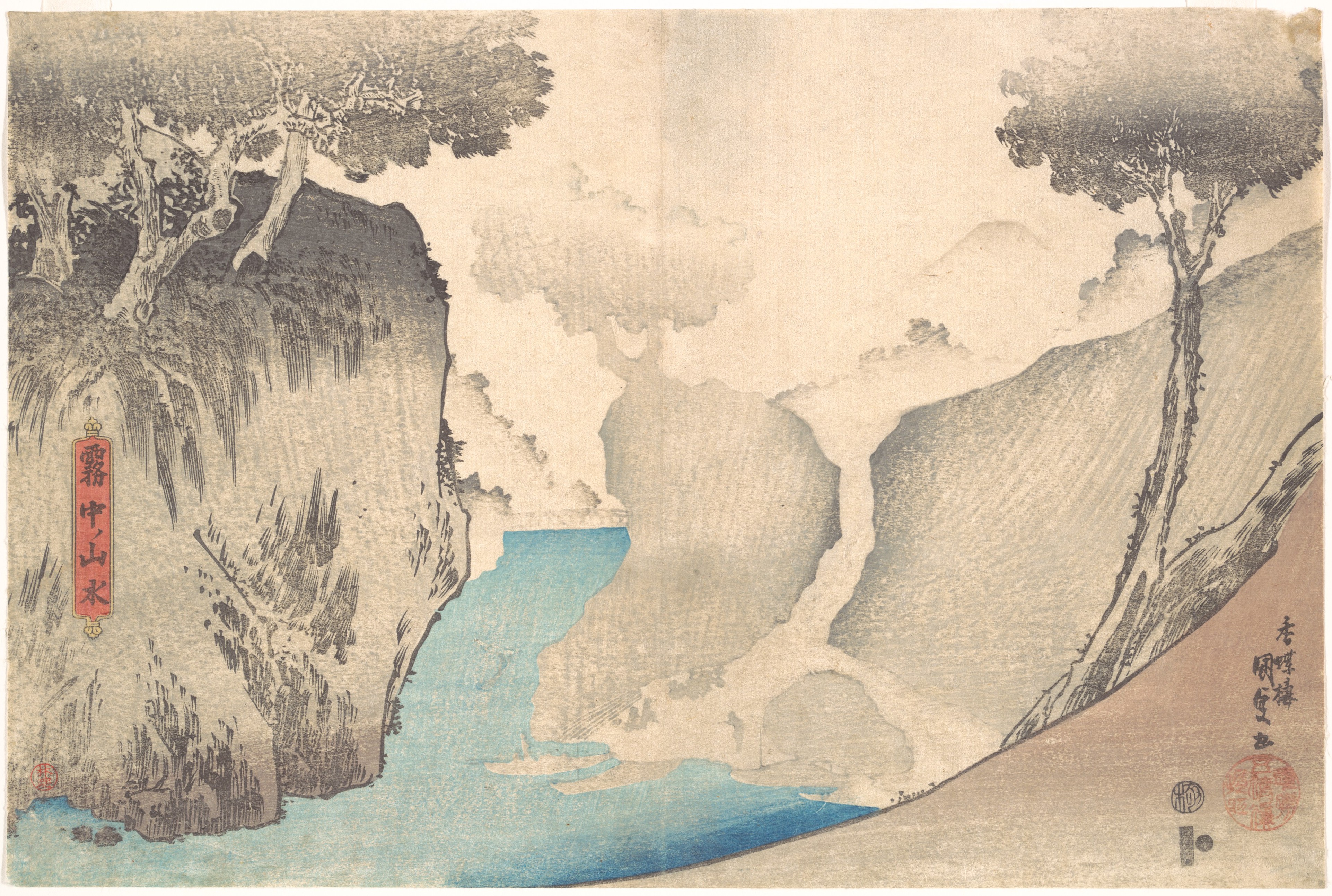
Ochanomizu in the Mist
mid-19th century
Woodblock print; ink and color on paper
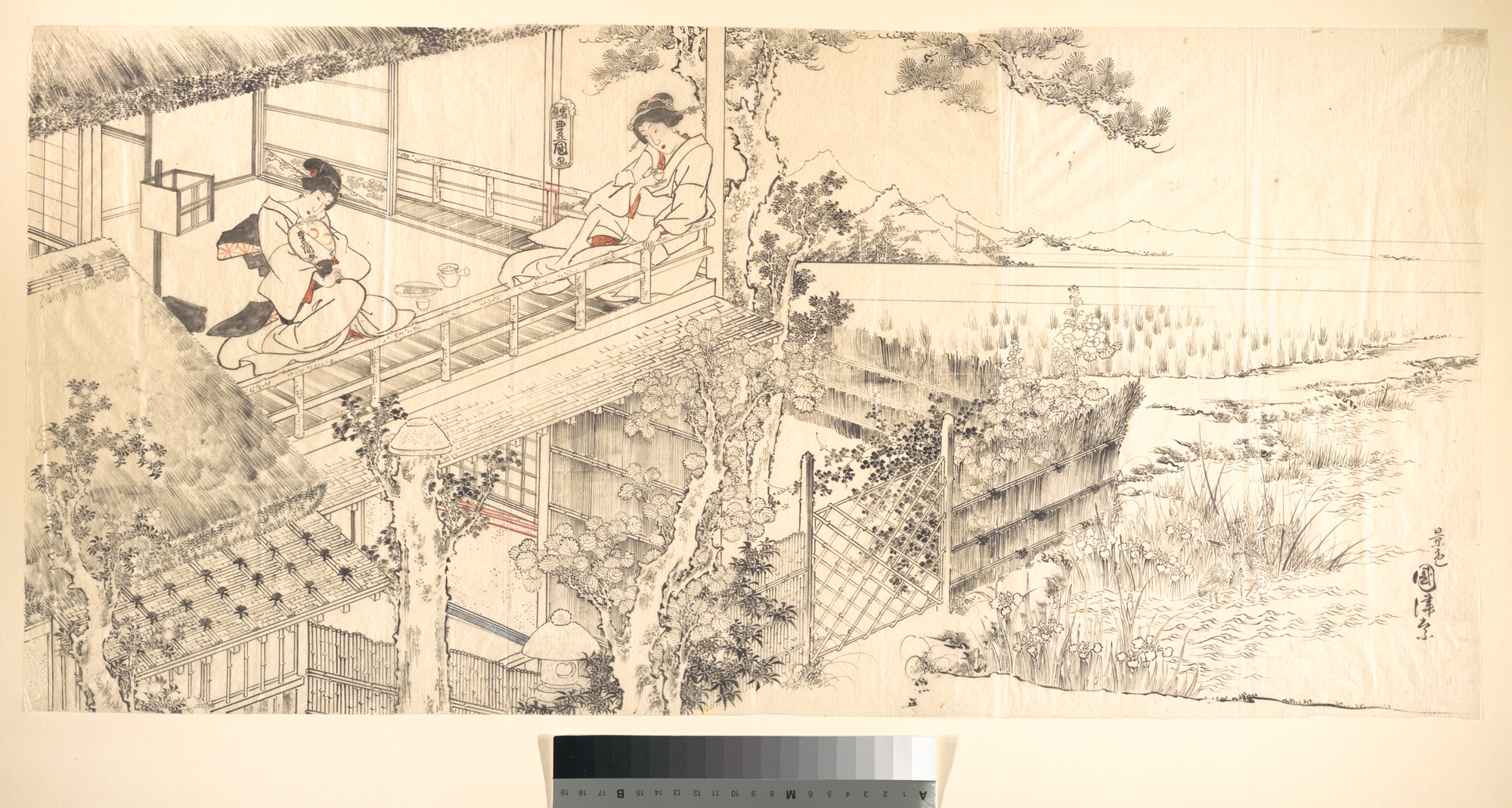
Two Courtesans Enjoying the View from a Teahouse
after 1844
Drawings intended as design for woodblock prints (triptych); ink and color on paper
Frequently Asked Questions
The actor Ichikawa Danjuro VIII as Mashiba Hisatsugu was created by Utagawa Kunisada (歌川国貞) in 1851.