
The actor Nakamura Utaemon IV as the fisherman Fukashichi, actually Kanawa Goro Imakuni (Ryoshi Fukashichi jitsu wa Kanawa Goro Imakuni)
- Date:
- c. 1847/52
- Medium:
- Color woodblock print; oban
- Source:
- Art Institute of Chicago
Description
Designed by Utagawa Kunisada in 1842 and held by the Art Institute of Chicago, this yakusha-e portrait shows Nakamura Utaemon IV in one of the disguise-and-revelation roles beloved by kabuki audiences: the fisherman Fukashichi, who is actually the warrior Kanawa Goro Imakuni in concealment. The convention, indicated in the title by the formula 'actually,' was a standard device of late Edo theatre, and Kunisada handled it with particular skill, layering costume and prop details so that the dual identity registers visually on the sheet. Utaemon IV was among the most acclaimed stars of the period, and Kunisada's nigao captures the wide-set eyes and broad face for which audiences knew him. The fisherman's stripped robes and the implied salt of seaside life are rendered through fabric pattern and printed gradation, while small details suggest the samurai beneath the disguise. Published just as the Tempo reforms were curbing what could and could not appear in Edo woodblock prints, the sheet sits at a moment when designers had to balance audience appetite for star portraits against new regulatory limits on naming actors. Kunisada's solution, perfected across the early 1840s, was to keep the visual likeness unmistakable while complying with the letter of the rules. The Art Institute's record documents the impression's place within his most productive decade, just before his adoption of the Toyokuni III name in 1844.
More Prints by Utagawa Kunisada

The actors Ichikawa Danjuro VII as Takamoto no kitsune and Segawa Kikunojo V as Izumi no Chieda-gitsune
1818
Color woodblock print; shikishiban, surimono

Basketry Work: By the Craftsman Ichida Shōshichirō of Naniwa (Kagozaiku Naniwa saikunin Ichida Shōshichirō)
1819
Woodblock print; ink and color on paper
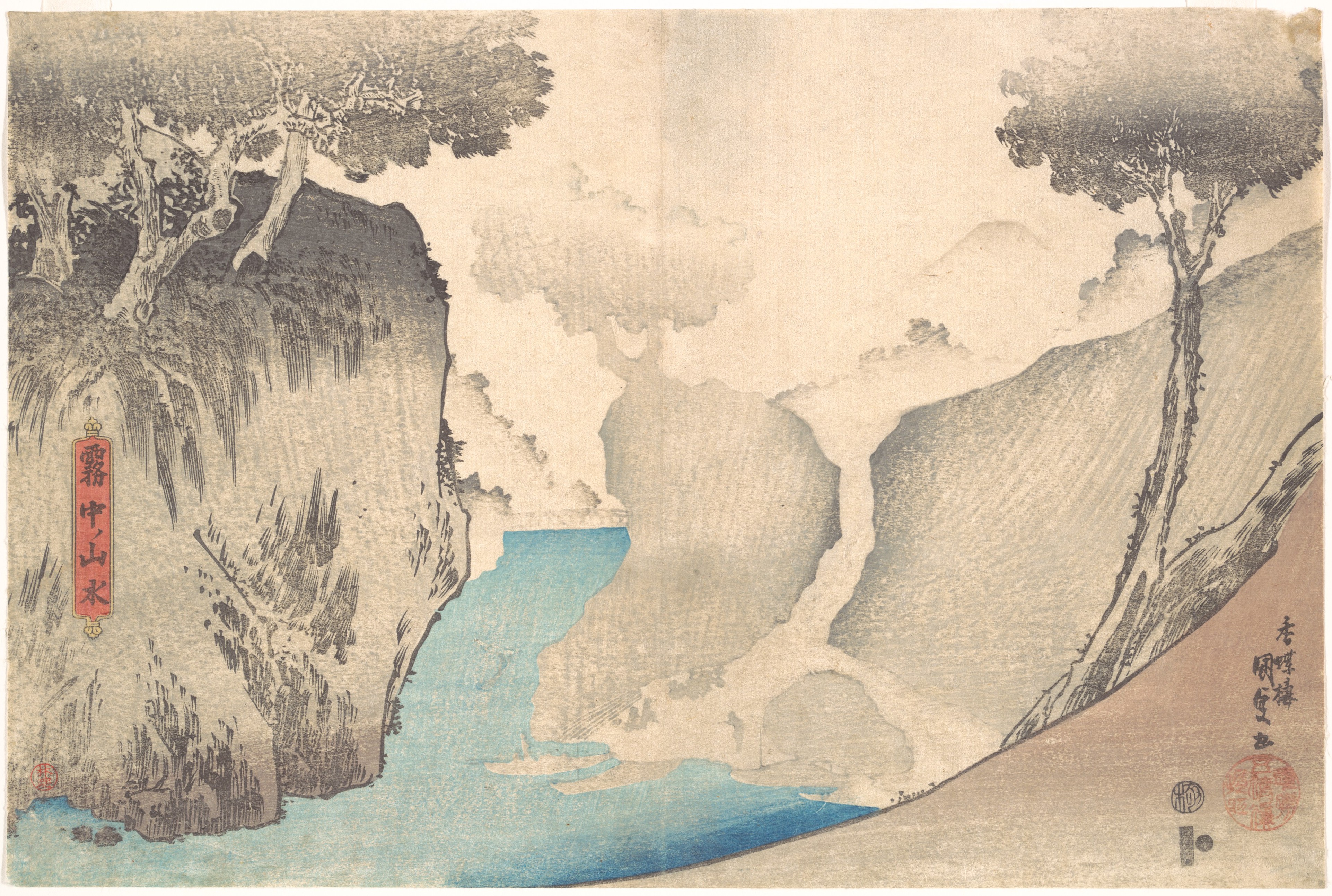
Ochanomizu in the Mist
mid-19th century
Woodblock print; ink and color on paper
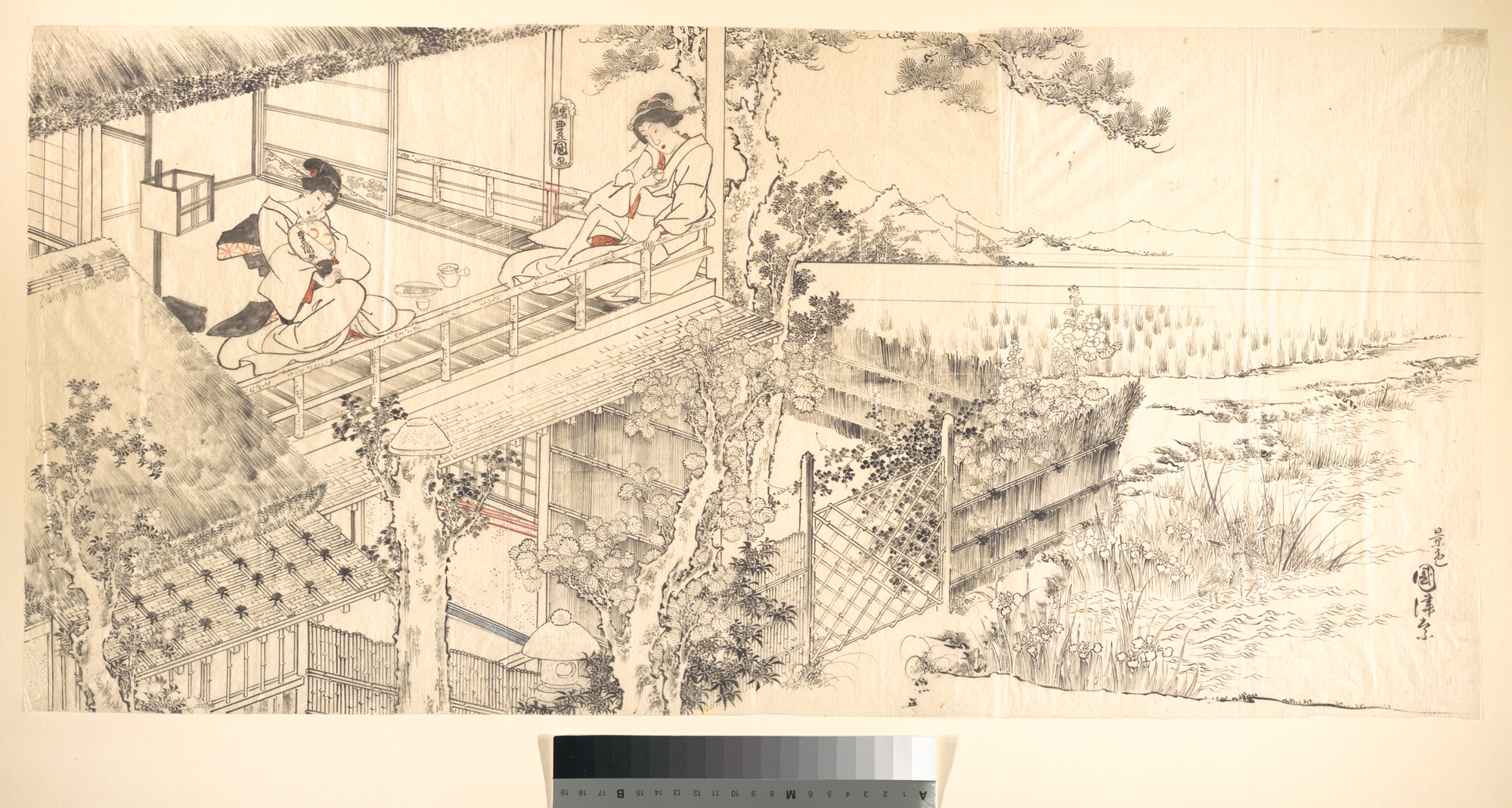
Two Courtesans Enjoying the View from a Teahouse
after 1844
Drawings intended as design for woodblock prints (triptych); ink and color on paper
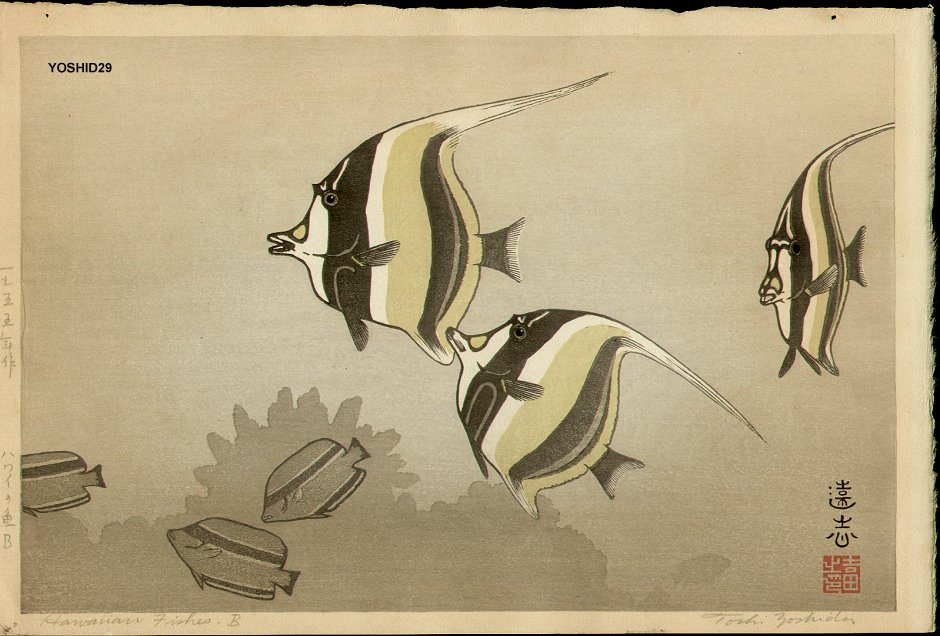
More Fish Prints


Frequently Asked Questions
The actor Nakamura Utaemon IV as the fisherman Fukashichi, actually Kanawa Goro Imakuni (Ryoshi Fukashichi jitsu wa Kanawa Goro Imakuni) was created by Utagawa Kunisada (歌川国貞) in c. 1847/52.
The actor Nakamura Utaemon IV as the fisherman Fukashichi, actually Kanawa Goro Imakuni (Ryoshi Fukashichi jitsu wa Kanawa Goro Imakuni) depicts fish.