
The actors Ichikawa Danjuro VII as Kan Shojo (Sugawara Michizane) and Segawa Kikunojo V as Umeomaru in the play "Sugawara Denju Tenarai Kagami," performed at the Kawarazaki Theater in the ninth month, 1832
- Date:
- 1832
- Medium:
- Color woodblock print; vertical shikishiban diptych, surimono
- Source:
- Art Institute of Chicago
Description
This 1832 woodblock print by Utagawa Kunisada documents a performance at Edo's Kawarazaki Theater in the ninth month of 1832, with Ichikawa Danjūrō VII as Kan Shōjō — the legendary statesman Sugawara no Michizane — and Segawa Kikunojō V as Umeōmaru, in the play 'Sugawara Denju Tenarai Kagami.' The play, one of the three great Chikamatsu-derived ningyō jōruri adapted for kabuki, dramatises the exile of Michizane to Dazaifu and the loyalty of his retainers Umeōmaru, Sakuramaru and Matsuōmaru. Kan Shōjō and Umeōmaru are two of the most demanding roles in the cycle, and the casting of Danjūrō VII alongside Kikunojō V was a major draw of the autumn 1832 Edo season. Kunisada had been Utagawa Toyokuni I's senior pupil for two decades and was by 1832 the dominant yakusha-e designer in Edo ukiyo-e, working closely with publishers to bring an actor print to market within weeks of a play's opening. The composition pairs the two figures across separate sheets in a posture that quotes a specific stage moment, with Danjūrō VII in court robes and Kikunojō V in the more theatrical role-costume of Umeōmaru. Faces, crests and props identify the actors precisely. Costume pattern is the principal pictorial event, and the print depends on the cooperation of the carver and printer for its dense overprinting. The Art Institute of Chicago holds the impression and records the precise play, theatre, month and year.
More Prints by Utagawa Kunisada

The actors Ichikawa Danjuro VII as Takamoto no kitsune and Segawa Kikunojo V as Izumi no Chieda-gitsune
1818
Color woodblock print; shikishiban, surimono

Basketry Work: By the Craftsman Ichida Shōshichirō of Naniwa (Kagozaiku Naniwa saikunin Ichida Shōshichirō)
1819
Woodblock print; ink and color on paper
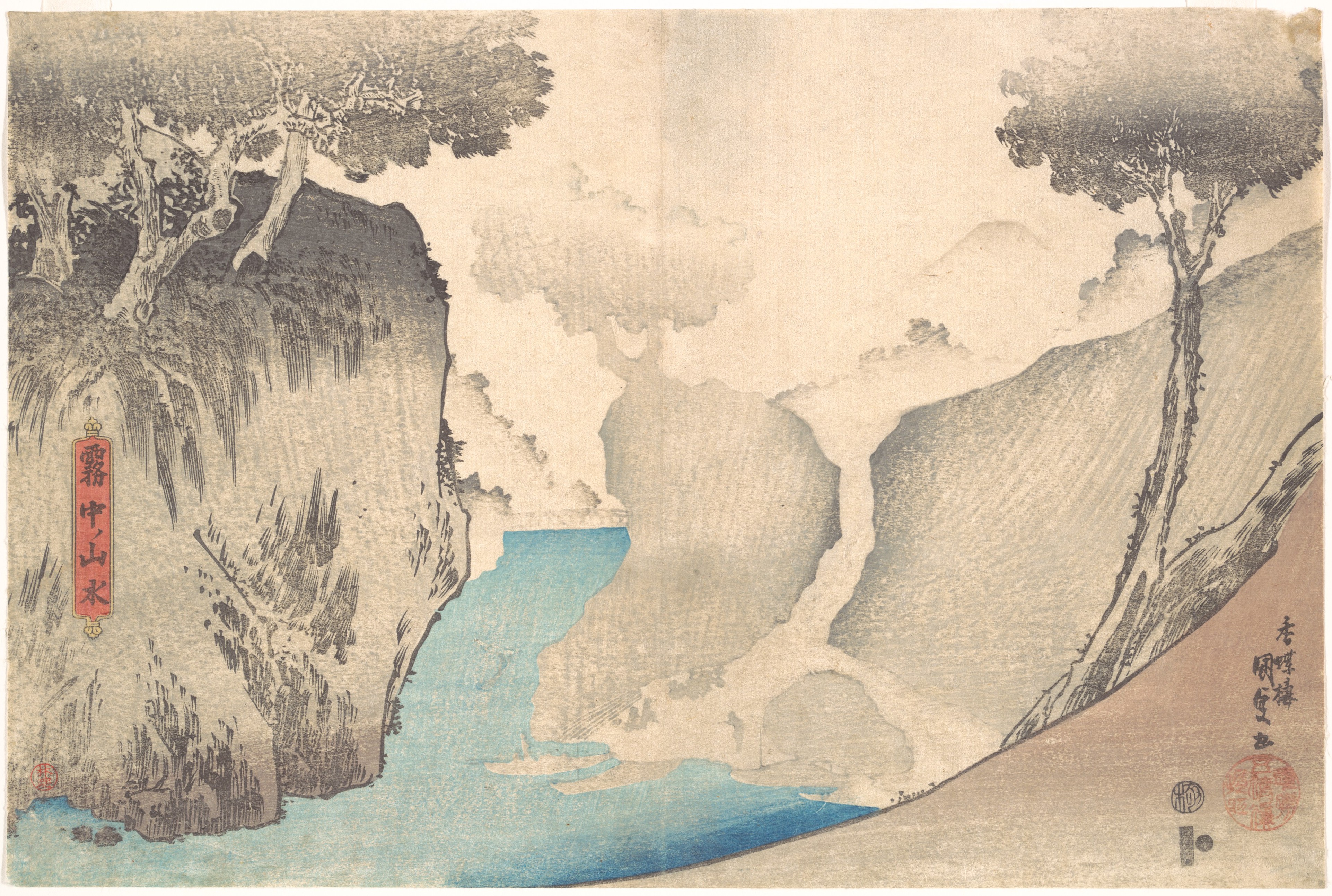
Ochanomizu in the Mist
mid-19th century
Woodblock print; ink and color on paper
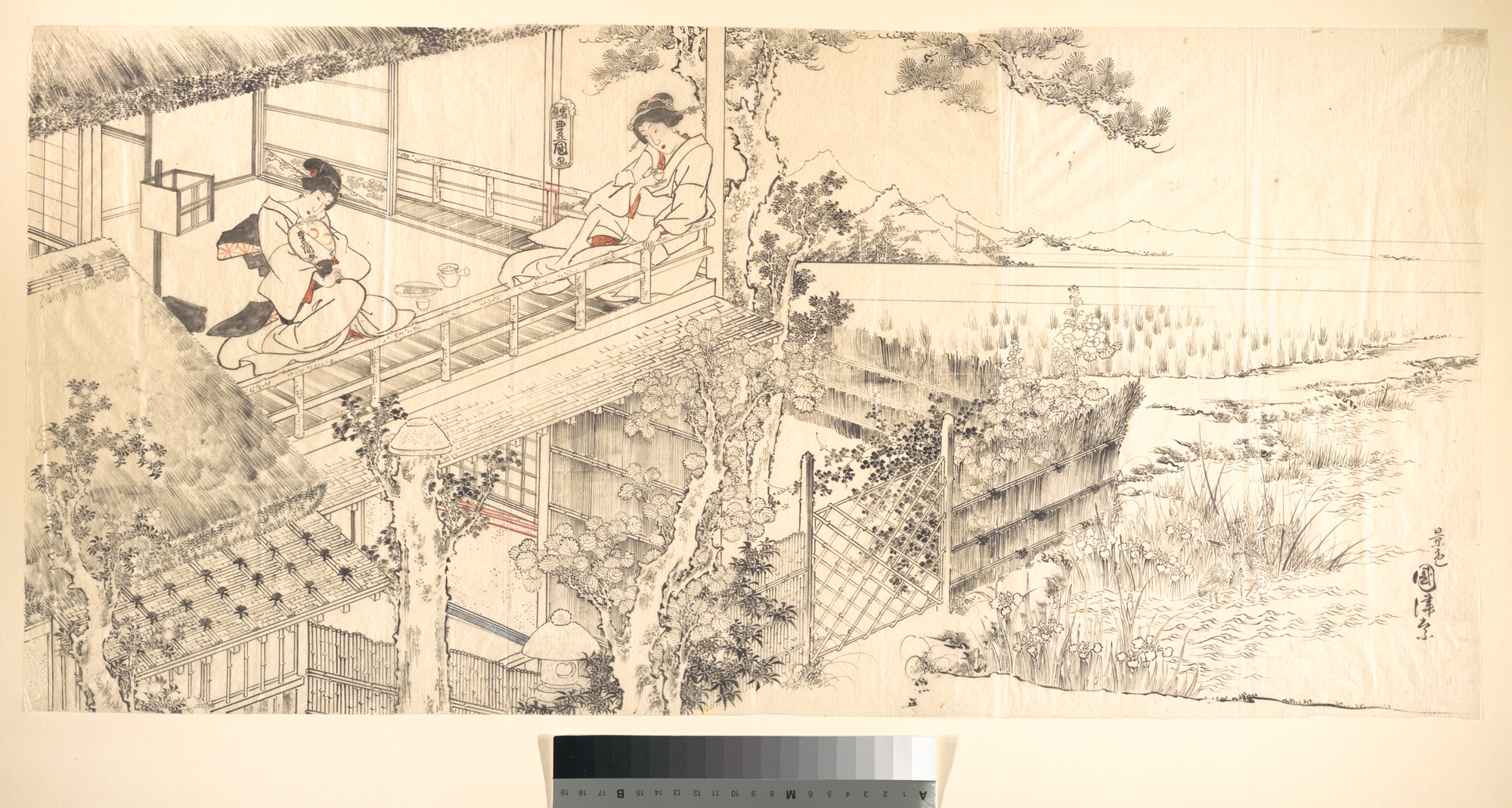
Two Courtesans Enjoying the View from a Teahouse
after 1844
Drawings intended as design for woodblock prints (triptych); ink and color on paper
Frequently Asked Questions
The actors Ichikawa Danjuro VII as Kan Shojo (Sugawara Michizane) and Segawa Kikunojo V as Umeomaru in the play "Sugawara Denju Tenarai Kagami," performed at the Kawarazaki Theater in the ninth month, 1832 was created by Utagawa Kunisada (歌川国貞) in 1832.