
The actors Ichikawa Danjuro VII as Soga Goro and Bando Mitsugoro III as Kobayashi no Asahina
- Date:
- 1827
- Medium:
- Color woodblock print; shikishiban, surimono
- Source:
- Art Institute of Chicago
Description
Dated 1827, this Utagawa Kunisada yakusha-e pairs two giants of the early-nineteenth-century Edo stage: Ichikawa Danjūrō VII as Soga Gorō, the younger of the legendary Soga brothers, and Bandō Mitsugorō III as Kobayashi no Asahina, the warrior whose tug-of-war with Gorō over an obi (sash) became one of kabuki's most iconic confrontations. The Soga play cycle, performed annually in Edo at New Year, anchored the city's theatrical calendar, and the Asahina obi-hiki was a centerpiece scene whose poses and props were instantly recognizable to any Edo theatergoer. Kunisada brings the moment's torque to the sheet through opposed body lines, costume patterning, and the contrasting makeup conventions for righteous brother and antagonist warrior. The Art Institute of Chicago preserves the impression (artwork 81307). The print is an exemplary specimen of Edo ukiyo-e yakusha-e at the height of the Bunsei era, before Kunisada had taken on the Toyokuni III name but already operating as one of Edo's leading recorders of the kabuki stage. It documents both a star pairing and an enduring theatrical motif central to Edo civic culture.
More Prints by Utagawa Kunisada

The actors Ichikawa Danjuro VII as Takamoto no kitsune and Segawa Kikunojo V as Izumi no Chieda-gitsune
1818
Color woodblock print; shikishiban, surimono

Basketry Work: By the Craftsman Ichida Shōshichirō of Naniwa (Kagozaiku Naniwa saikunin Ichida Shōshichirō)
1819
Woodblock print; ink and color on paper
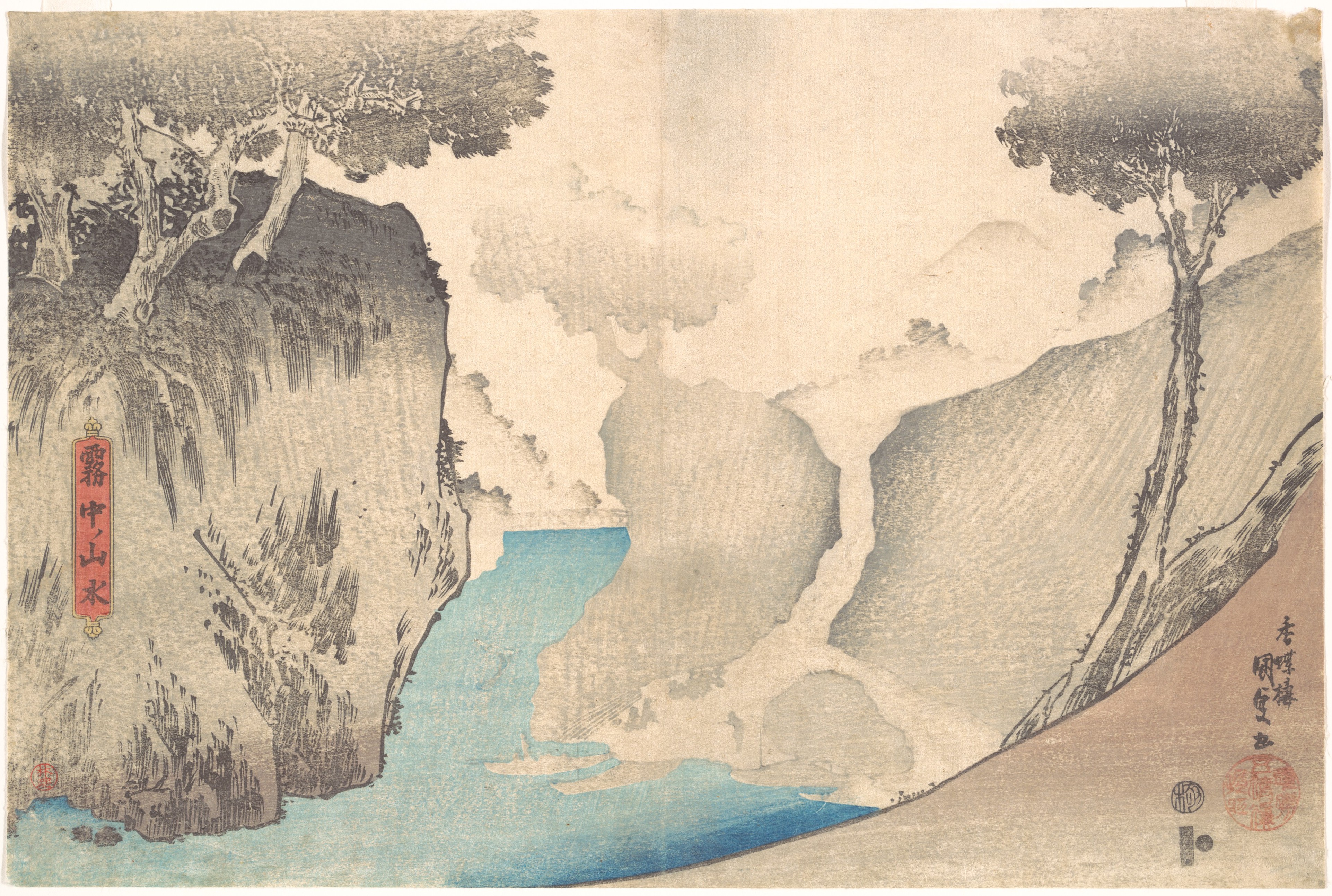
Ochanomizu in the Mist
mid-19th century
Woodblock print; ink and color on paper
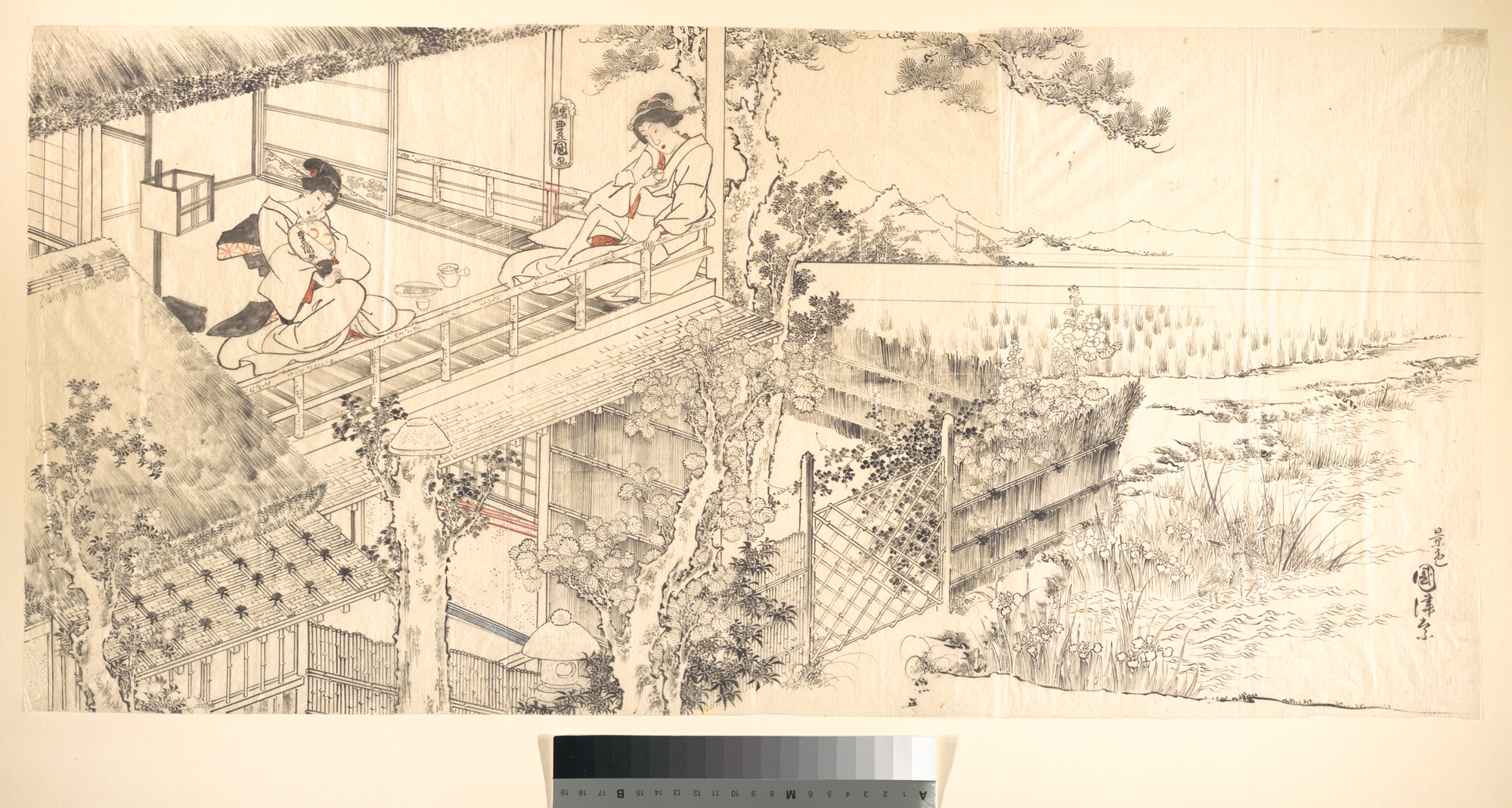
Two Courtesans Enjoying the View from a Teahouse
after 1844
Drawings intended as design for woodblock prints (triptych); ink and color on paper
Frequently Asked Questions
The actors Ichikawa Danjuro VII as Soga Goro and Bando Mitsugoro III as Kobayashi no Asahina was created by Utagawa Kunisada (歌川国貞) in 1827.