
The actors Nakamura Tomijuro II as the wet nurse Shigenoi and Ichimura Uzaemon XIII as Jinenjo no Sankichi in the play "Koi Nyobo Somewake Tazuna," performed at the Ichimura Theater in the fifth month, 1854
- Date:
- 1854
- Medium:
- Color woodblock print; oban diptych
- Source:
- Art Institute of Chicago
Description
This 1854 yakusha-e by Utagawa Kunisada documents a specific performance at the Ichimura Theater, pairing Nakamura Tomijuro II as the wet nurse Shigenoi with Ichimura Uzaemon XIII as Jinenjo no Sankichi in the popular sewamono drama "Koi Nyobo Somewake Tazuna." The play centers on the heartrending recognition scene between Shigenoi, the long-separated mother in service to a samurai household, and the wandering packhorse driver Sankichi who turns out to be her own son. Kunisada's design isolates the two figures in the diagonal embrace that audiences would have recognized instantly, distilling an entire act of theatrical music and dialogue into a single legible image. As the most prolific designer of Edo ukiyo-e in the mid-nineteenth century, Kunisada had spent decades refining the conventions of yakusha-e and was particularly skilled at capturing emotional registers beyond the heroic. Here he leans into the sentimental palette of late Edo melodrama: Shigenoi's high-quality robes contrast with Sankichi's plain travel costume, and the disparity in their material worlds becomes a visual proxy for the social violence that has separated them. The publisher's seal, censors' kiwame marks, and date cartouche, all standard elements of post-Tenpo regulation, are integrated into the elaborate title cartouche, identifying the precise fifth-month production. The Art Institute of Chicago preserves this impression as part of its extensive holdings of Kunisada's actor prints, an archive that illuminates both the theatrical life of late Edo and the visual economy that sustained Edo's print publishing trade.
More Prints by Utagawa Kunisada

The actors Ichikawa Danjuro VII as Takamoto no kitsune and Segawa Kikunojo V as Izumi no Chieda-gitsune
1818
Color woodblock print; shikishiban, surimono

Basketry Work: By the Craftsman Ichida Shōshichirō of Naniwa (Kagozaiku Naniwa saikunin Ichida Shōshichirō)
1819
Woodblock print; ink and color on paper
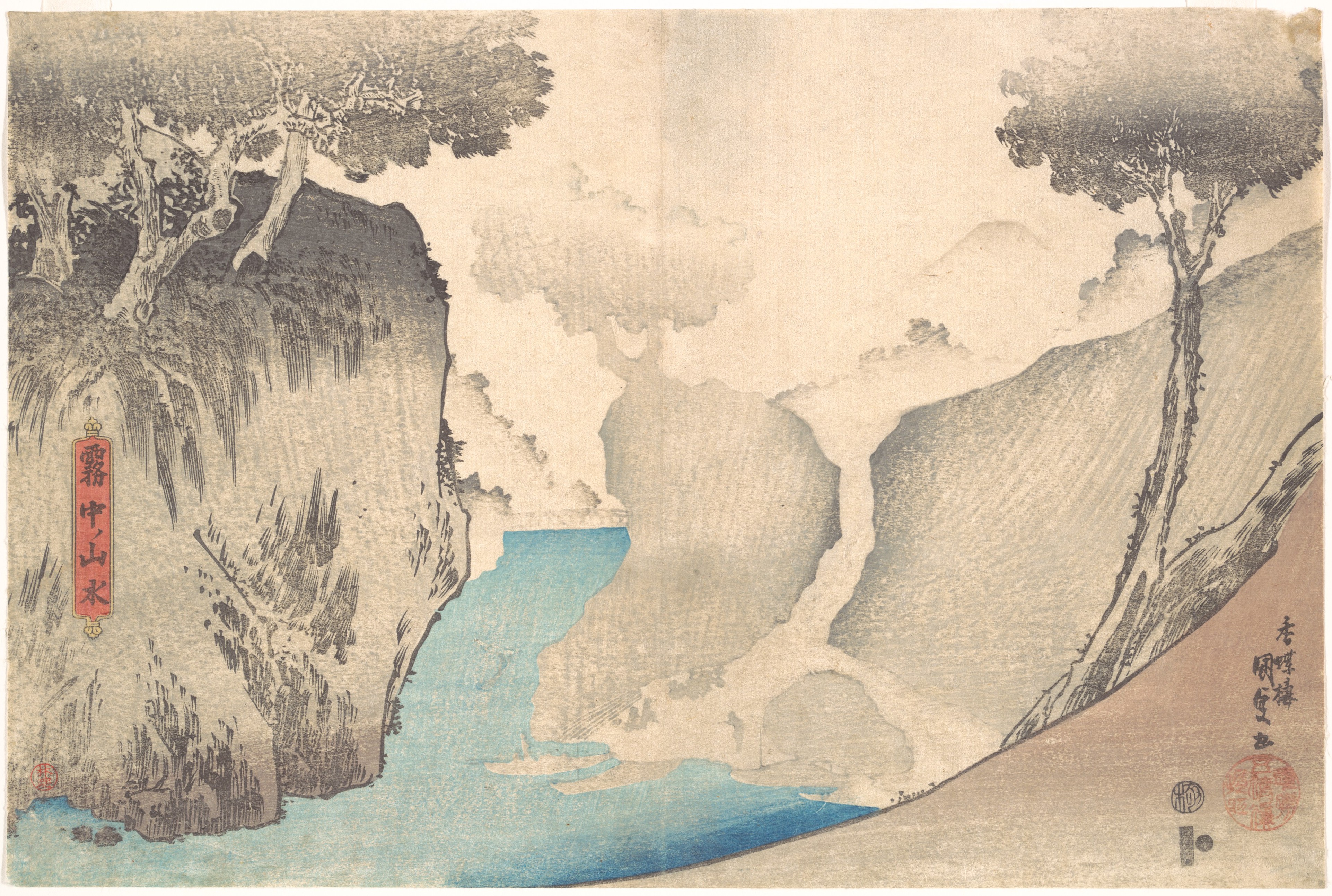
Ochanomizu in the Mist
mid-19th century
Woodblock print; ink and color on paper
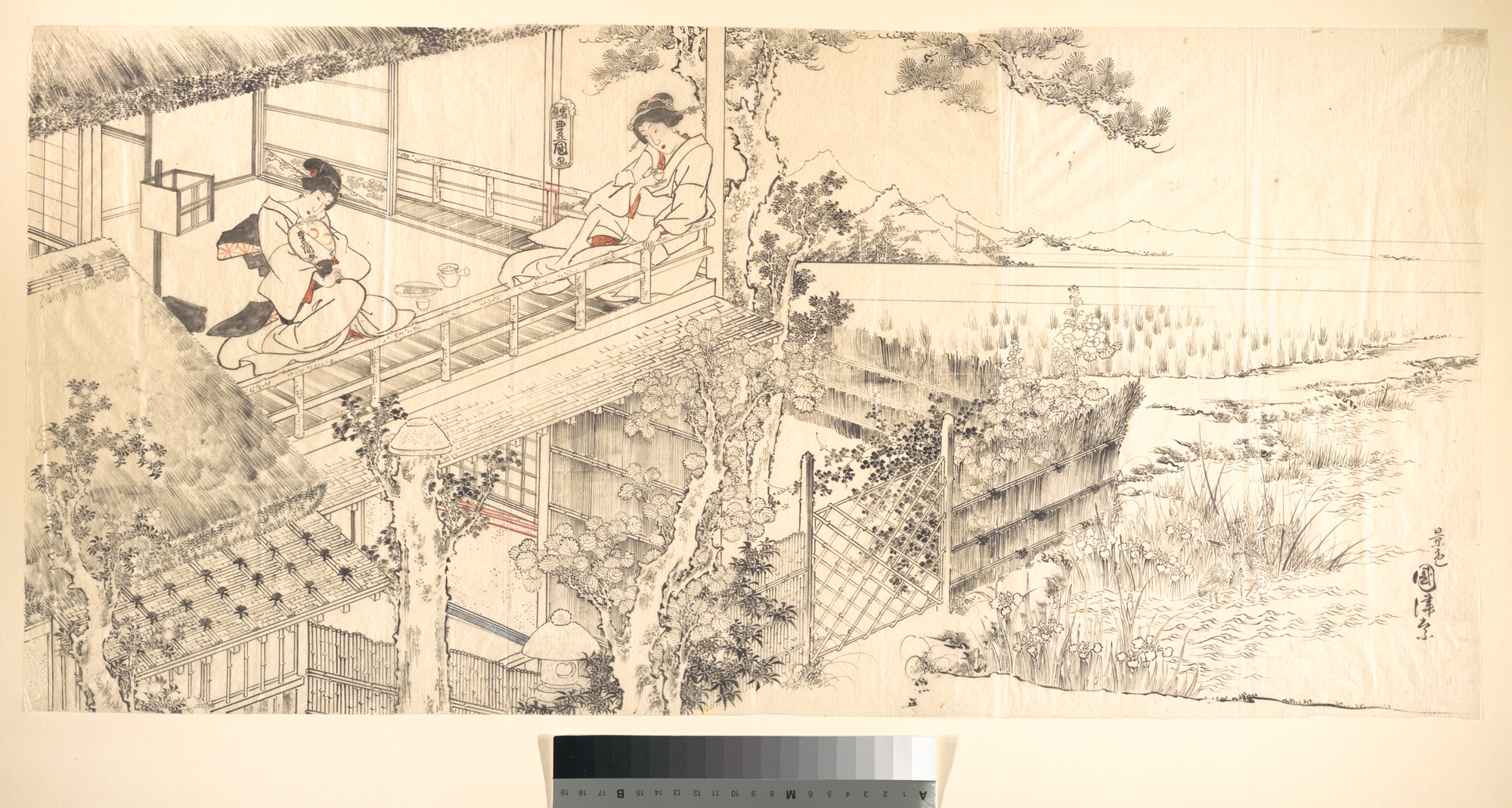
Two Courtesans Enjoying the View from a Teahouse
after 1844
Drawings intended as design for woodblock prints (triptych); ink and color on paper
Frequently Asked Questions
The actors Nakamura Tomijuro II as the wet nurse Shigenoi and Ichimura Uzaemon XIII as Jinenjo no Sankichi in the play "Koi Nyobo Somewake Tazuna," performed at the Ichimura Theater in the fifth month, 1854 was created by Utagawa Kunisada (歌川国貞) in 1854.