
The Empress Jingu and the Minister Takeuchi
- Date:
- 1844-62
- Medium:
- Source:
- Victoria and Albert Museum
Description
The Empress Jingū and the Minister Takeuchi is an 1844 woodblock print by Utagawa Kunisada, executed during the period immediately following the Tenpō Reforms when designers had to navigate restrictions on overt depictions of courtesans and contemporary actors. Subjects drawn from legendary Japanese history offered a politically safe register, and the pairing of Empress Jingū with her loyal minister Takeuchi no Sukune was a familiar one in late Edo ukiyo-e. According to the traditional chronicles, Jingū led a campaign across the sea to Korea while carrying the future Emperor Ōjin, and Takeuchi appears in many legends as a preternaturally long-lived counsellor who supported her regency. Kunisada treats them as monumental figures within a vertical composition, deploying the heavy black outlines and saturated reds, indigos and greens characteristic of mid-1840s Edo printmaking. The faces follow the broad-cheeked, strong-jawed manner he had developed for warrior and historical subjects, distinct from the softer treatment he reserved for bijin. As a leading Utagawa-school designer, Kunisada produced many such legend-based sheets as cover for what was effectively yakusha-e: the postures and gestures often quote specific kabuki performances, and Edo audiences would have read the figures simultaneously as ancient heroes and as the contemporary actors who played them. The Victoria and Albert Museum holds the impression and records the date and museum number that anchor it within his 1844 production, when the censor's seal system was tightening publishers' margins. The print thus stands as both a piece of visual storytelling about a foundational national legend and as a document of how Edo ukiyo-e adapted to regulatory pressure in the years after the reforms.
More Prints by Utagawa Kunisada

The actors Ichikawa Danjuro VII as Takamoto no kitsune and Segawa Kikunojo V as Izumi no Chieda-gitsune
1818
Color woodblock print; shikishiban, surimono

Basketry Work: By the Craftsman Ichida Shōshichirō of Naniwa (Kagozaiku Naniwa saikunin Ichida Shōshichirō)
1819
Woodblock print; ink and color on paper
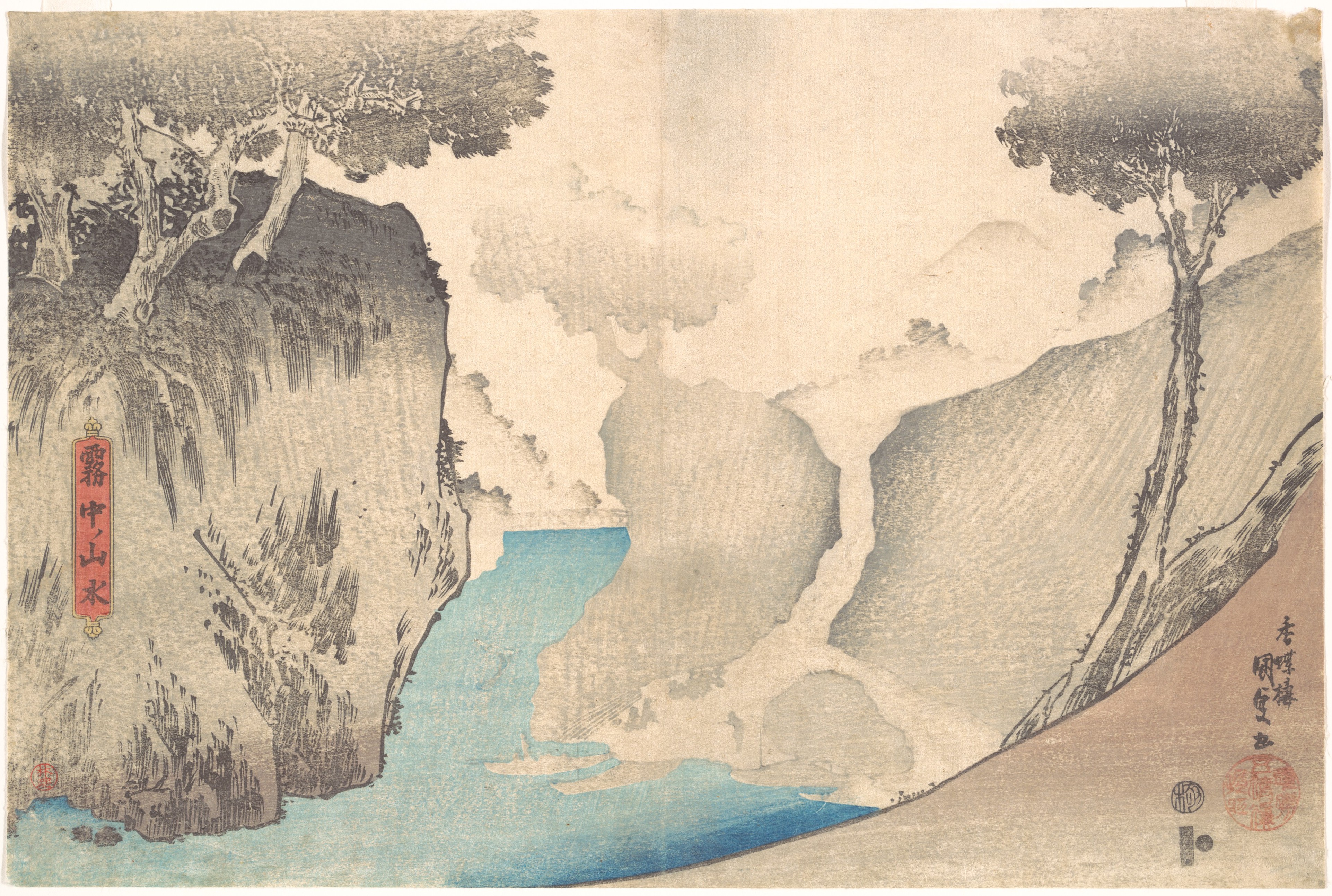
Ochanomizu in the Mist
mid-19th century
Woodblock print; ink and color on paper
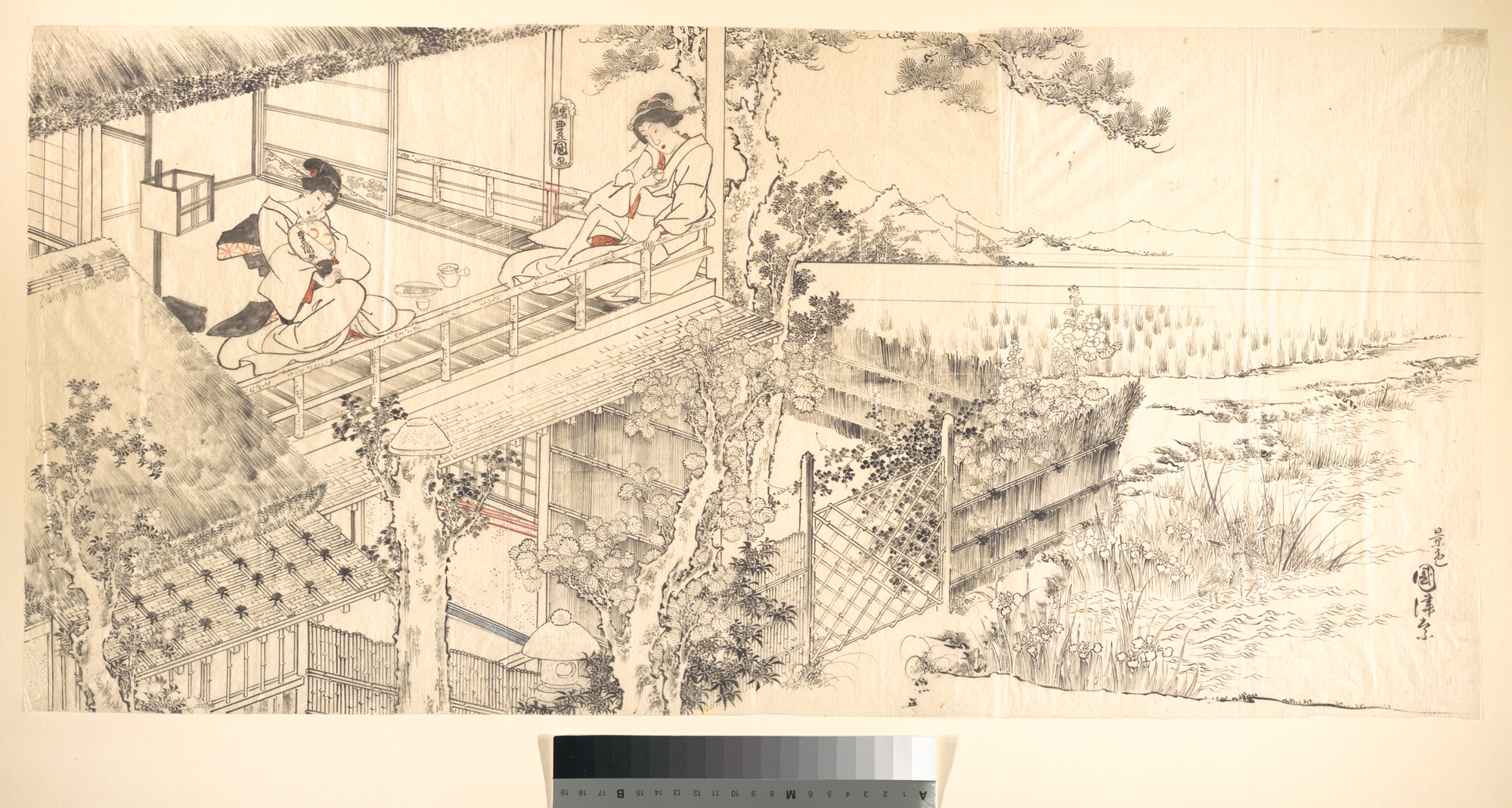
Two Courtesans Enjoying the View from a Teahouse
after 1844
Drawings intended as design for woodblock prints (triptych); ink and color on paper
Frequently Asked Questions
The Empress Jingu and the Minister Takeuchi was created by Utagawa Kunisada (歌川国貞) in 1844-62.