
The Thirty-Six Immortals of Poetry as Kabuki Actors (Yakusha sanjūrokkasen) 役者三十六歌仙
- Date:
- 1835, first month (Tempō 6)
- Medium:
- Woodblock printed book; ink and color on paper
- Source:
- Metropolitan Museum of Art
Description
"The Thirty-Six Immortals of Poetry as Kabuki Actors (Yakusha Sanjurokkasen)," a series Utagawa Kunisada began in 1835, is one of the most accomplished mitate projects in Edo ukiyo-e, mapping the canonical list of thirty-six classical Japanese poets (the Sanjurokkasen) onto leading contemporary kabuki actors. The classical Sanjurokkasen, first compiled by Fujiwara no Kinto in the early eleventh century, had become a touchstone of court poetry, frequently illustrated in painting, manuscript, and print. By translating the immortals into actors, Kunisada folds an ancient literary canon into the modern celebrity culture of Edo: each sheet pairs a kabuki star, drawn with Kunisada's full yakusha-e vocabulary of facial likeness and costume detail, with a classical poet whose verse appears in the print's cartouche. The result is a series that pleases simultaneously on three registers: as actor portraiture, as poetic anthology, and as cultural argument, since it implicitly claims for kabuki performance the gravitas of court verse. Kunisada's compositional decisions, half-length figures, brocade-pattern cartouches, calligraphic verse panels, draw on the surimono tradition while remaining within the price range of standard ukiyo-e production. The Metropolitan Museum of Art preserves portions of this series within its substantial collection of Kunisada's serial yakusha-e, where it documents the artist's command of mitate compositions and his role in elevating the social standing of kabuki within the broader cultural hierarchy of late Edo Japan.
More Prints by Utagawa Kunisada

The actors Ichikawa Danjuro VII as Takamoto no kitsune and Segawa Kikunojo V as Izumi no Chieda-gitsune
1818
Color woodblock print; shikishiban, surimono

Basketry Work: By the Craftsman Ichida Shōshichirō of Naniwa (Kagozaiku Naniwa saikunin Ichida Shōshichirō)
1819
Woodblock print; ink and color on paper
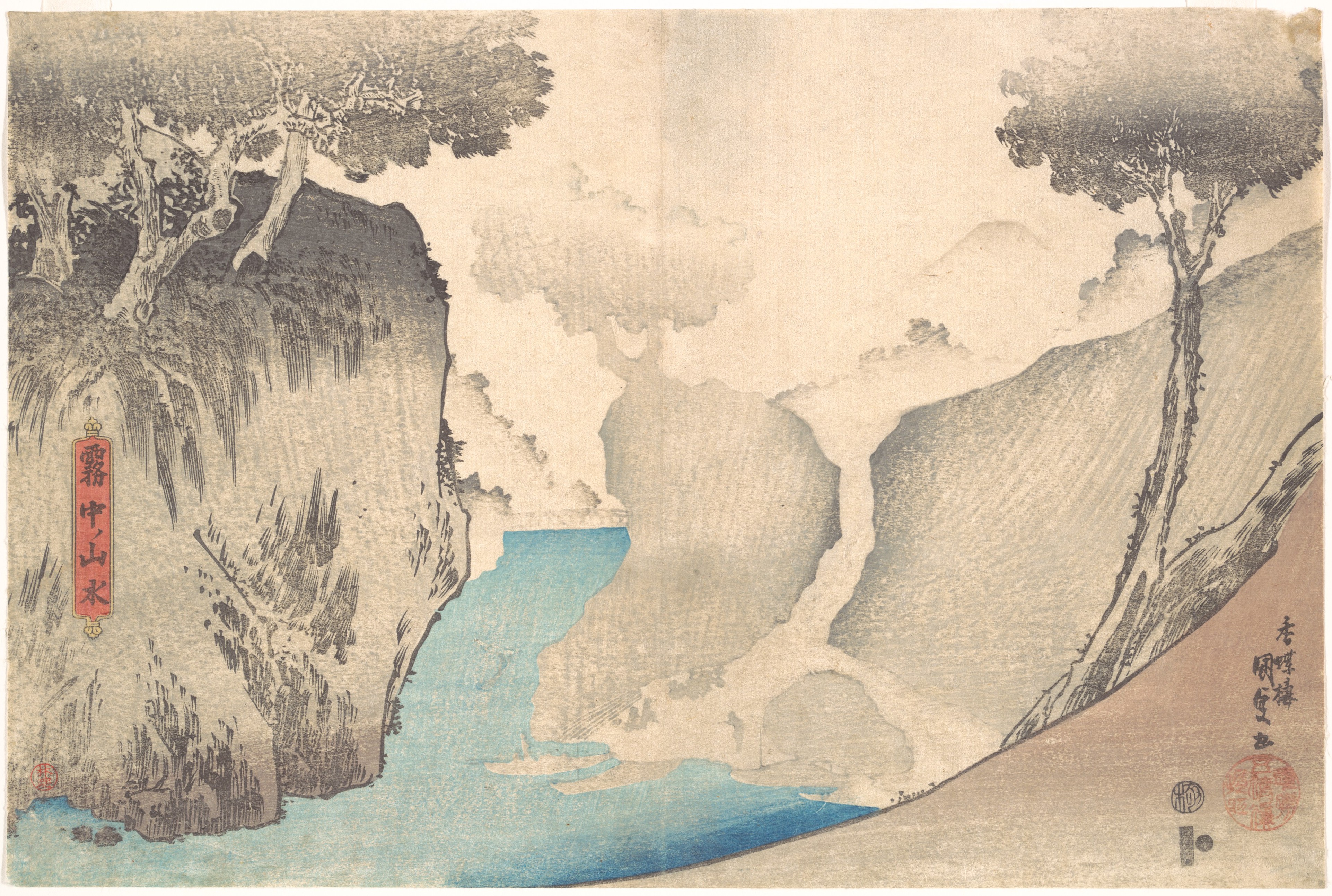
Ochanomizu in the Mist
mid-19th century
Woodblock print; ink and color on paper
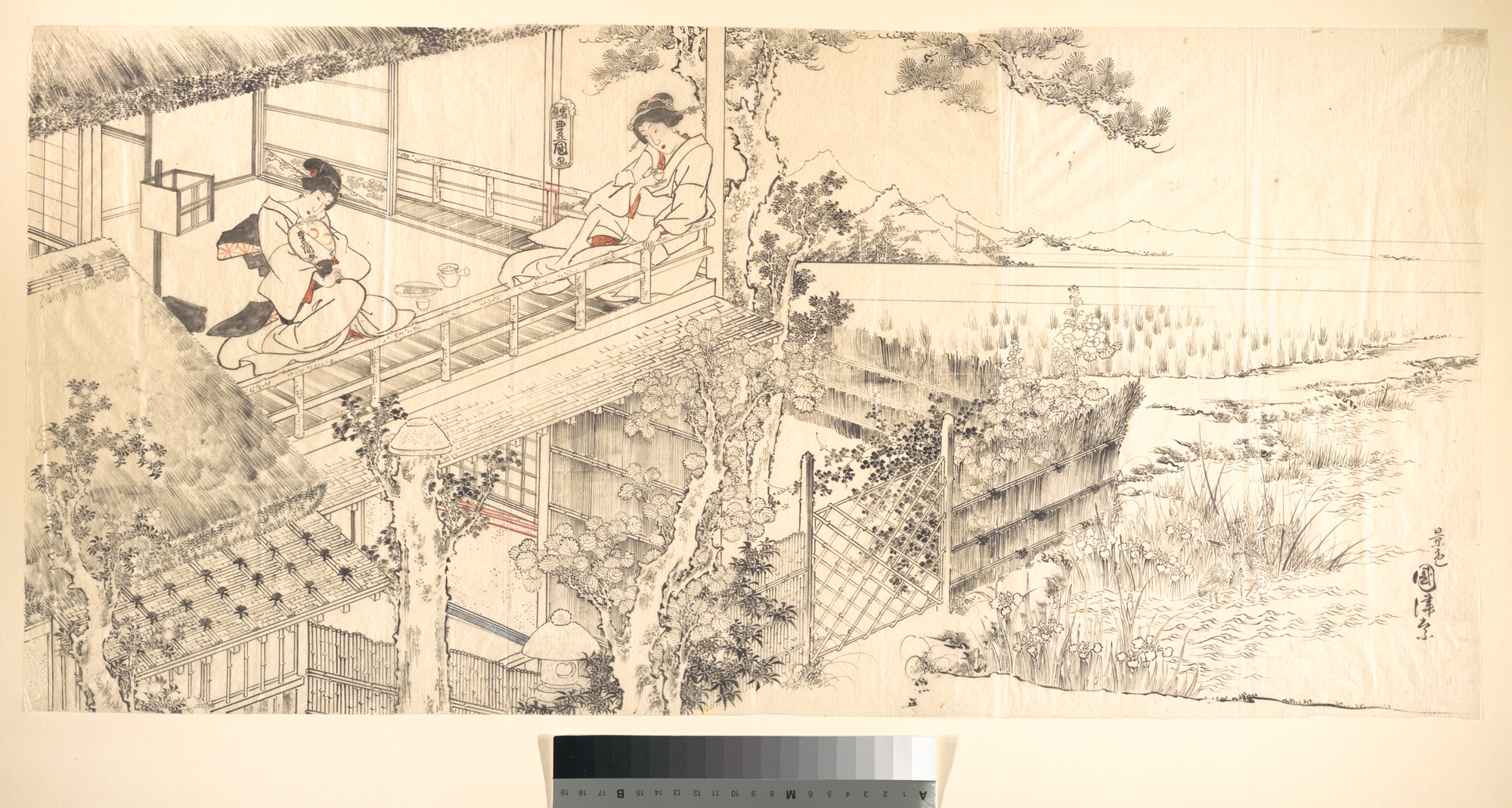
Two Courtesans Enjoying the View from a Teahouse
after 1844
Drawings intended as design for woodblock prints (triptych); ink and color on paper
Frequently Asked Questions
The Thirty-Six Immortals of Poetry as Kabuki Actors (Yakusha sanjūrokkasen) 役者三十六歌仙 was created by Utagawa Kunisada (歌川国貞) in 1835, first month (Tempō 6).