
Three actors and a puppet
- Date:
- late 1810s
- Medium:
- Color woodblock print; shikishiban, surimono
- Source:
- Art Institute of Chicago
Description
"Three actors and a puppet" is a late-1810s color woodblock print by Utagawa Kunisada in the shikishiban surimono format, held in the Art Institute of Chicago. The print belongs to Kunisada's early career, when he had completed his apprenticeship under Toyokuni I and was establishing himself as one of Edo's most sought-after designers for both commercial actor prints and the privately commissioned surimono trade. Shikishiban surimono were typically commissioned by poetry circles for New Year's distribution and celebrated literate patronage, theatrical fandom, and the social bonds of Edo's cultivated middle class. The subject of three actors with a puppet places the print in the rich Edo-period dialogue between kabuki and ningyo joruri (the puppet theater that became the genre we know as bunraku); many kabuki plays originated as puppet plays, and the visual play between live actor and puppet was a sophisticated theme for surimono audiences. The Art Institute of Chicago's example shows Kunisada's early facility with figure composition: elegant lines, refined coloring, and the small-edition luxury of surimono including likely metallic pigments and embossing. As an early Kunisada surimono in a major institutional collection, the print is valuable as a record of his Bunka- and Bunsei-era style before his explosion into mass-market actor-print production in the 1820s and 1830s.
More Prints by Utagawa Kunisada

The actors Ichikawa Danjuro VII as Takamoto no kitsune and Segawa Kikunojo V as Izumi no Chieda-gitsune
1818
Color woodblock print; shikishiban, surimono

Basketry Work: By the Craftsman Ichida Shōshichirō of Naniwa (Kagozaiku Naniwa saikunin Ichida Shōshichirō)
1819
Woodblock print; ink and color on paper
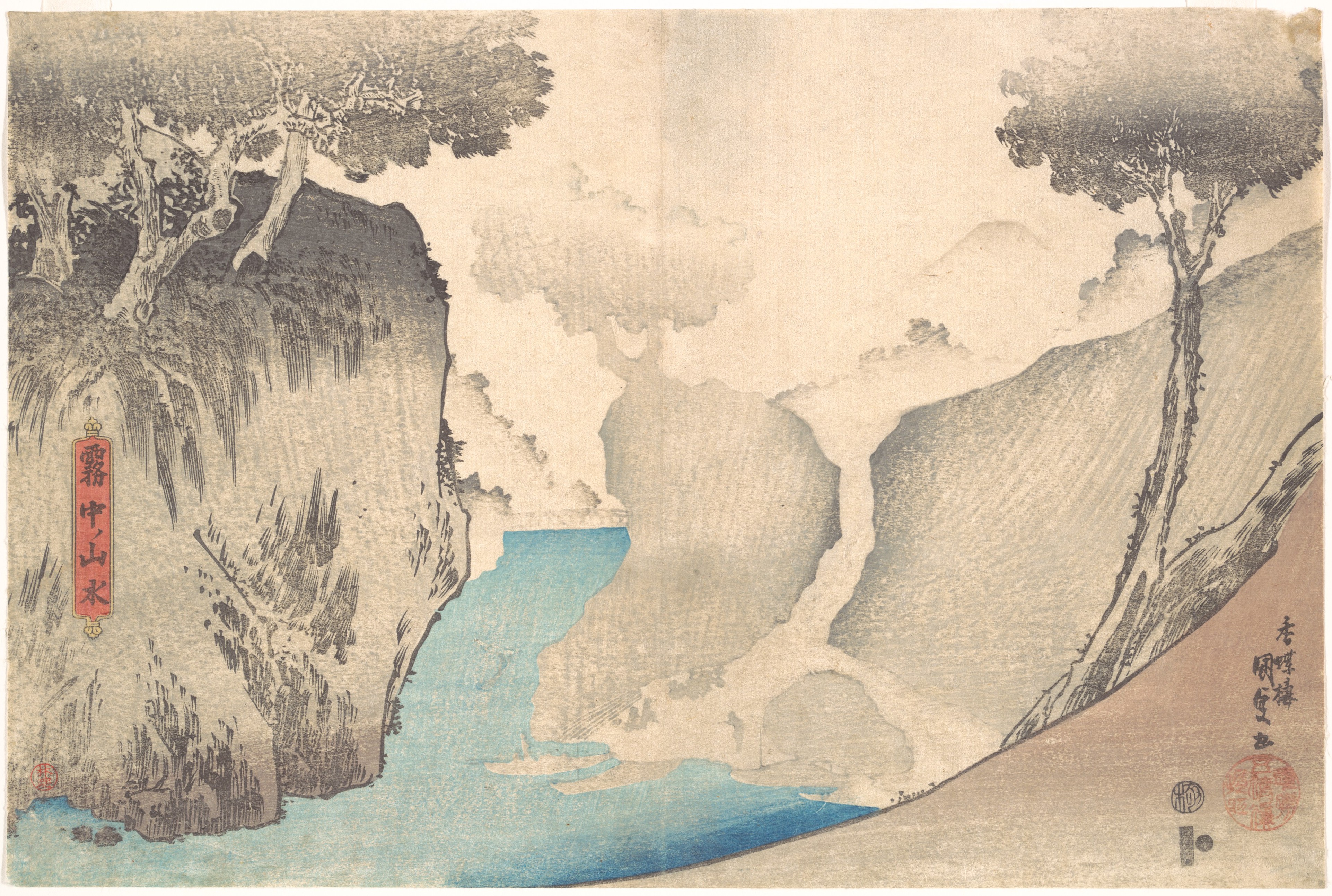
Ochanomizu in the Mist
mid-19th century
Woodblock print; ink and color on paper
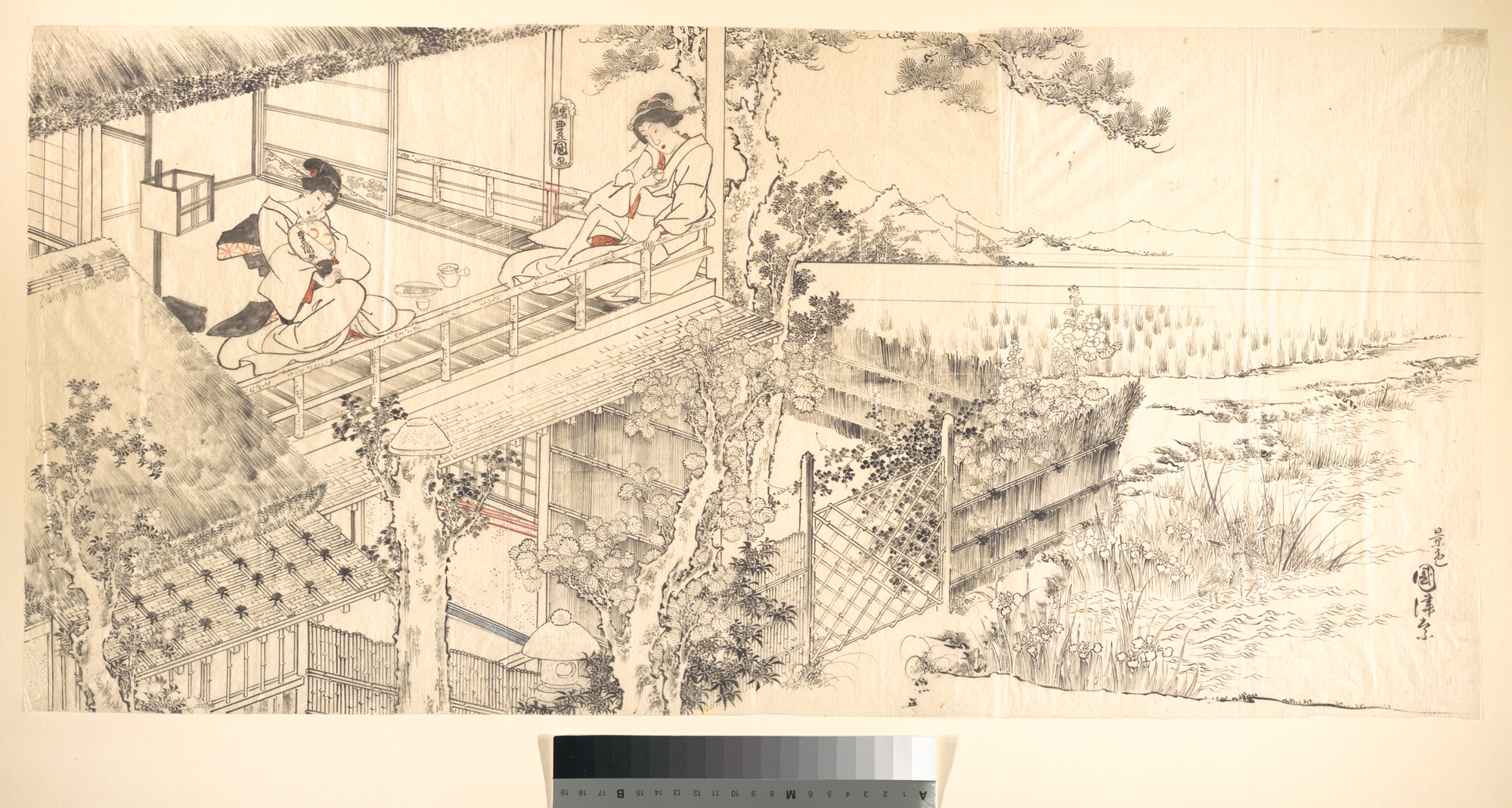
Two Courtesans Enjoying the View from a Teahouse
after 1844
Drawings intended as design for woodblock prints (triptych); ink and color on paper
Frequently Asked Questions
Three actors and a puppet was created by Utagawa Kunisada (歌川国貞) in late 1810s.