
Umegae and Genta in the Bell of Hell Scene from Jо̄ruri Drama Hiragana Seisuiki, New Edition, Part I
- Date:
- ca.1830-35
- Medium:
- Source:
- Victoria and Albert Museum
Description
Umegae and Genta in the Bell of Hell Scene, from the jōruri drama Hiragana Seisuiki, designed by Utagawa Kunisada around 1830, illustrates one of the most poignant moments in the Edo theatrical repertoire. Hiragana Seisuiki, a Bunraku puppet play later adapted for kabuki, follows the doomed lovers Kajiwara Genta and the courtesan Umegae through the Genpei War period of the late twelfth century. In the famous Kane no I no dan (Bell at the Well) scene, Umegae strikes the well at the inn of Fukushima with a ladle, hoping it will produce gold like the bell of hell, in order to fund Genta's military equipment; her devotion is rewarded when his mother throws down a purse of money. The scene became a touchstone for ideas about female loyalty in Edo popular culture and was illustrated repeatedly by ukiyo-e designers. Kunisada's 1830 version belongs to a productive middle period of his career and renders the moment with the controlled drama for which his yakusha-e and theater prints were valued. The figures are likely identified by actor cartouches as well as role names, making the print simultaneously a commemoration of a specific stage performance and an enduring narrative image. The Victoria and Albert Museum preserves this impression as O121758. The print sits within Kunisada's broader practice of translating jōruri and kabuki scenes into commercial Edo ukiyo-e prints that fans collected as theater closed and reopened across the season.
More Prints by Utagawa Kunisada

The actors Ichikawa Danjuro VII as Takamoto no kitsune and Segawa Kikunojo V as Izumi no Chieda-gitsune
1818
Color woodblock print; shikishiban, surimono

Basketry Work: By the Craftsman Ichida Shōshichirō of Naniwa (Kagozaiku Naniwa saikunin Ichida Shōshichirō)
1819
Woodblock print; ink and color on paper
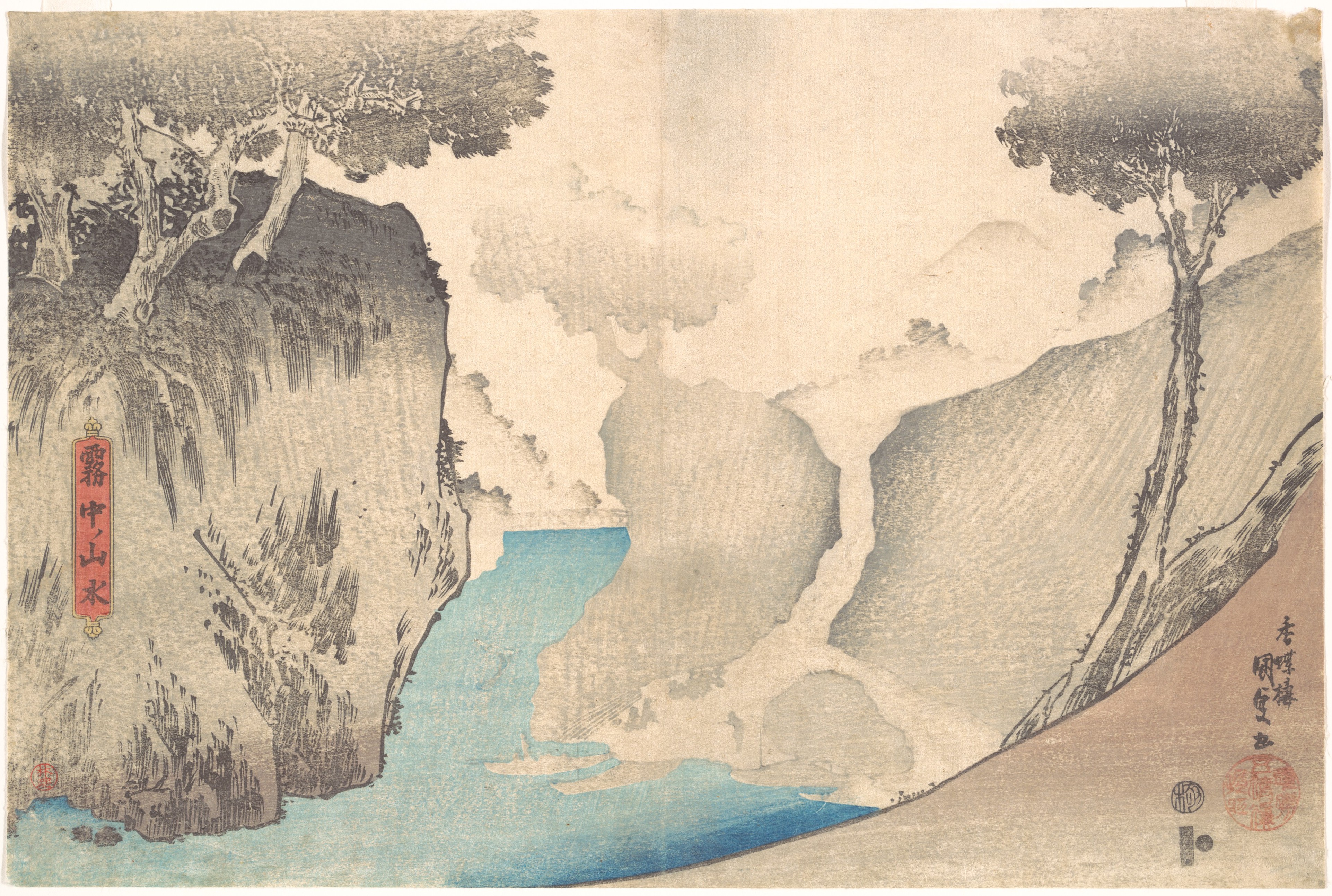
Ochanomizu in the Mist
mid-19th century
Woodblock print; ink and color on paper
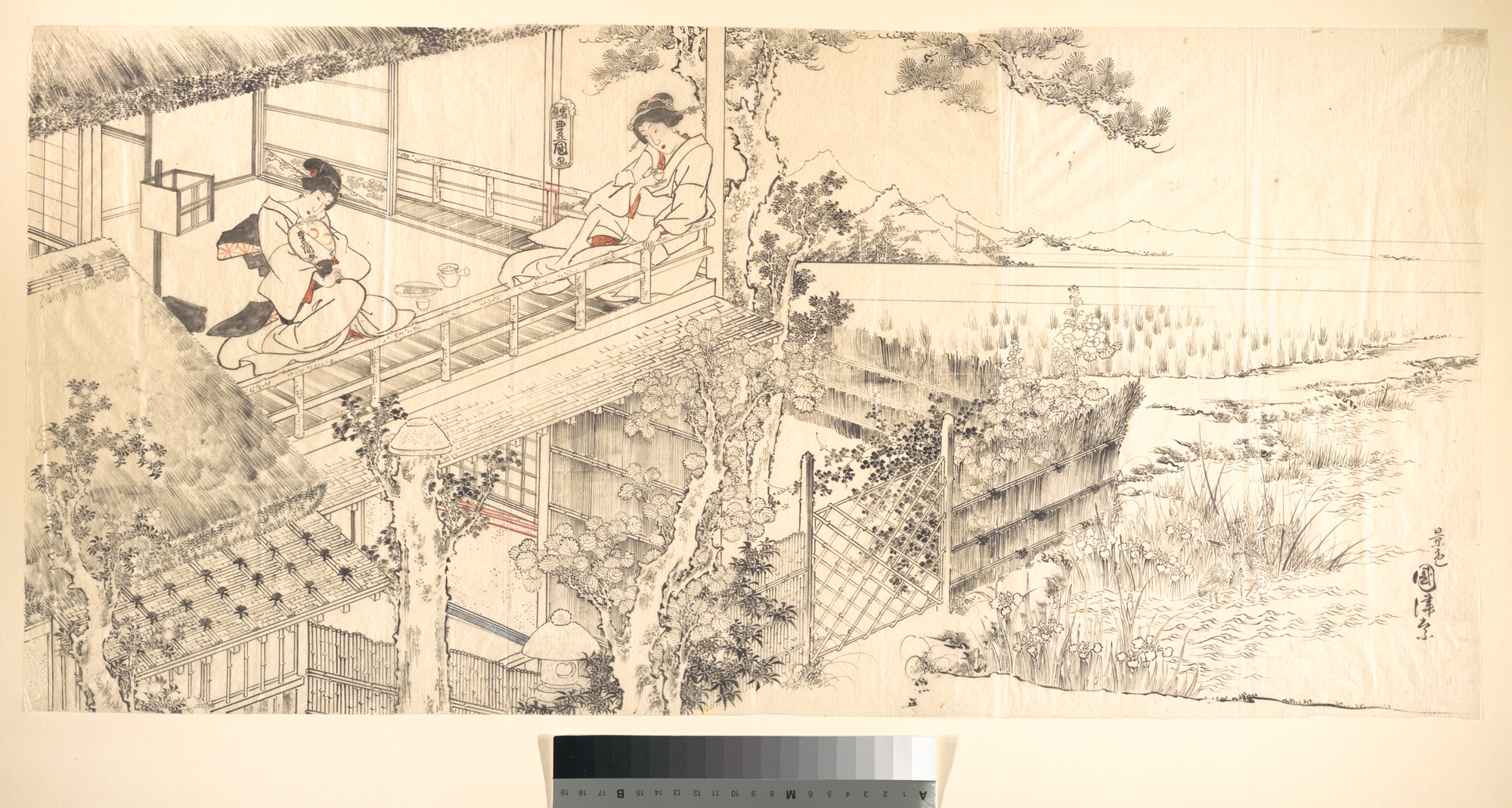
Two Courtesans Enjoying the View from a Teahouse
after 1844
Drawings intended as design for woodblock prints (triptych); ink and color on paper
Frequently Asked Questions
Umegae and Genta in the Bell of Hell Scene from Jо̄ruri Drama Hiragana Seisuiki, New Edition, Part I was created by Utagawa Kunisada (歌川国貞) in ca.1830-35.