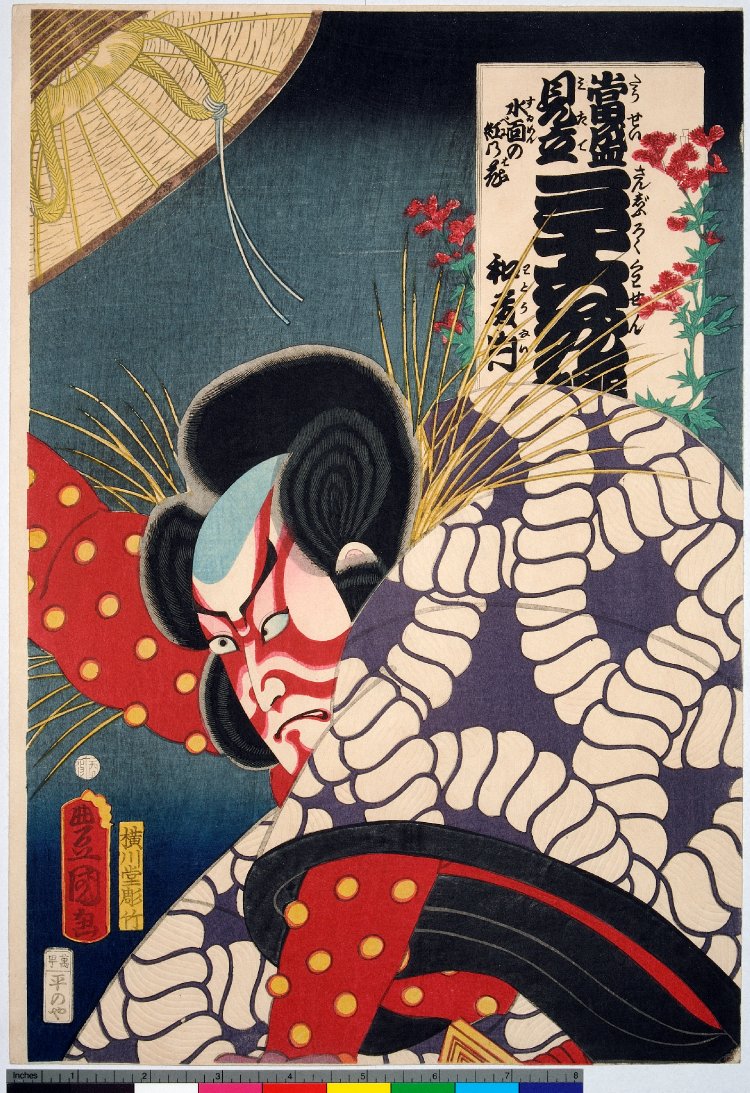
Watonai, Suimen no beninohana (Watonai, Safflower) / Tosei mitate sanju-rokkasen 當盛見立 三十六花撰 (Contemporary Kabuki Actors Likened to Thirty-Six Flowers (Immortals of Poetry))
- Source:
- ukiyo-e.org
Description
Watonai, Suimen no beninohana (Watonai, Safflower) is a yakusha-e print by Utagawa Kunisada, the dominant designer of Edo ukiyo-e actor portraiture during the first half of the nineteenth century. The sheet belongs to the series Tosei mitate sanju-rokkasen (Contemporary Kabuki Actors Likened to Thirty-Six Flowers / Immortals of Poetry), a mitate scheme in which Kunisada pairs each star actor of his day with one of the classical thirty-six poetic immortals and assigns a corresponding flower as a visual emblem. Here the actor takes the role of Watonai, the half-Chinese, half-Japanese hero of Chikamatsu Monzaemon's puppet and kabuki drama Kokusenya kassen (The Battles of Coxinga), and the assigned bloom is the safflower (beninohana), the source of crimson dye whose hue echoes the heroic intensity associated with this aragoto-flavoured role. Kunisada concentrates the design on a half-length figure with the bold facial expression, exaggerated brows, and patterned costume that define his mature actor manner, while the flower cartouche identifies the poetic pairing and the title cartouche carries the series name in elegant calligraphy. The print exemplifies the Utagawa school's role in keeping kabuki celebrity culture circulating across Edo through woodblock prints, and it shows how Kunisada layered classical literary allusion onto popular theatre imagery to satisfy connoisseurs and theatre fans alike. The impression catalogued at ukiyo-e.org through the British Museum's records preserves the sheet for study of Kunisada's mitate practice. Source: ukiyo-e.org / British Museum (https://ukiyo-e.org/image/bm/AN00431561_001_l).
More Prints by Utagawa Kunisada

The actors Ichikawa Danjuro VII as Takamoto no kitsune and Segawa Kikunojo V as Izumi no Chieda-gitsune
1818
Color woodblock print; shikishiban, surimono

Basketry Work: By the Craftsman Ichida Shōshichirō of Naniwa (Kagozaiku Naniwa saikunin Ichida Shōshichirō)
1819
Woodblock print; ink and color on paper
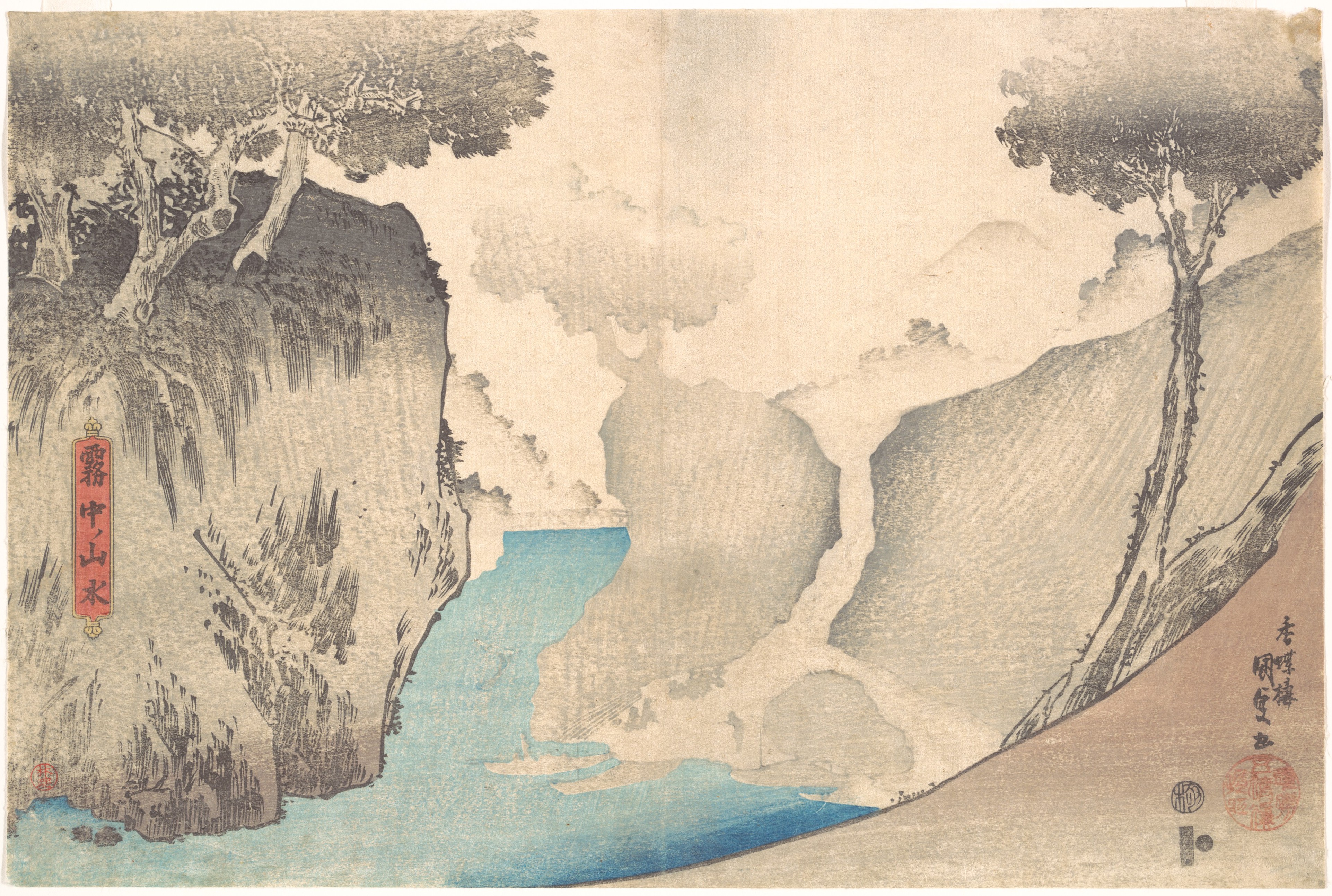
Ochanomizu in the Mist
mid-19th century
Woodblock print; ink and color on paper
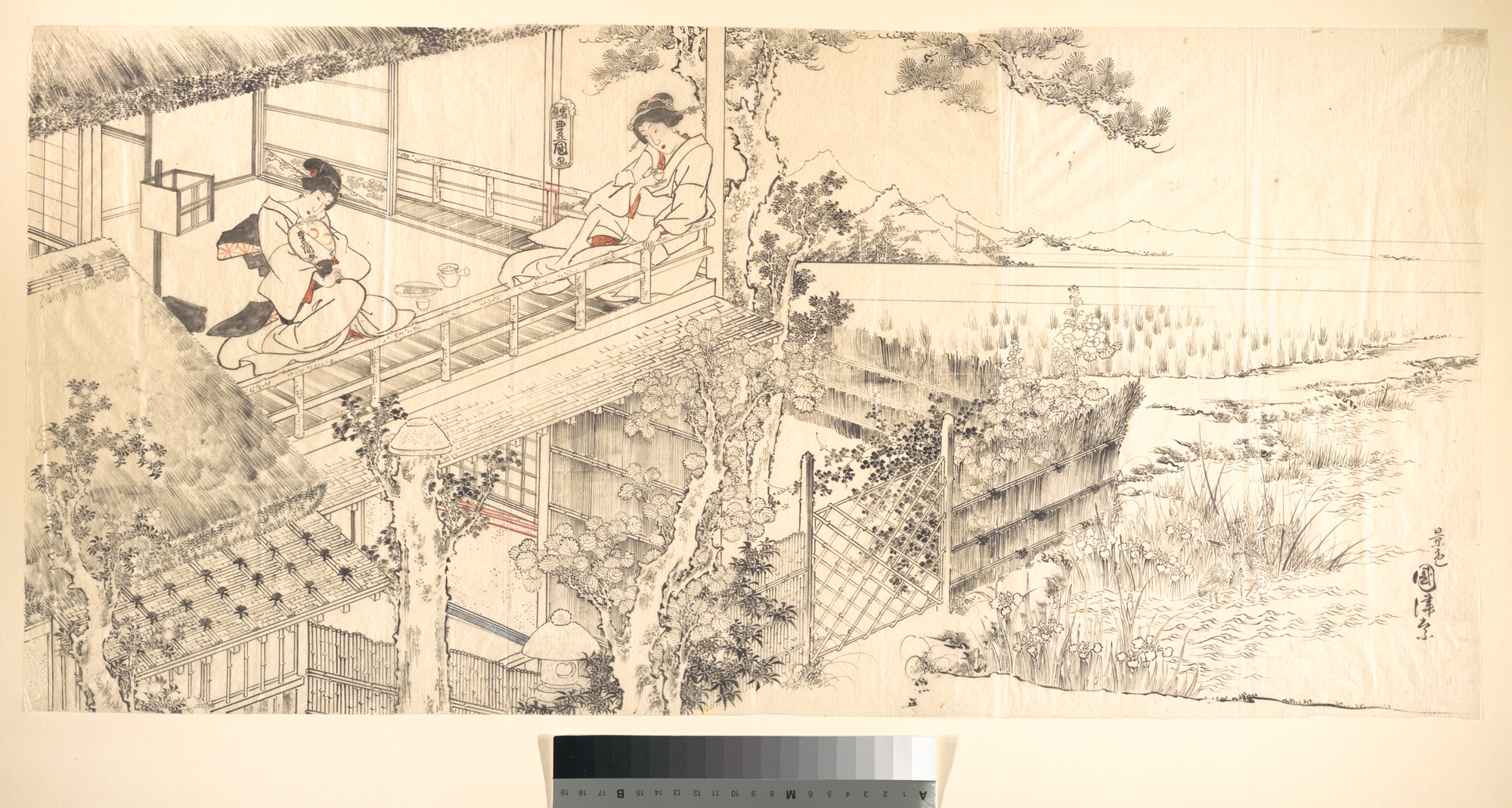
Two Courtesans Enjoying the View from a Teahouse
after 1844
Drawings intended as design for woodblock prints (triptych); ink and color on paper
More Birds & Flowers Prints
Frequently Asked Questions
Watonai, Suimen no beninohana (Watonai, Safflower) / Tosei mitate sanju-rokkasen 當盛見立 三十六花撰 (Contemporary Kabuki Actors Likened to Thirty-Six Flowers (Immortals of Poetry)) was created by Utagawa Kunisada (歌川国貞).
Watonai, Suimen no beninohana (Watonai, Safflower) / Tosei mitate sanju-rokkasen 當盛見立 三十六花撰 (Contemporary Kabuki Actors Likened to Thirty-Six Flowers (Immortals of Poetry)) depicts birds & flowers.