
Yokkaichi (Yokkaichi)
- Medium:
- Source:
- Victoria and Albert Museum
Description
Yokkaichi by Utagawa Kunisada depicts the Tōkaidō post station at Yokkaichi in Ise Province, the forty-third of the fifty-three stations between Edo and Kyoto. Yokkaichi was a market town whose name (literally Fourth Day Market) reflected its origins as a regular trading hub on the fourth day of each month, and travelers passing through it often had business at the nearby Ise Shrine. Where Hiroshige's celebrated 1830s Tōkaidō landscapes show Yokkaichi as a windswept stretch of road with a hurrying traveler, Kunisada's contributions to the Tōkaidō genre typically reframe the station around a single figure, often a woman in fashionable contemporary dress, with the place name and a poetic cartouche identifying the location. This approach reflects Kunisada's instincts as the leading Edo ukiyo-e designer of his generation: figures, costumes, and personalities anchored his commercial appeal, and landscape conventions were grafted onto a fundamentally portrait-oriented practice. The Victoria and Albert Museum preserves this impression as O426073. Kunisada produced multiple Tōkaidō series across his career, sometimes in collaboration with other Utagawa-school artists, and these prints together formed a substantial alternative to Hiroshige's dominant landscape franchise. As a Yokkaichi sheet, the print records both the geography of the highway and the way nineteenth-century Edo readers experienced famous places through the lens of fashionable figures.
More Prints by Utagawa Kunisada

The actors Ichikawa Danjuro VII as Takamoto no kitsune and Segawa Kikunojo V as Izumi no Chieda-gitsune
1818
Color woodblock print; shikishiban, surimono

Basketry Work: By the Craftsman Ichida Shōshichirō of Naniwa (Kagozaiku Naniwa saikunin Ichida Shōshichirō)
1819
Woodblock print; ink and color on paper
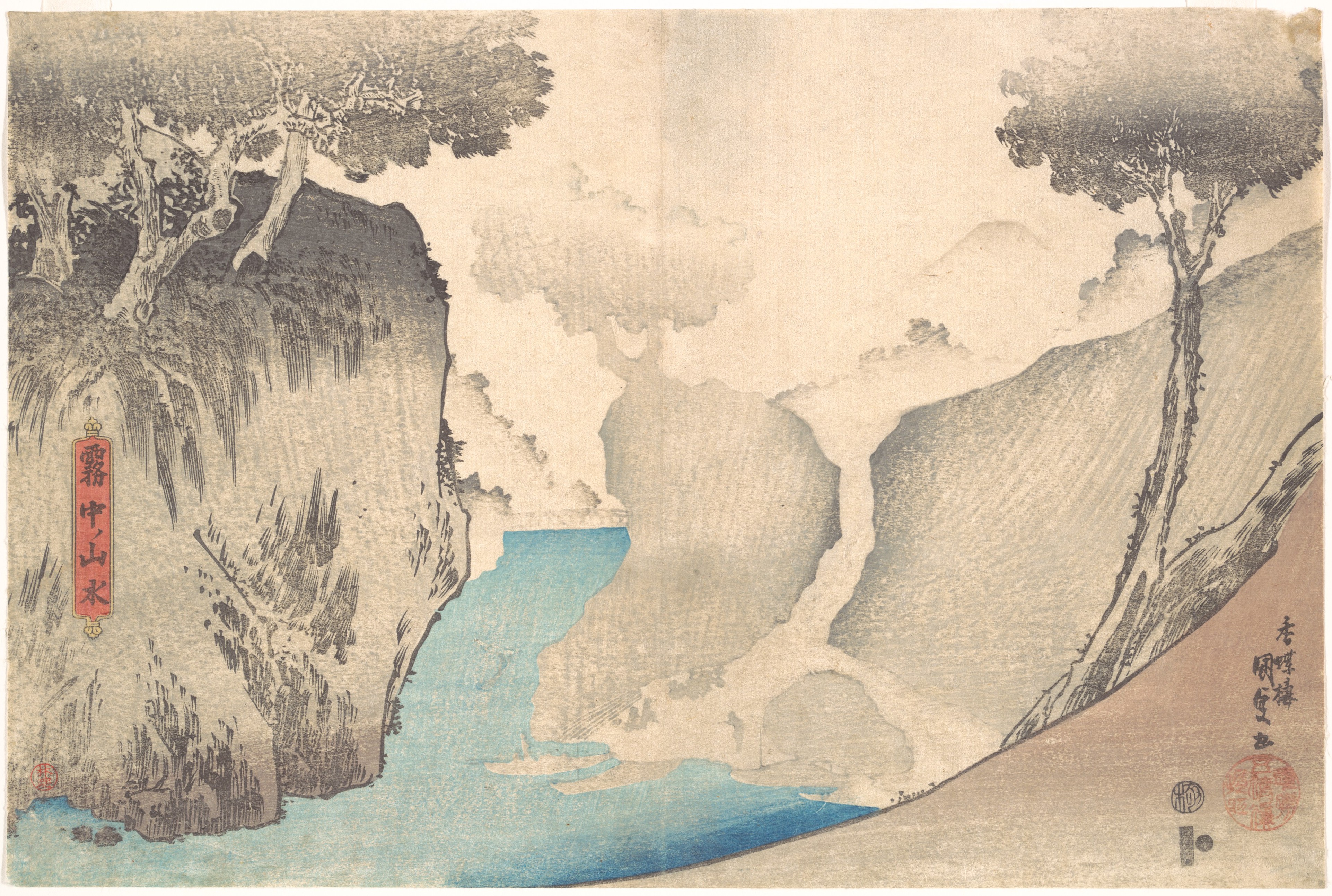
Ochanomizu in the Mist
mid-19th century
Woodblock print; ink and color on paper
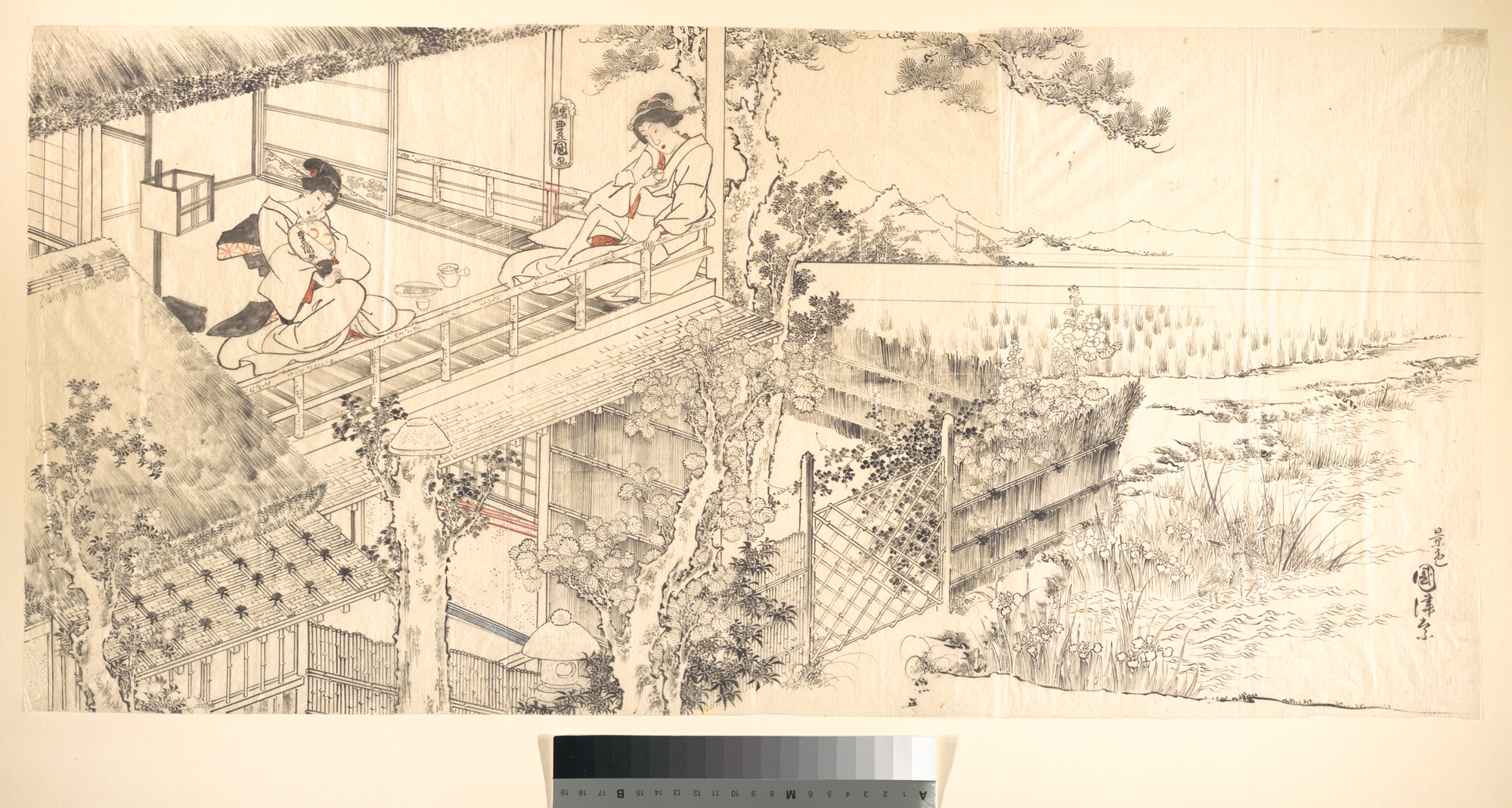
Two Courtesans Enjoying the View from a Teahouse
after 1844
Drawings intended as design for woodblock prints (triptych); ink and color on paper
Frequently Asked Questions
Yokkaichi (Yokkaichi) was created by Utagawa Kunisada (歌川国貞).