
Yoshida (Yoshida)
- Medium:
- Source:
- Victoria and Albert Museum
Description
Yoshida is a woodblock print attributed to Utagawa Kunisada in the Victoria and Albert Museum collection, identified by its station name from the Tokaido road system that supplied generations of Edo ukiyo-e designers with subject matter. Yoshida was the thirty-fourth post-station on the Tokaido, located in present-day Aichi Prefecture, and its prominent bridge over the Toyokawa River became one of the recognizable landmark images of the route after Hokusai and Hiroshige established the visual conventions of the Tokaido print. Kunisada, the leading Utagawa school designer of the mid-nineteenth century, returned to Tokaido themes in several major series, most famously his collaborations with Hiroshige in which Kunisada supplied figures of kabuki actors and beauties set against Hiroshige's landscape backgrounds. The result was a hybrid genre that fused meisho-e and yakusha-e, allowing audiences to read a station name as both a geographical reference and an actor-portrait theme. Without confirmed series attribution from the V&A entry, this Yoshida sheet should be appreciated for what it demonstrates of Kunisada's mature compositional habits: bold figures, decisive outline, complex textile patterning, and a willingness to subordinate landscape to costume drama. The print is a representative artifact of the way Edo ukiyo-e publishers used the Tokaido as a structuring device for serial print sets that combined tourism, theater, and celebrity portraiture. For collectors building a Kunisada selection, station prints such as Yoshida offer a more affordable entry into the artist's massive corpus than his celebrated half-length actor heads.
More Prints by Utagawa Kunisada

The actors Ichikawa Danjuro VII as Takamoto no kitsune and Segawa Kikunojo V as Izumi no Chieda-gitsune
1818
Color woodblock print; shikishiban, surimono

Basketry Work: By the Craftsman Ichida Shōshichirō of Naniwa (Kagozaiku Naniwa saikunin Ichida Shōshichirō)
1819
Woodblock print; ink and color on paper
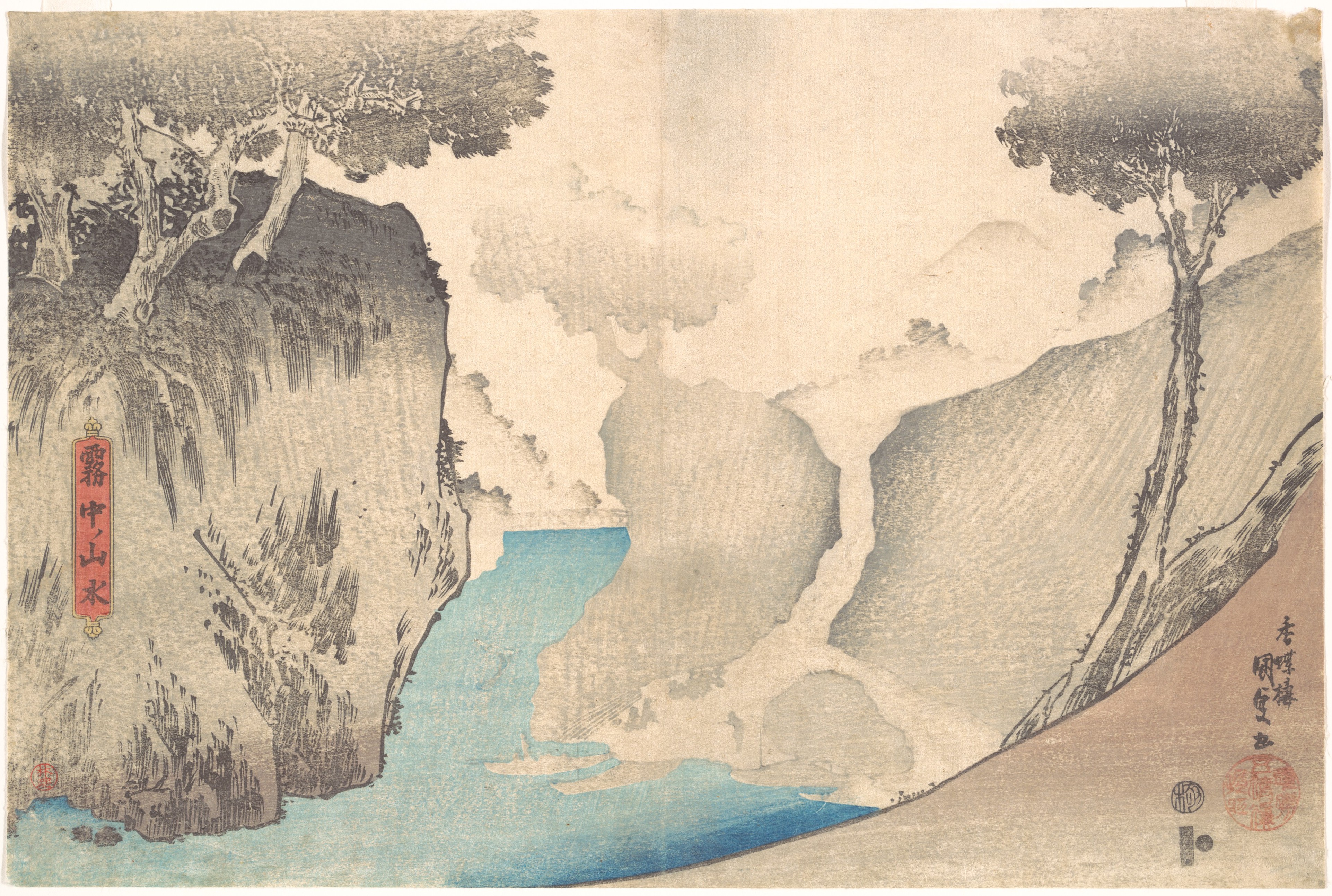
Ochanomizu in the Mist
mid-19th century
Woodblock print; ink and color on paper
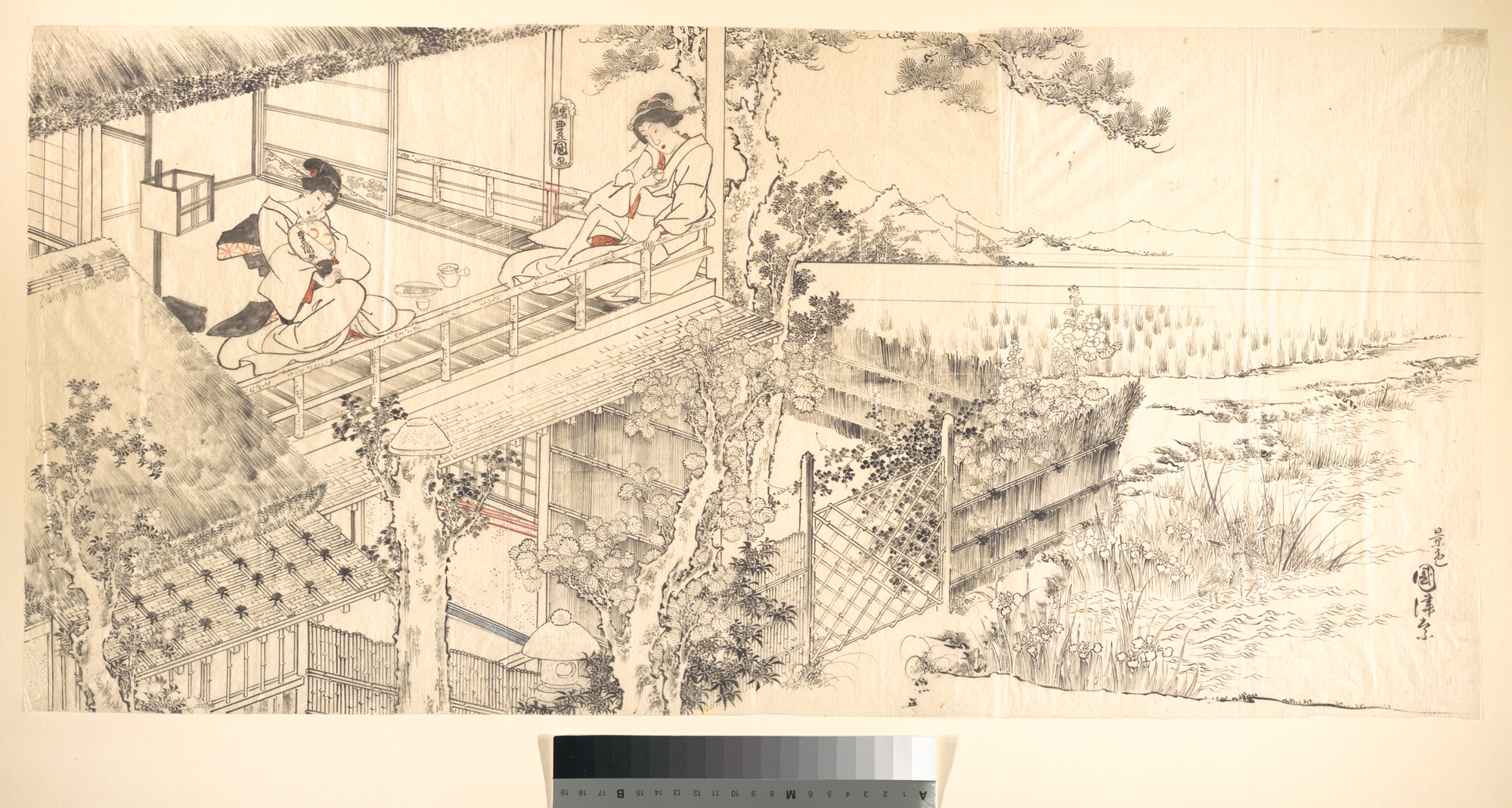
Two Courtesans Enjoying the View from a Teahouse
after 1844
Drawings intended as design for woodblock prints (triptych); ink and color on paper
Frequently Asked Questions
Yoshida (Yoshida) was created by Utagawa Kunisada (歌川国貞).