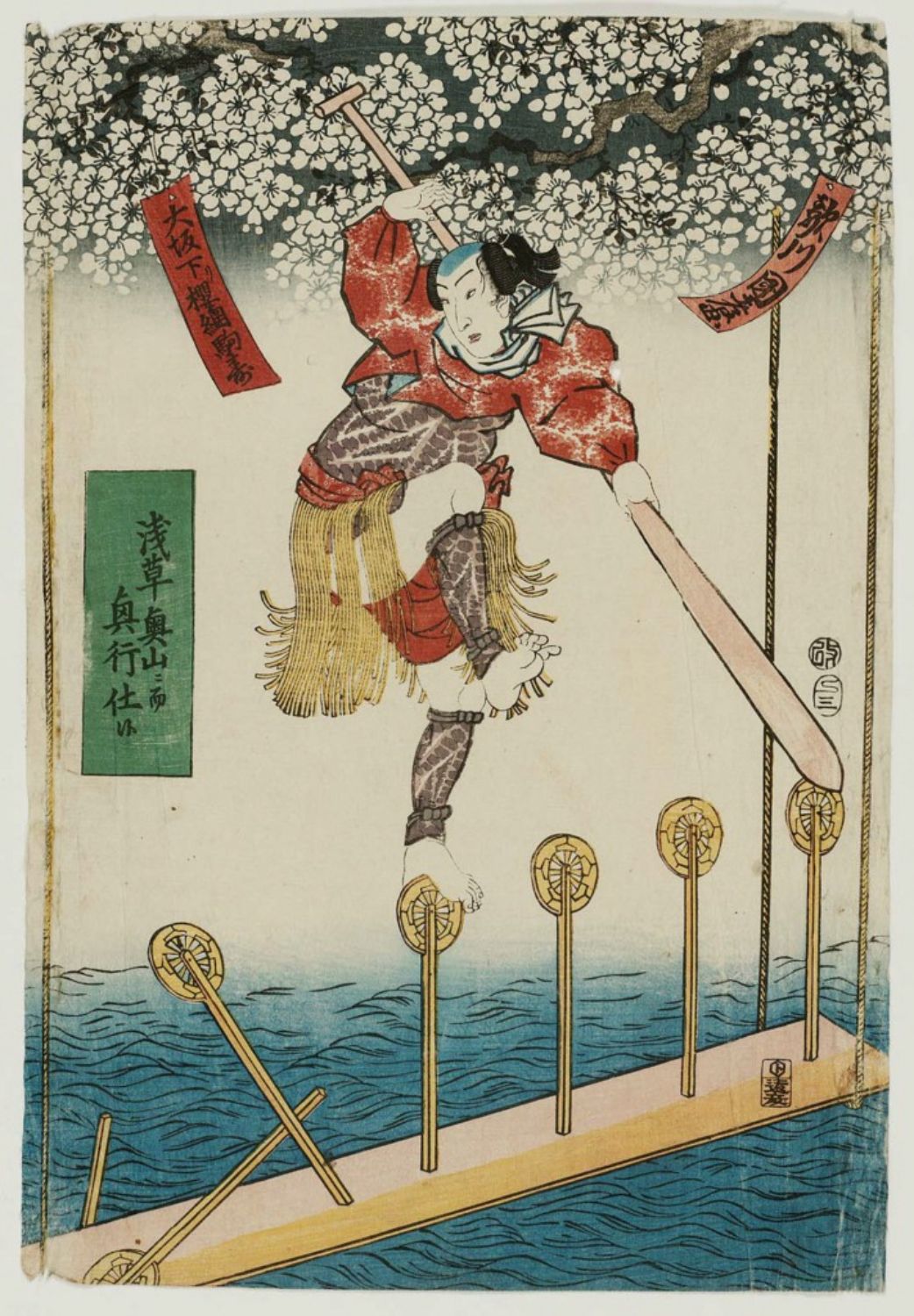
Acrobat from Osaka Performing at Asakusa
- Date:
- Edo period, c. 1854-1868
- Medium:
- Woodblock print (nishiki-e), ink and color on paper
Description
A single sheet by the Bakumatsu Utagawa-school designer Utagawa Kunitaka, held at the Museum of Fine Arts in Boston, depicting an acrobat from Osaka performing at the Asakusa entertainment district in Edo. The print belongs to the late-Tokugawa interest in misemono - the popular sideshow attractions that flourished in temple precincts and unlicensed entertainment districts through the eighteenth and nineteenth centuries, supplying Edo print designers with a steady stream of contemporary spectacle subjects. Asakusa, with its sprawling Sensō-ji temple precinct and the adjacent quasi-tolerated entertainment grounds, became in the late Edo period one of the great misemono venues, attracting travelling performers from across Japan: jugglers, acrobats, sword-swallowers, animal trainers, freak-show exhibitors, dioramists, and the operators of mechanical karakuri figures all set up booths in the Okuyama district behind the main temple hall. The crossing of an Osaka acrobat into Edo was an event of mild interest in itself: the two metropolitan poles of Tokugawa Japan maintained distinct popular cultures despite the regular travel of both performers and merchants between them, and the appearance of an Osaka entertainer at Asakusa registered a moment of Kansai-Kantō exchange that print designers could exploit for commercial appeal. The acrobat tradition itself - karuwaza or kyokugei - drew on a long history of Japanese popular acrobatics, often combined with juggling, balancing acts on poles or balls, and feats of physical contortion. Kunitaka's print preserves the visual record of one such performer's Asakusa engagement. The Museum of Fine Arts dates the print broadly to the Edo period and identifies Kunitaka as the designer.
More Prints by Utagawa Kunitaka
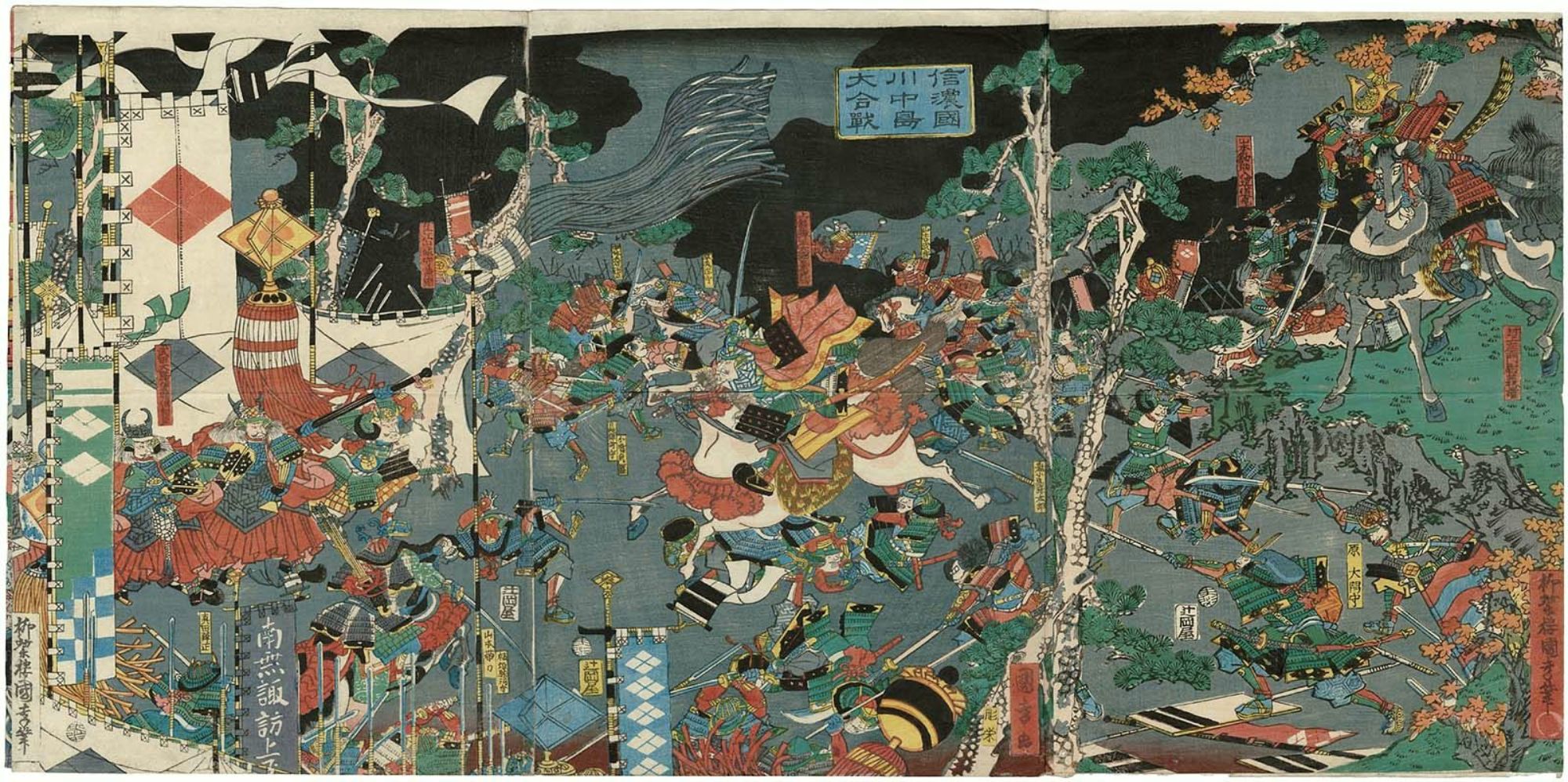
The Great Battle of Kawanakajima in Shinano Province (Shinano no kuni Kawanakajima ōgassen)
信濃国川中島大合戦
1863
Woodblock print (nishiki-e), ink and color on paper; triptych
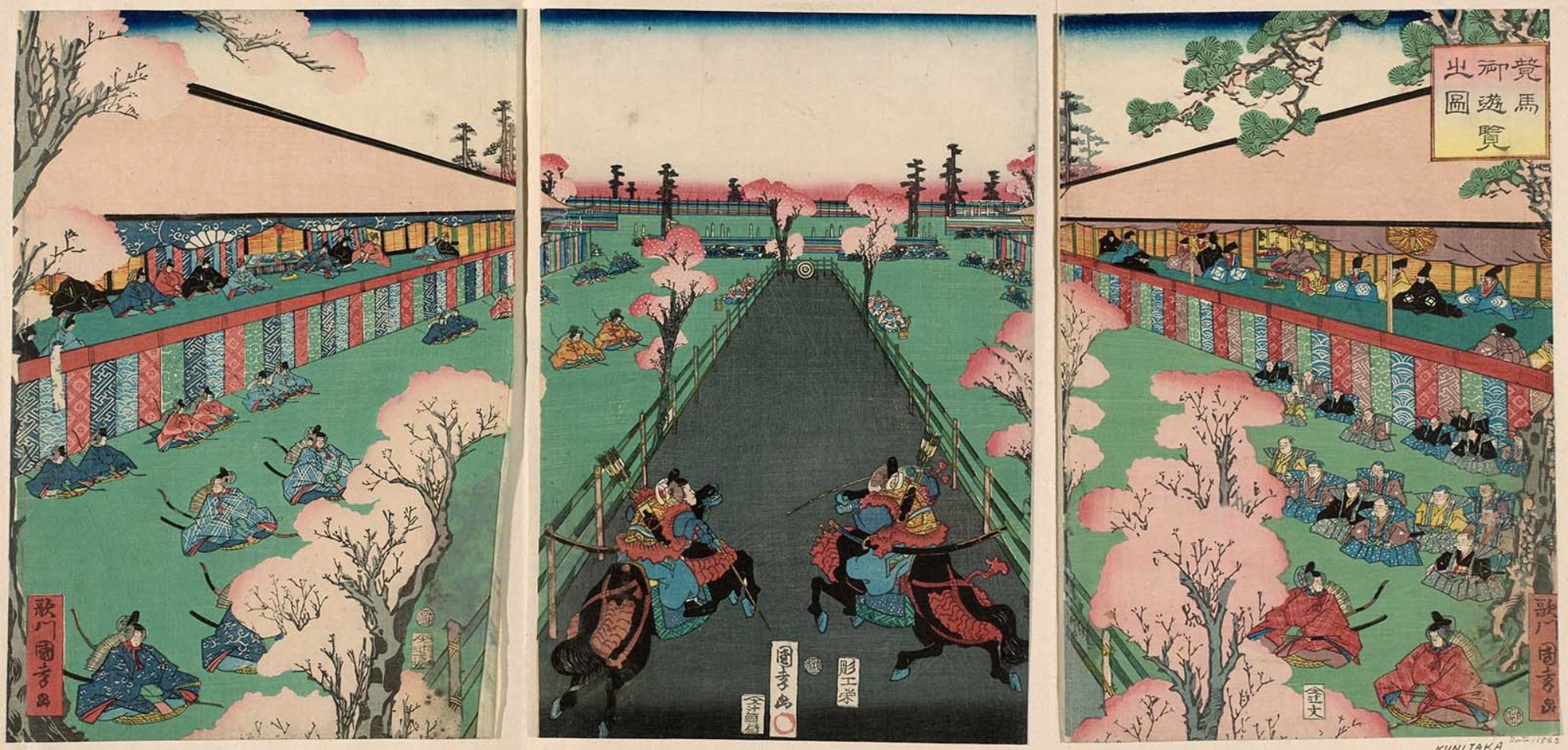
Imperial Visit to a Horse Race (Keiba goyūran no zu)
競馬御遊覧之図
1863
Woodblock print (nishiki-e), ink and color on paper; triptych

Edo Beauties in the Evening
late Edo period, c. 1854-1868
Woodblock print (nishiki-e), ink and color on paper
Famous Views of the Tōkaidō: Watching the Races
1863
Woodblock print (nishiki-e), ink and color on paper
Frequently Asked Questions
Acrobat from Osaka Performing at Asakusa was created by Utagawa Kunitaka (歌川国孝) in Edo period, c. 1854-1868.