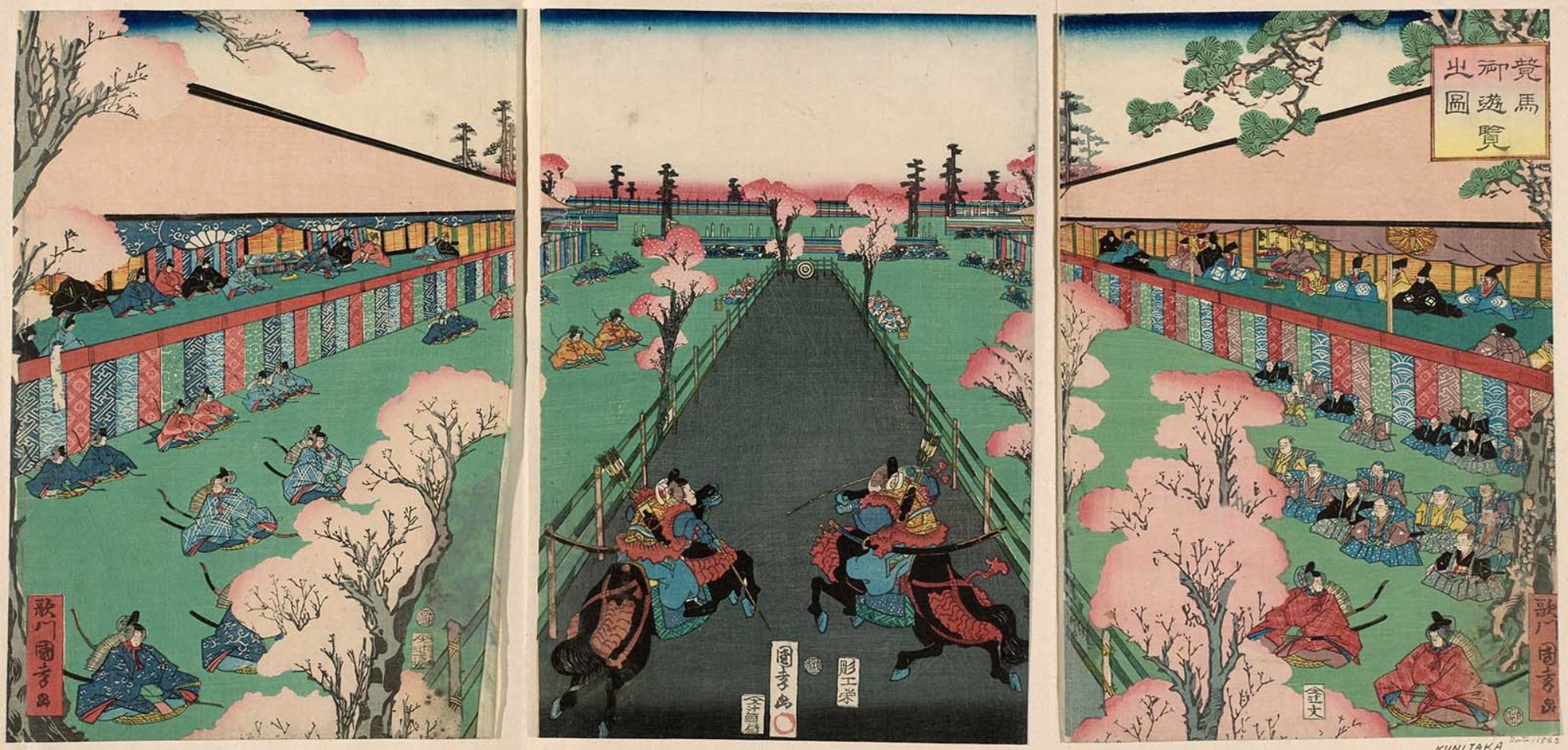
Imperial Visit to a Horse Race (Keiba goyūran no zu)
競馬御遊覧之図
- Date:
- 1863
- Medium:
- Woodblock print (nishiki-e), ink and color on paper; triptych
Description
A triptych nishiki-e dated 1863 by the Utagawa-school designer Utagawa Kunitaka, held by the Museum of Fine Arts in Boston, depicting an imperial review of a horse race. The composition divides the action by social rank: the right-hand panel shows the samurai retinue of the shogunate and its leading commanders watching from one side of the racecourse, while the left-hand panel shows the imperial court nobles (kuge) and the sovereign himself watching from the other - a pictorial scheme that registers in print form the elaborate ceremonial politics of the Bunkyū era (1861-1864) and the bakufu's last sustained attempt to stabilise the regime through the kobu-gattai (court-shogunate union) policy. Under that policy, briefly successful in the early 1860s, the shogun Tokugawa Iemochi paid the first shogunal visit to the imperial court in Kyoto since the early seventeenth century, and a series of ceremonial exchanges aimed at reconciling the increasingly polarised positions of the imperial court and the Edo bakufu was elaborated through state ritual including hunting, horse racing, and military reviews. Kunitaka's print belongs to the small but significant body of Bakumatsu woodblock prints that responded to these contemporary political events through the safe pictorial frame of ceremonial recreation: horse racing, as an aristocratic pursuit shared by the warrior and courtier classes, supplied designers with a subject that could record the formal reconciliation of the two governing institutions without straying into the politically dangerous territory of explicit policy commentary. The horse-racing tradition itself - kurabeuma in classical Japanese - had medieval origins in Heian-era court spectacle and had been revived under the Tokugawa regime as a martial discipline practised by the samurai class. The triptych format gives Kunitaka room to compose the divided racecourse panorama across three full sheets, with the central panel typically reserved for the racing horses themselves and the flanking panels for the contrasting audiences of warriors and courtiers.
More Prints by Utagawa Kunitaka
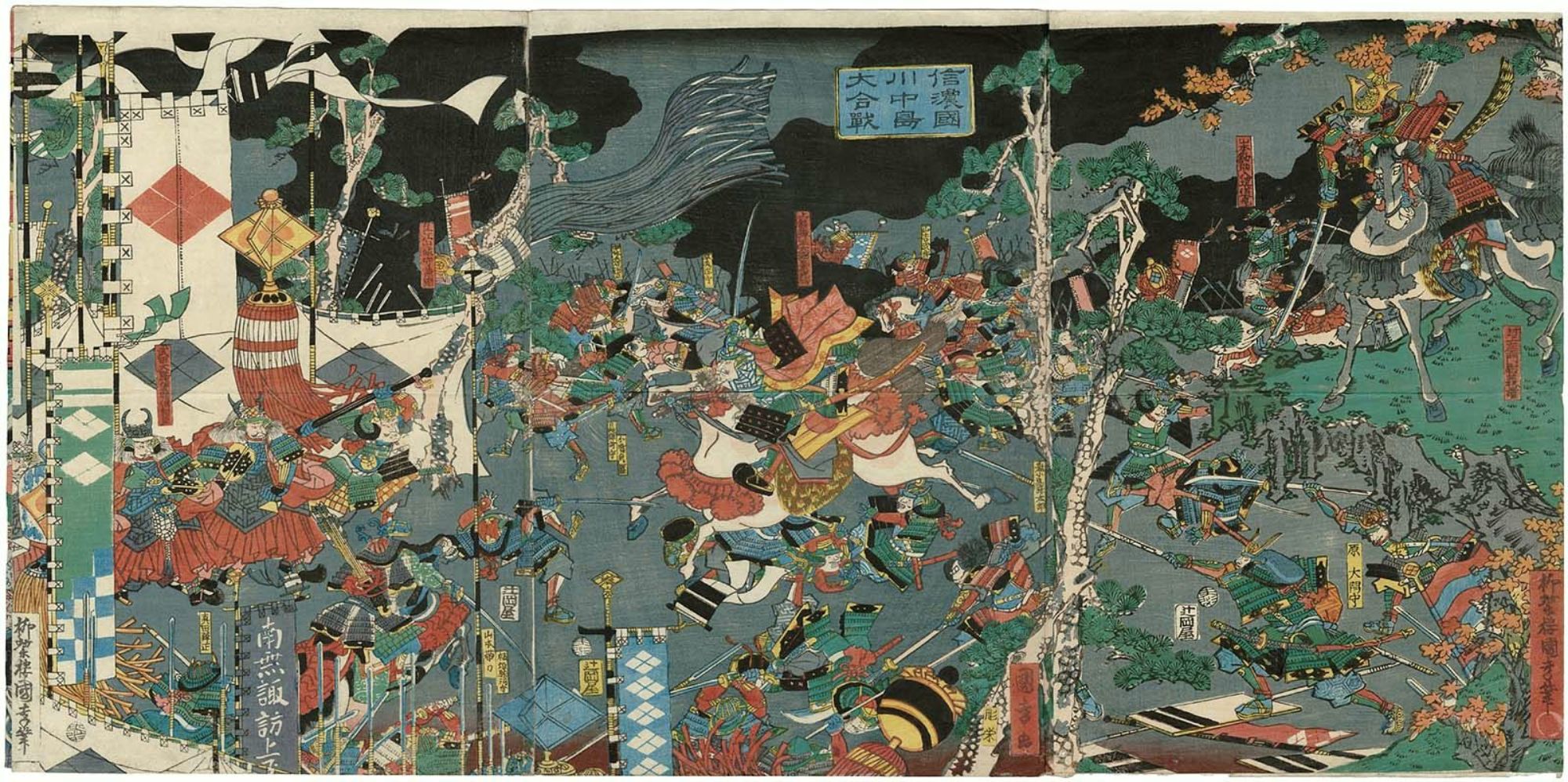
The Great Battle of Kawanakajima in Shinano Province (Shinano no kuni Kawanakajima ōgassen)
信濃国川中島大合戦
1863
Woodblock print (nishiki-e), ink and color on paper; triptych
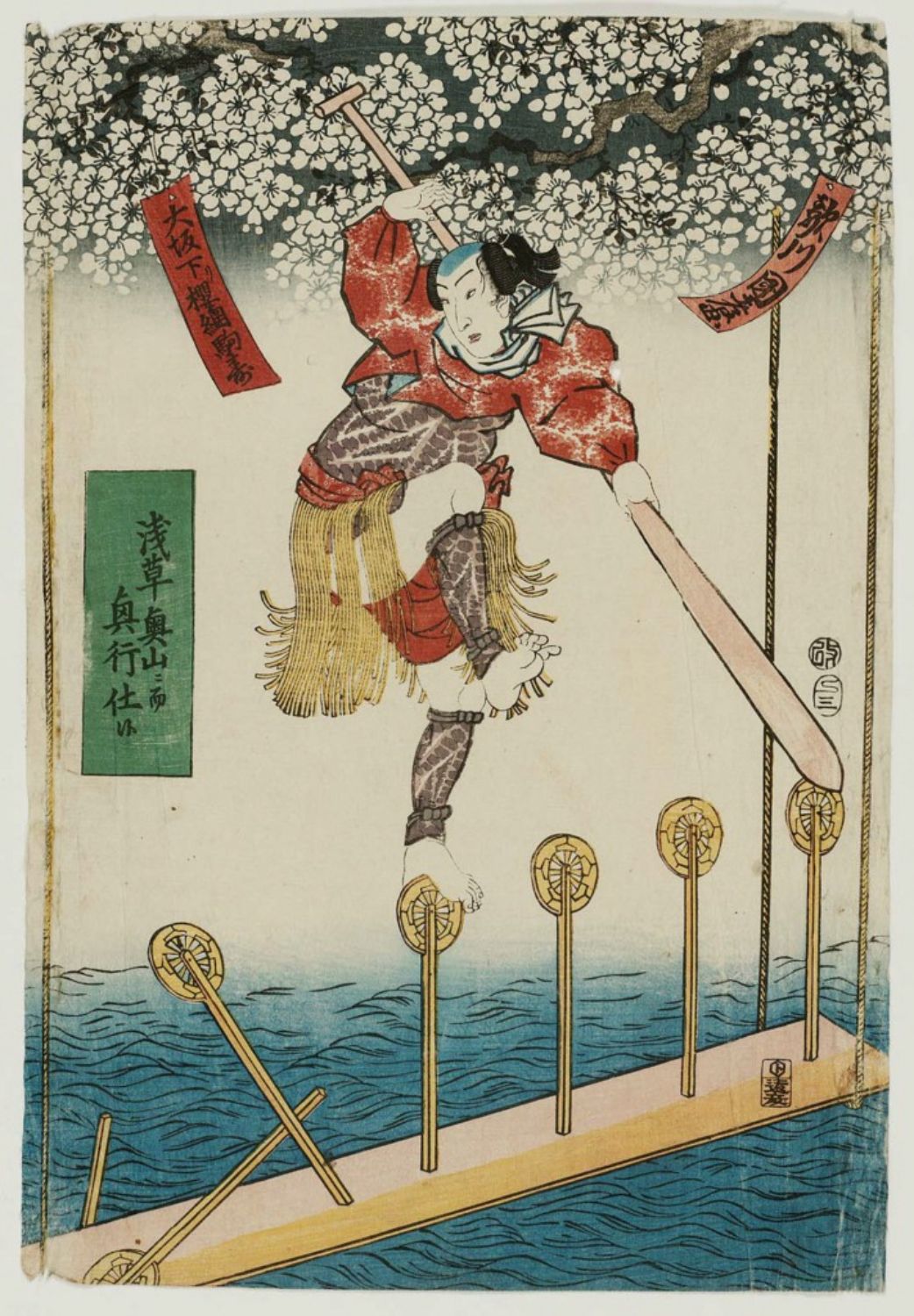
Acrobat from Osaka Performing at Asakusa
Edo period, c. 1854-1868
Woodblock print (nishiki-e), ink and color on paper

Edo Beauties in the Evening
late Edo period, c. 1854-1868
Woodblock print (nishiki-e), ink and color on paper
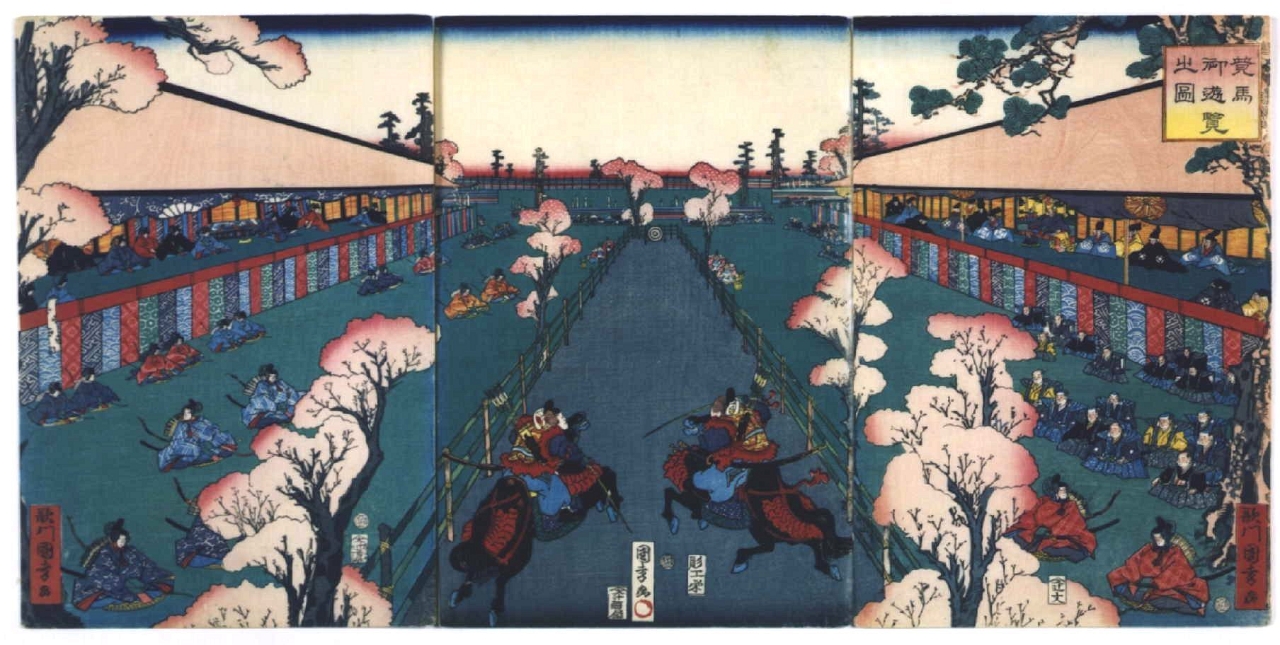
Famous Views of the Tōkaidō: Watching the Races
1863
Woodblock print (nishiki-e), ink and color on paper
Frequently Asked Questions
Imperial Visit to a Horse Race (Keiba goyūran no zu) (競馬御遊覧之図) was created by Utagawa Kunitaka (歌川国孝) in 1863.