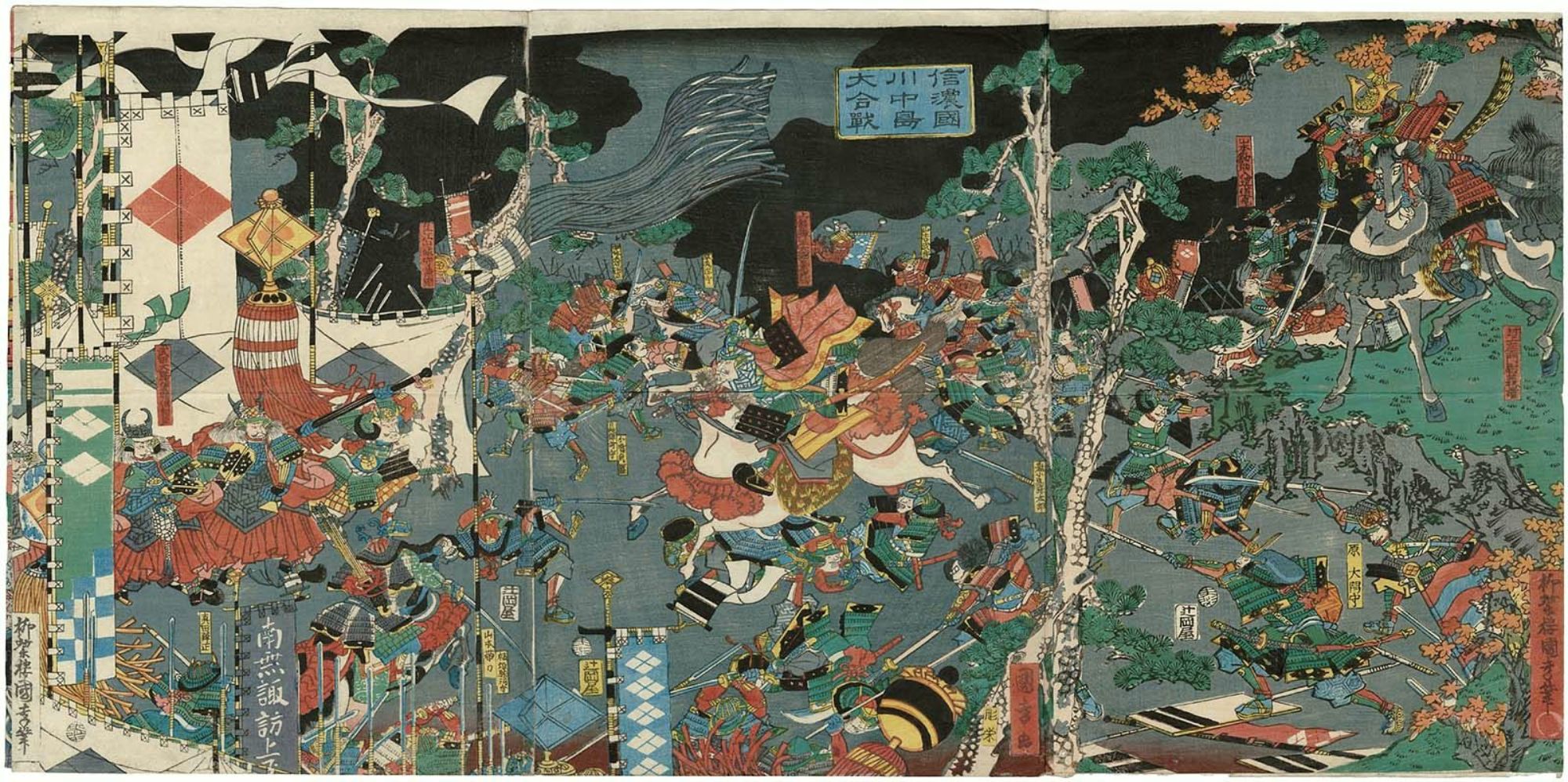
The Great Battle of Kawanakajima in Shinano Province (Shinano no kuni Kawanakajima ōgassen)
信濃国川中島大合戦
- Date:
- 1863
- Medium:
- Woodblock print (nishiki-e), ink and color on paper; triptych
Description
A triptych nishiki-e by the Utagawa-school designer Utagawa Kunitaka, dated 1863 and held by the Museum of Fine Arts in Boston, reconstructing the celebrated sixteenth-century engagements between the daimyo Takeda Shingen and Uesugi Kenshin at Kawanakajima on the Chikuma River in Shinano Province. The Battle of Kawanakajima - actually a series of five engagements fought intermittently between 1553 and 1564 over control of the strategically important Shinano basin - had supplied Edo print culture with one of its most enduring military subjects since at least the Tenpō era of the 1830s, when Utagawa Kuniyoshi's musha-e (warrior prints) revived public appetite for Sengoku-period historical drama. The fourth engagement of 1561 - in which Uesugi Kenshin in legend rode into the Takeda command tent and exchanged sword blows with Shingen, who parried with his iron war-fan - became the canonical pictorial set piece, dramatised across paintings, prints, and kabuki productions. Kunitaka's 1863 triptych belongs to the broader Bakumatsu revival of historical-military subjects: in the years of escalating political crisis following Commodore Perry's arrival, Edo print publishers and their customers turned increasingly to legendary samurai conflict as a means of imagining national resolve under threat. The Tokugawa censorship regime, which had restricted depictions of contemporary politics throughout the Edo period, permitted historical-military imagery of this kind as a substitute outlet for nationalist sentiment. The triptych format - three full-sheet panels printed and sold together to compose a single wide horizontal field - was the standard mid-nineteenth-century Edo presentation for battle subjects of this scale, allowing the designer to develop the multiple combatants, cavalry, banners, and command pavilions across a panoramic stage suited to the breadth of the legendary action. Kunitaka, then in the principal phase of his recorded career as an Utagawa-school designer, executes the figural drawing in the style of his master Kunisada (Toyokuni III), with the bold polychrome printing characteristic of the late-Edo nishiki-e tradition.
More Prints by Utagawa Kunitaka
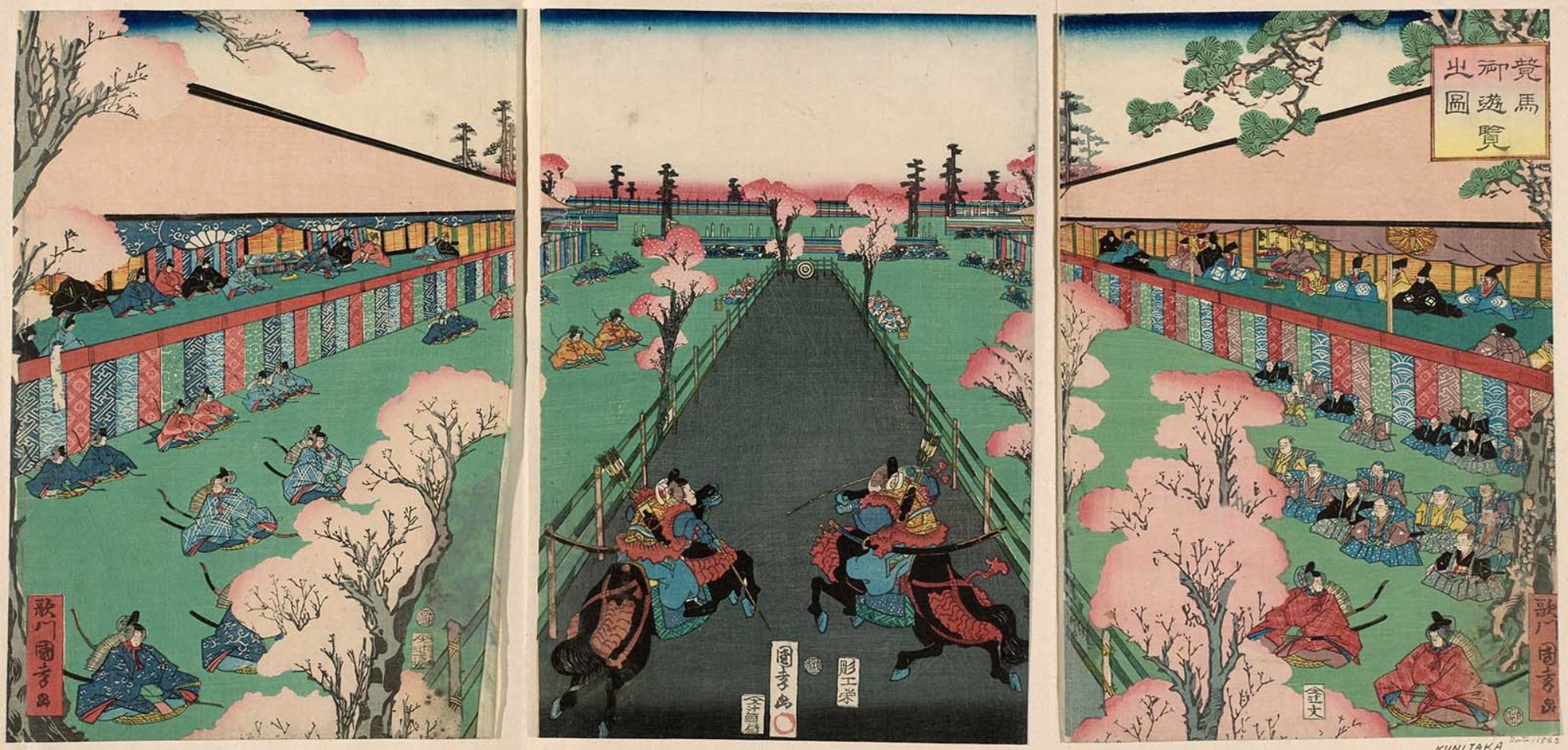
Imperial Visit to a Horse Race (Keiba goyūran no zu)
競馬御遊覧之図
1863
Woodblock print (nishiki-e), ink and color on paper; triptych
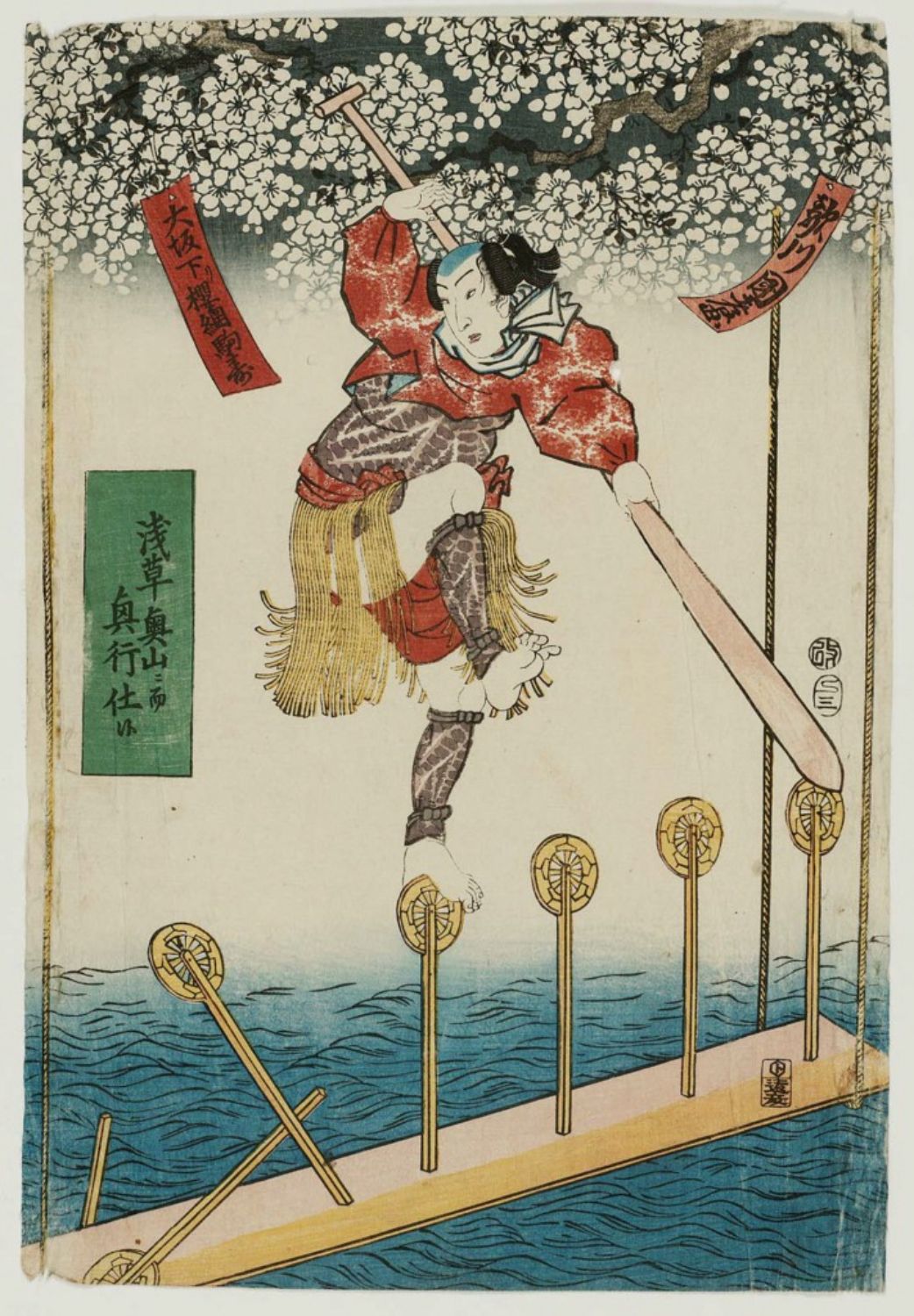
Acrobat from Osaka Performing at Asakusa
Edo period, c. 1854-1868
Woodblock print (nishiki-e), ink and color on paper

Edo Beauties in the Evening
late Edo period, c. 1854-1868
Woodblock print (nishiki-e), ink and color on paper
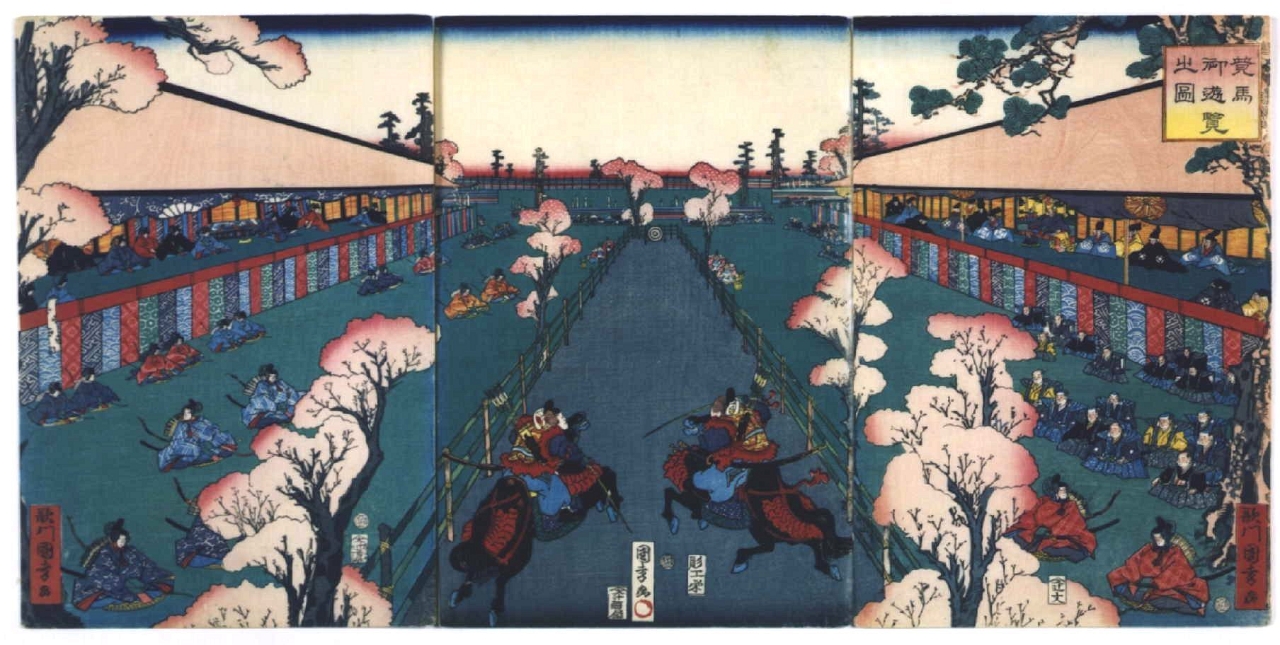
Famous Views of the Tōkaidō: Watching the Races
1863
Woodblock print (nishiki-e), ink and color on paper
Frequently Asked Questions
The Great Battle of Kawanakajima in Shinano Province (Shinano no kuni Kawanakajima ōgassen) (信濃国川中島大合戦) was created by Utagawa Kunitaka (歌川国孝) in 1863.