
At Nihonbashi, Starting the Ōyama Pilgrimage (Nihonbashi Ōyama mōde no zu)
日本橋大山詣之図
- Date:
- mid-Meiji, ca. 1872
- Medium:
- Color woodblock print (nishiki-e), ōban triptych
- Source:
- Edo-Tokyo Museum
Description
A tight cluster of six men in matching black-and-white check kimonos crowds the composition against a dark indigo night sky, their pale faces and shaved-pate hairstyles sharply lit; several carry pilgrimage staffs and a long red lacquered wand-like pole slung diagonally across the center panel, while one figure at right holds an open fan marked with a bold red character. The palette is dominated by indigo, black-and-white check, and deep red accents, with the figures' intent, forward-glancing expressions and close-packed poses giving the scene a sense of bustling motion. Title cartouches and inscriptions run down the right panel, identifying the scene as Utagawa Kuniteru II's ōban triptych *At Nihonbashi, Starting the Ōyama Pilgrimage*.
More Prints by Utagawa Kuniteru II
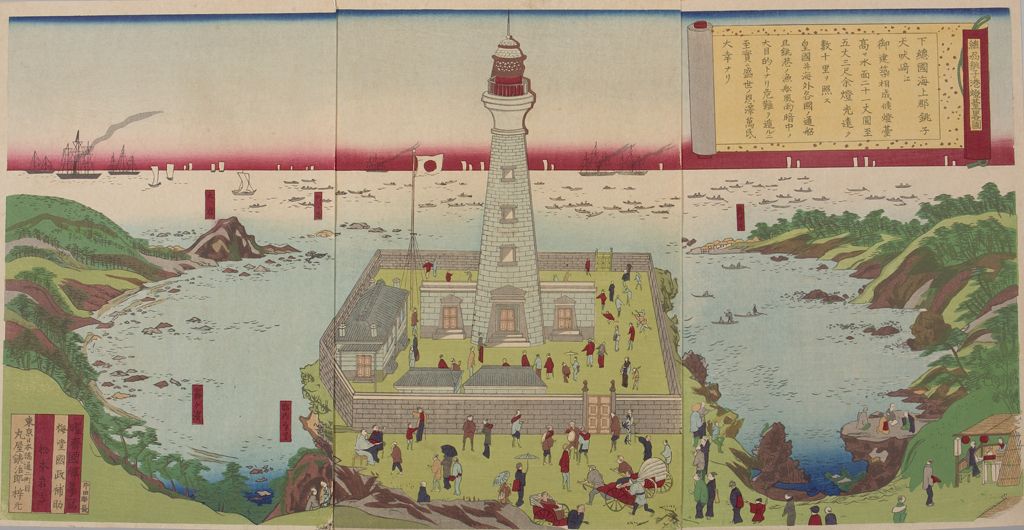
Harbor with Lighthouse and American Men and Ships
Meiji period, late 19th century
Color woodblock print (nishiki-e), ōban triptych
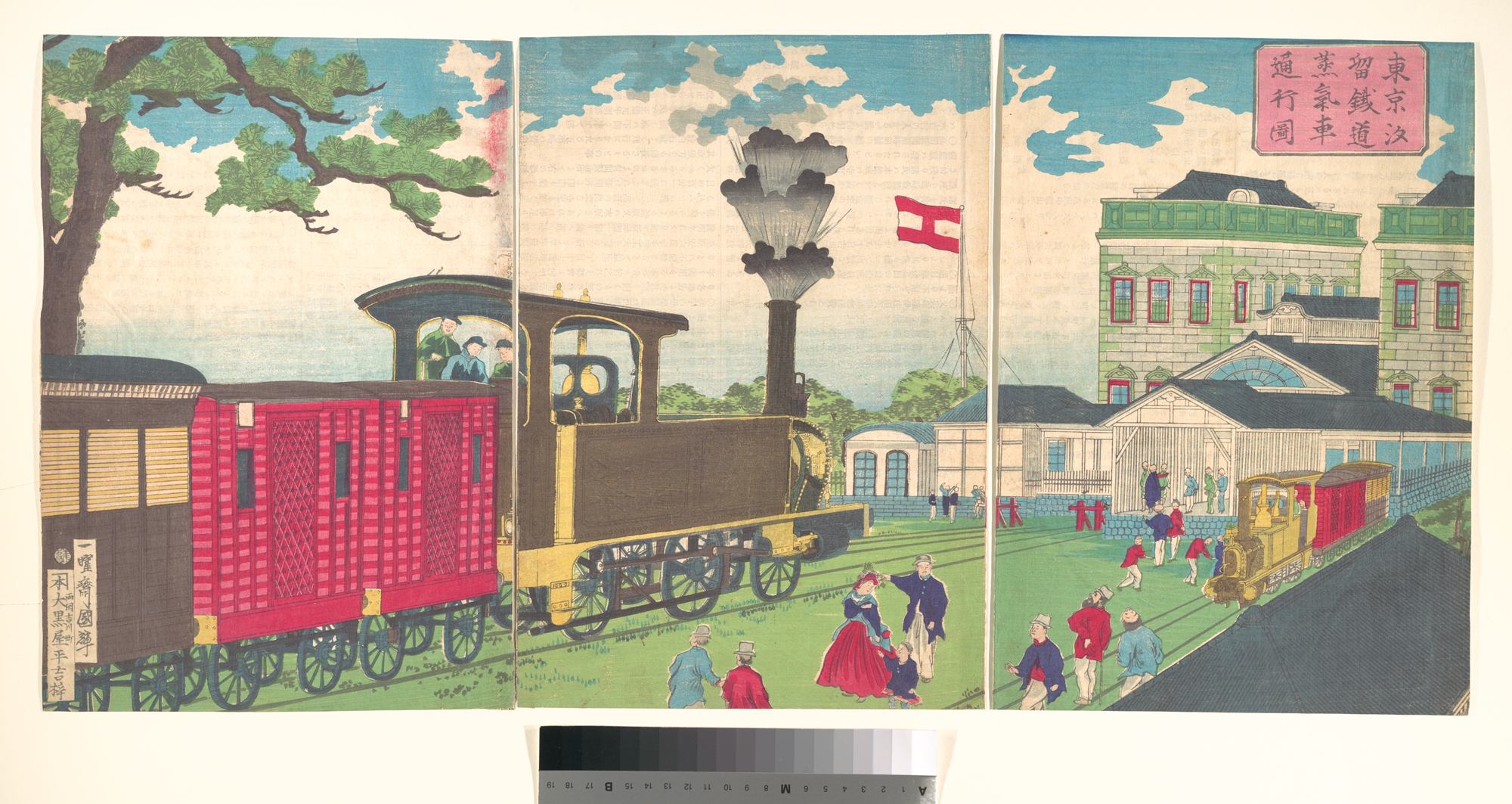
Steam Train Passing Shiodome in Tokyo (Tōkyō Shiodome o tōru jōki kikansha)
東京汐留を通る蒸気機関車
1872
Color woodblock print (nishiki-e), ōban triptych
True Picture of a Five-Story Building at Kaiun Bridge (Mitsui House), First National Bank of Japan
海運橋三井組ハウス第一国立銀行真景之図
1872
Color woodblock print (nishiki-e), ōban triptych
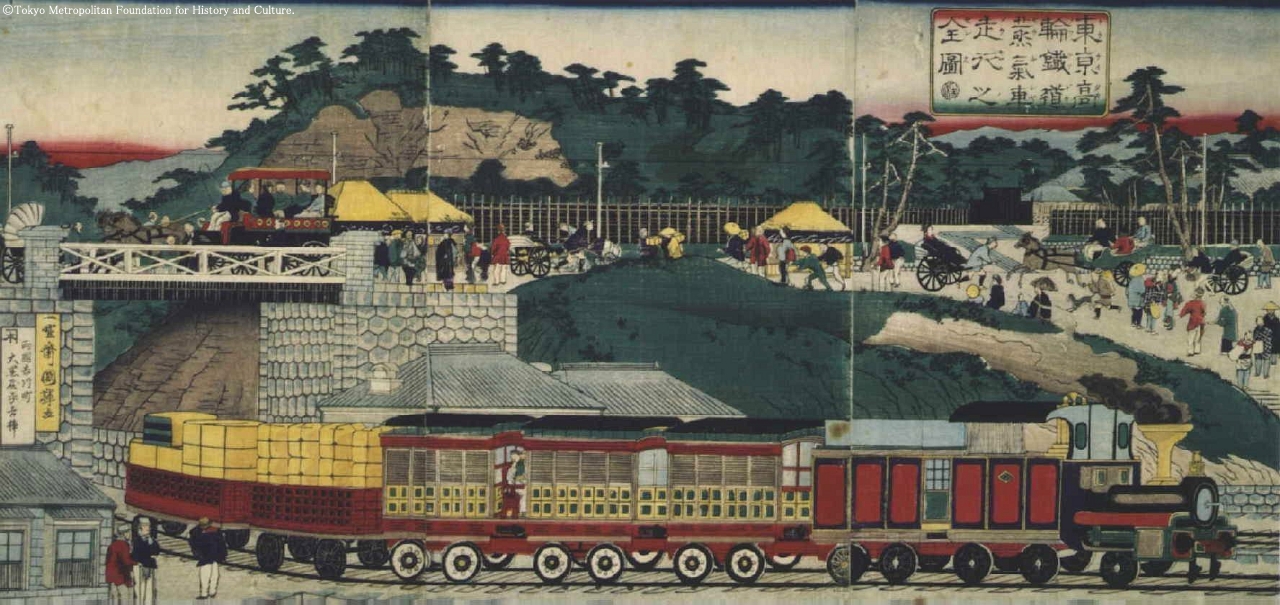
The Takanawa Steam Railway, Tokyo (Tōkyō Takanawa jōki tetsudō)
東京高輪蒸気鉄道
1872
Color woodblock print (nishiki-e), ōban triptych
Frequently Asked Questions
At Nihonbashi, Starting the Ōyama Pilgrimage (Nihonbashi Ōyama mōde no zu) (日本橋大山詣之図) was created by Utagawa Kuniteru II (二代歌川国輝) in mid-Meiji, ca. 1872.