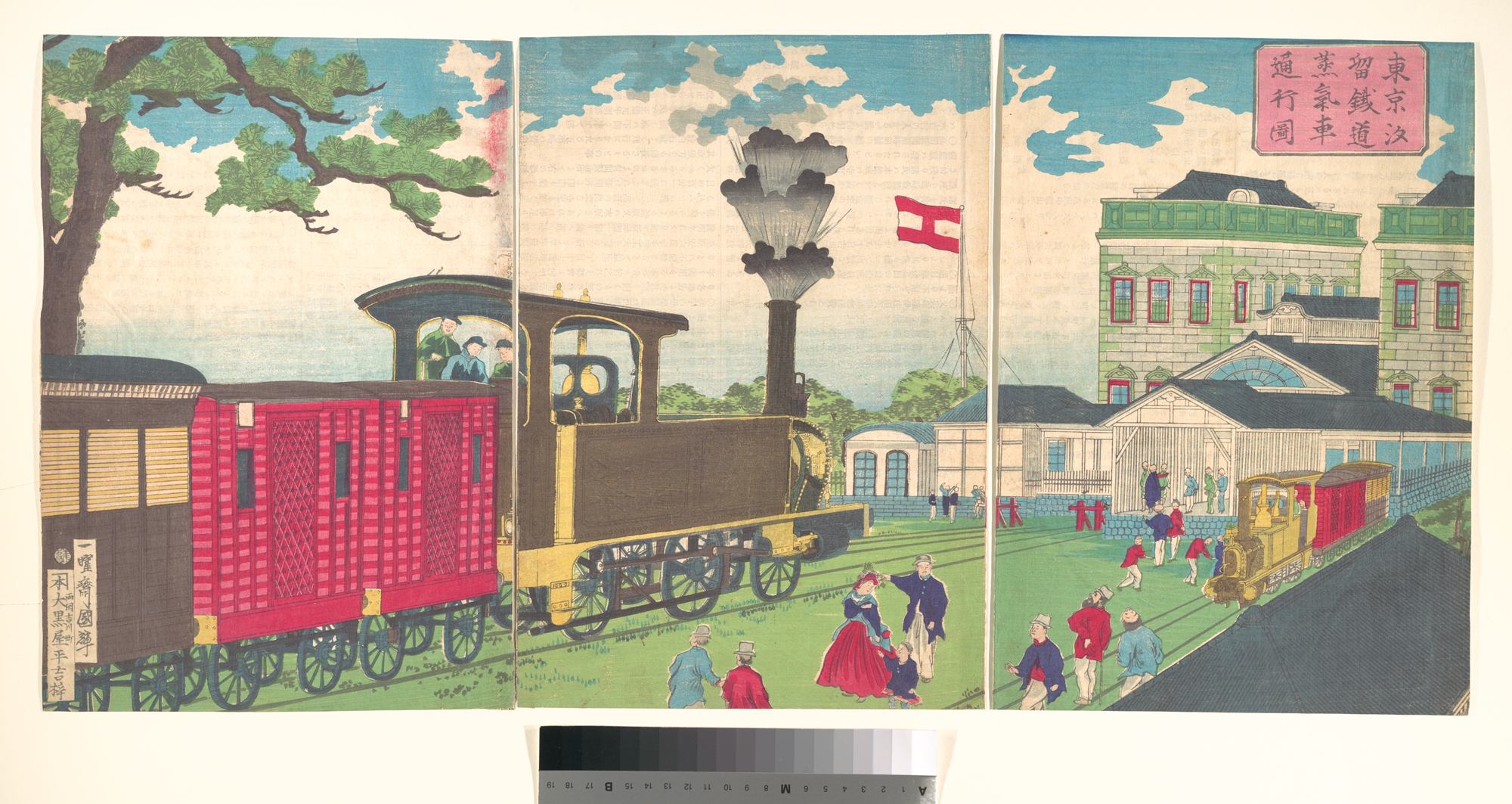
Steam Train Passing Shiodome in Tokyo (Tōkyō Shiodome o tōru jōki kikansha)
東京汐留を通る蒸気機関車
- Date:
- 1872
- Medium:
- Color woodblock print (nishiki-e), ōban triptych
- Source:
- Metropolitan Museum of Art
Description
This 1872 color woodblock triptych by Utagawa Kuniteru II, held by the Metropolitan Museum of Art (accession DP147709), depicts the steam train of the new Tokyo–Yokohama railway passing through Shiodome in Tokyo. The railway, inaugurated on the fourteenth of October 1872, was the first stretch of Japanese steam rail and the single most-celebrated technological monument of the early Meiji period. The Shiodome terminus, located near the foreign-settlement quarter at Tsukiji and the great Hamarikyū gardens of the former shogunal estate, became the iconic visual emblem of Meiji modernization in the first months after the railway's opening.
Kuniteru II's composition deploys the conventional ōban triptych format of late-Edo and early-Meiji ukiyo-e to encompass a panoramic view of the steam locomotive and its passenger carriages in motion. The brilliant red of the locomotive boiler and the bright aniline pigments of the train's livery are characteristic of early-Meiji color printing, which adopted the new synthetic aniline dyes introduced from Europe in the 1860s. The composition belongs to a small cycle of Kuniteru II's railway prints that includes the related Takanawa Steam Railway triptych in the Edo-Tokyo Museum (accession 0191220236) and that represents the height of the Meiji kaika-e (enlightenment print) genre.
The print was acquired by the Metropolitan Museum among its substantial Meiji-era kaika-e holdings, where it documents both the visual representation of the Meiji modernization program and the late-Edo print industry's response to that program. The locomotive itself — among the first batch of locomotives imported from the British manufacturer Vulcan Foundry — appears repeatedly in Meiji-era prints by Kuniteru II and his contemporaries Hiroshige III and Yoshitora, each of whom recorded the early stretches of the new railway as the defining image of the modernization era.
More Prints by Utagawa Kuniteru II

At Nihonbashi, Starting the Ōyama Pilgrimage (Nihonbashi Ōyama mōde no zu)
日本橋大山詣之図
mid-Meiji, ca. 1872
Color woodblock print (nishiki-e), ōban triptych
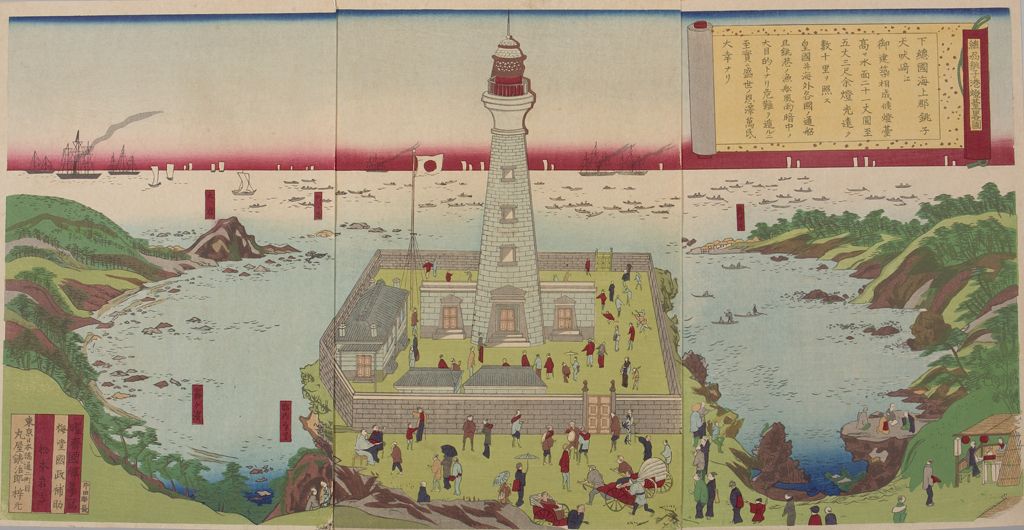
Harbor with Lighthouse and American Men and Ships
Meiji period, late 19th century
Color woodblock print (nishiki-e), ōban triptych
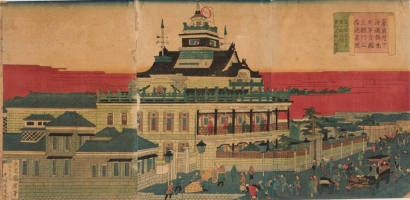
True Picture of a Five-Story Building at Kaiun Bridge (Mitsui House), First National Bank of Japan
海運橋三井組ハウス第一国立銀行真景之図
1872
Color woodblock print (nishiki-e), ōban triptych
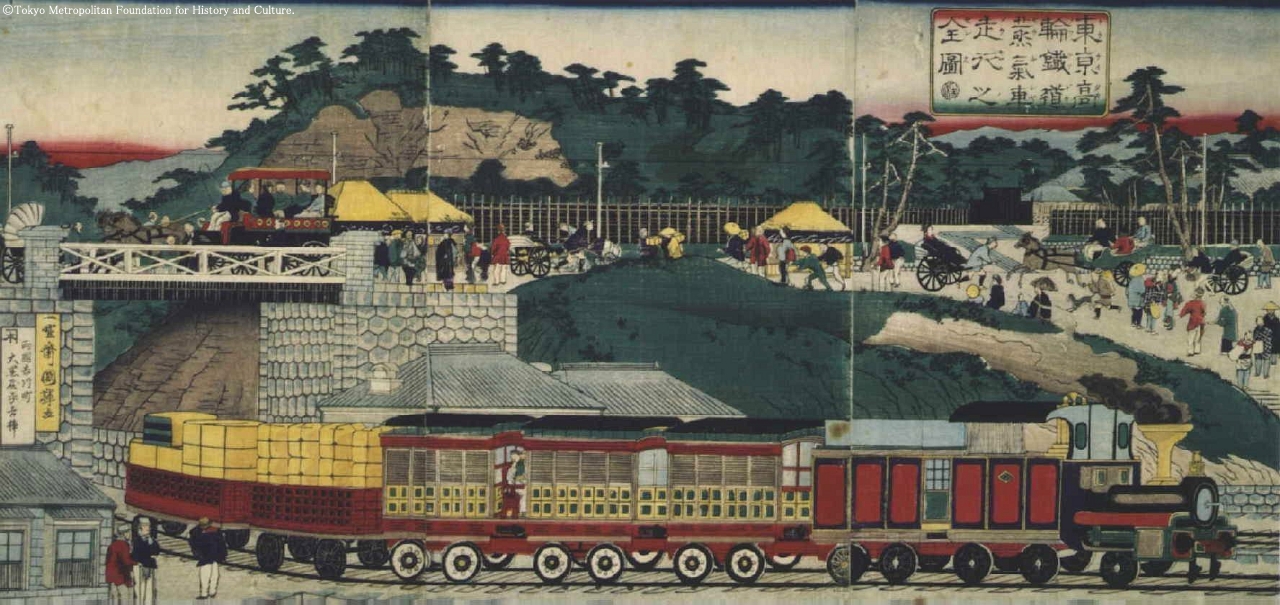
The Takanawa Steam Railway, Tokyo (Tōkyō Takanawa jōki tetsudō)
東京高輪蒸気鉄道
1872
Color woodblock print (nishiki-e), ōban triptych
More Rain Prints

Rain Shower at Shо̄no, from the series Fifty-three Stations of the Tо̄kaidо̄ (Tо̄kaidо̄ gojusan tsugi)
1962
Woodblock print, ink and color on paper

Shōno: Driving Rain (Shōno hakuu), from the series Fifty-three Stations of the Tōkaidō (Tōkaidō gojūsan tsugi no uchi), also known as the First Tōkaidō or Great Tōkaidō
c. 1833-36
Woodblock print (nishiki-e); ink and color on paper

Omiya in Rain (Ame no Omiya)
Ame no Omiya
1930
Color woodblock print; oban

Evening Shower at Teradomari (Teradomari no yau), from the series "Souvenirs of Travel, Second Series (Tabi miyage dai nishu)"
Teradomari no yau
1921
Color woodblock print; oban
Frequently Asked Questions
Steam Train Passing Shiodome in Tokyo (Tōkyō Shiodome o tōru jōki kikansha) (東京汐留を通る蒸気機関車) was created by Utagawa Kuniteru II (二代歌川国輝) in 1872.
Steam Train Passing Shiodome in Tokyo (Tōkyō Shiodome o tōru jōki kikansha) depicts rain.