Biography
Utagawa Kuniteru II (二代歌川国輝, 1830–1874) — who also signed with the go (art names) Ichiyōsai (一曜斎) and, as Kunitsuna II (国綱), Ichiransai Kunitsuna — was a Bakumatsu and early-Meiji print designer whose work documents the visual transformation of Edo into Tokyo during the most turbulent decades of nineteenth-century Japan. Born Yamada Kunijirō in Edo, he was a pupil of Utagawa Kunisada I (Toyokuni III, 1786–1865), the most prolific actor-print designer of the mid-nineteenth century, whose Edo studio trained dozens of secondary pupils who carried the Utagawa school's compositional formulas into the Meiji print industry.
The name "Kuniteru" was used by more than one artist in the Utagawa school, and modern cataloguing distinguishes this designer — a Kunisada pupil whose career ran from the late 1850s into the early Meiji period — from the earlier Utagawa Kuniteru active in the first half of the century. Because he also signed as Kunitsuna II, museums and dealers commonly catalogue him under the dual designation "Kuniteru II (Kunitsuna II)."
Kuniteru II's career falls into two phases. The earlier, in the late Edo period, encompasses conventional ukiyo-e genres — actor portraits (yakusha-e), warrior subjects (musha-e), images of beautiful women (bijin-ga), and sumo prints (sumō-e) — in the Kunisada-school idiom. The second and far more historically significant phase, from around 1869 to his death in 1874, turned almost completely to the Yokohama-e and kaika-e (enlightenment prints) that recorded the visual novelty of the Meiji modernization program. Steam trains, gas lamps, brick-and-stone Western-style buildings, foreign warships, telegraph wires, and the new uniformed army and police all entered his compositions, frequently rendered in the brilliant aniline reds and purples that characterize early-Meiji color printing.
These Meiji prints, which constitute the bulk of his surviving output, document the rapid transformation of Edo into Tokyo following the 1868 imperial restoration. His Illustration of a Steam Locomotive Passing Shiodome in Tokyo, held by the Metropolitan Museum of Art, records the new Tokyo–Yokohama railway — the Shinbashi-to-Yokohama line that opened on 14 October 1872 as the first stretch of Japanese steam rail and became a defining image of Meiji modernization. Related railway compositions, such as his view of the Takanawa steam railway and his 1873 print of the five-story Western-style bank at Kaiunbashi in Kabutochō (the First National Bank, associated with the Mitsui house), register the new infrastructure of brick buildings, raised viaducts, gas lamps, and horse-drawn carriages that reshaped the city's eastern districts in the early 1870s. He also depicted the era's new industry, as in his print of the Tomioka silk mill.
Kuniteru II likewise carried the Utagawa school's long engagement with sumo prints into the Meiji period, and his subjects ranged more broadly across classical-narrative and current-events imagery. Much of his Meiji output was issued by the Tokyo publisher Yamamotoya Heikichi (Eikyūdō), one of the principal print houses specializing in current-events imagery and kaika-e for an audience eager to see the new buildings and machines of imperial Tokyo.
Kuniteru II died in 1874, only a few years into the Meiji period, at about the age of forty-four. His comparatively short Meiji career nonetheless produced some of the most documentary depictions of the early-Meiji transformation that survive from the print industry. He worked alongside contemporaries such as Utagawa Yoshitora, Utagawa Hiroshige III, Utagawa Kunisada III, and Yōshū Chikanobu, all of whom contributed to the Yokohama-e and kaika-e visual record of Japan's encounter with Western modernity. For collectors of Meiji visual culture, Kuniteru II remains a foundational designer whose surviving impressions record, with the immediacy of contemporary witness, the specific visual novelty that defined the first decade of the Meiji era.
Key Facts
- Active Period
- 1830–1874
- Nationality
- 🇯🇵Japan
- Movement
- Meiji/Taishō Prints
- Works Indexed
- 12
Frequently Asked Questions
Utagawa Kuniteru II (二代歌川国輝, 1830–1874) — who also signed with the go (art names) Ichiyōsai (一曜斎) and, as Kunitsuna II (国綱), Ichiransai Kunitsuna — was a Bakumatsu and early-Meiji print designer whose work documents the visual transformation of Edo into Tokyo during the most turbulent decades of nineteenth-century Japan. Born Yamada Kunijirō in Edo, he was a pupil of Utagawa Kunisada I (Toyokuni III, 1786–1865), the most prolific actor-print designer of the mid-nineteenth century, whose Edo studio trained dozens of secondary pupils who carried the Utagawa school's compositional formulas into the Meiji print industry.
Utagawa Kuniteru II was active from 1830 to 1874. They were associated with the Meiji/Taishō Prints movement.
Utagawa Kuniteru II's work was shaped by the Meiji/Taishō Prints tradition in Japanese woodblock printmaking. Meiji/Taishō Prints: Meiji and Taishō era prints (1868–1926) bridge the transition from traditional ukiyo-e to the modern shin-hanga and sosaku-hanga movements.
Utagawa Kuniteru II's prints frequently feature sumo, bridges, rain.
Original prints by Utagawa Kuniteru II can be found in collections including Edo-Tokyo Museum, Harvard Art Museums, Metropolitan Museum of Art, Art Gallery of Greater Victoria.
Woodblock Prints by Utagawa Kuniteru II (12)
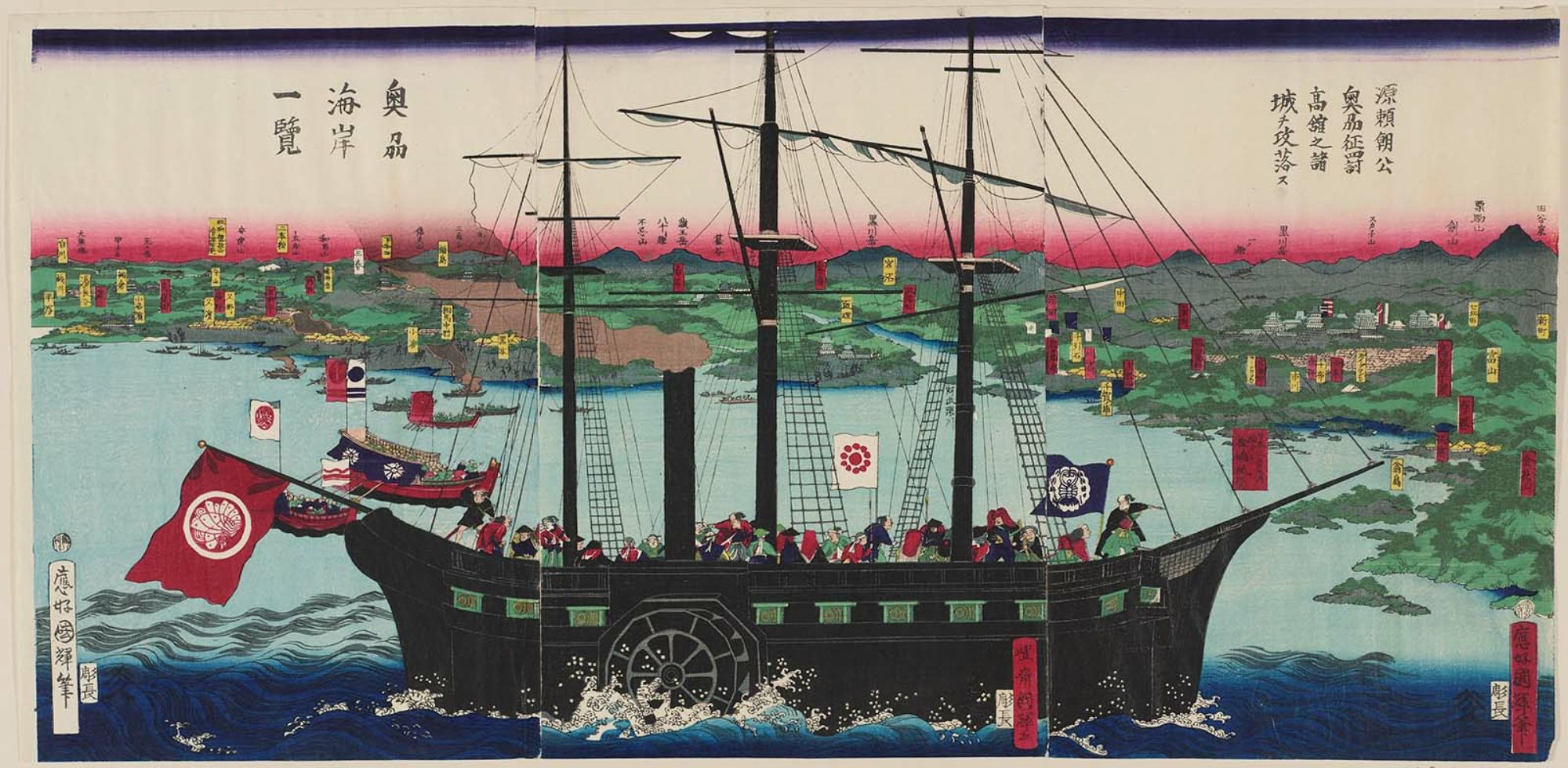
In the Conquest of Ōshū Province, Lord Minamoto Yoritomo Captures the Fortress of Takadachi (Minamoto Yoritomo kō Ōshū seibatsu Takadachi no shojō o kōraku su)
源頼朝公奥州征伐高館之城所を攻落す
1868
Color woodblock print (nishiki-e), ōban triptych
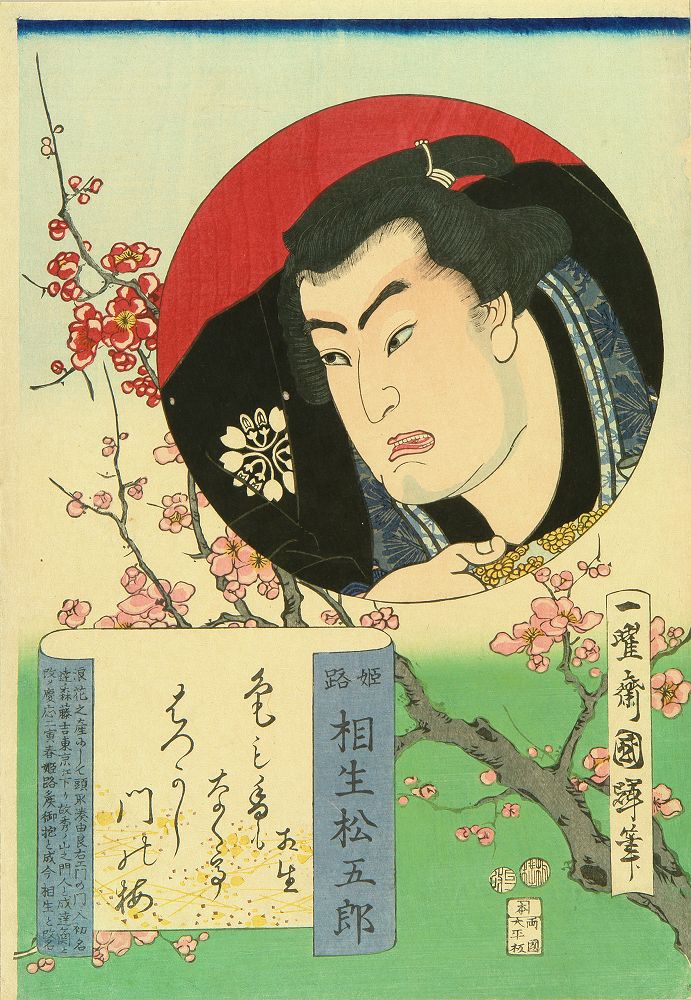
Portrait of the Sumō Wrestler Aioi Matsugorō
相生松五郎之図
1869
Color woodblock print (nishiki-e) with lacquer-printed kimono detail
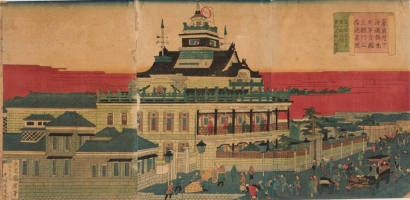
True Picture of a Five-Story Building at Kaiun Bridge (Mitsui House), First National Bank of Japan
海運橋三井組ハウス第一国立銀行真景之図
1872
Color woodblock print (nishiki-e), ōban triptych
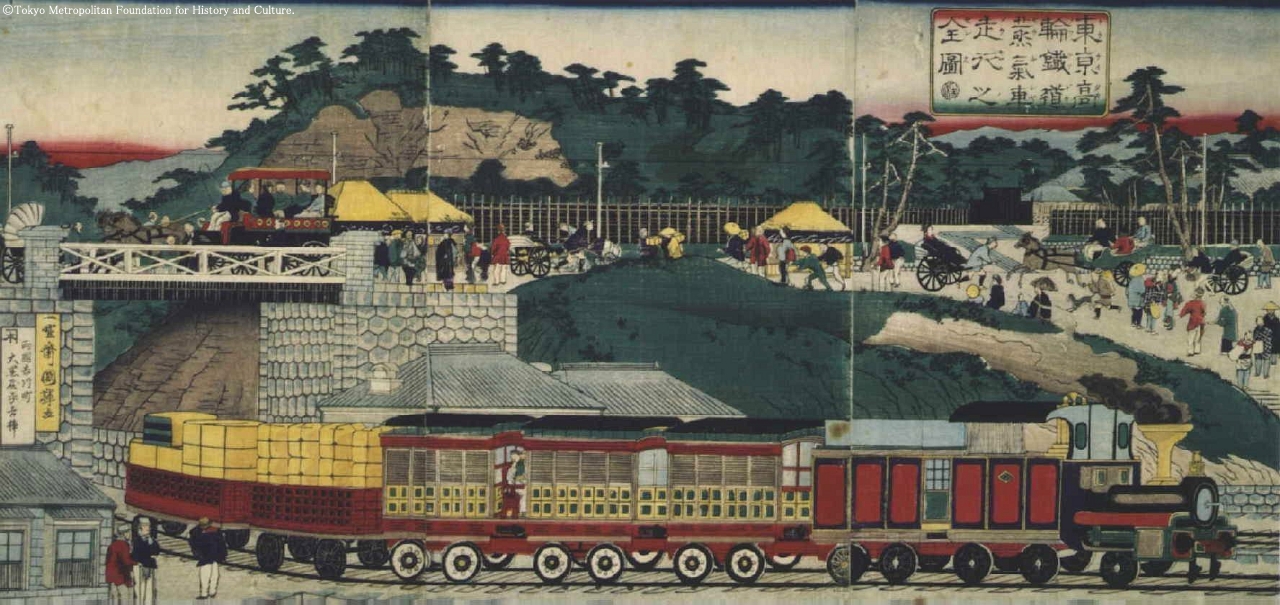
The Takanawa Steam Railway, Tokyo (Tōkyō Takanawa jōki tetsudō)
東京高輪蒸気鉄道
1872
Color woodblock print (nishiki-e), ōban triptych
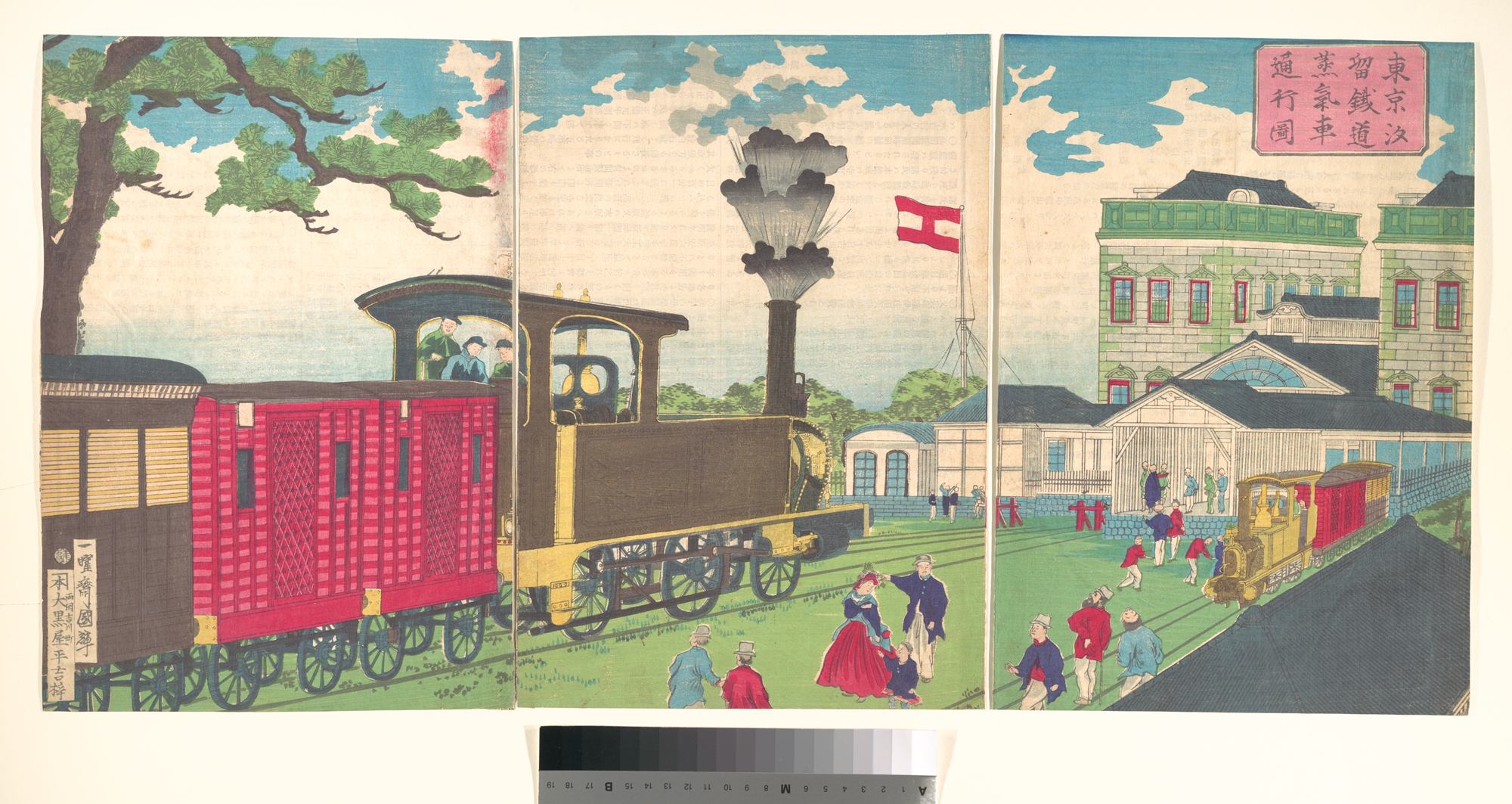
Steam Train Passing Shiodome in Tokyo (Tōkyō Shiodome o tōru jōki kikansha)
東京汐留を通る蒸気機関車
1872
Color woodblock print (nishiki-e), ōban triptych
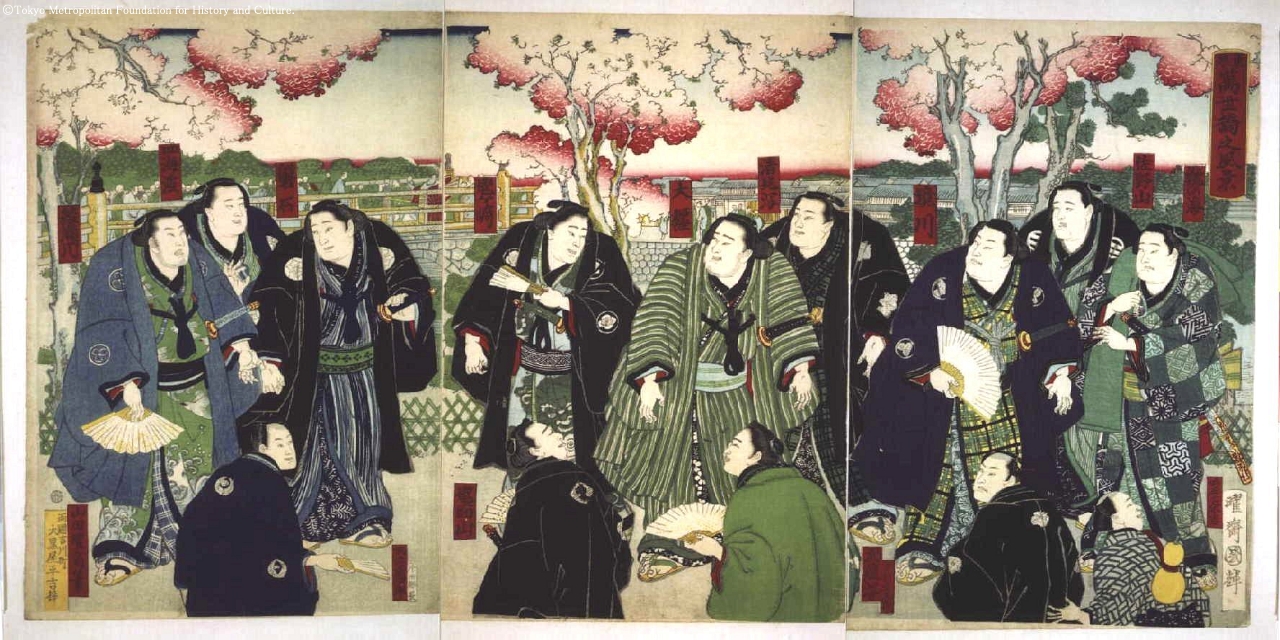
A View of Mansei Bridge in Tokyo (Tōkyō Manseibashi no zu)
東京萬世橋之図
ca. 1873
Color woodblock print (nishiki-e), ōban

At Nihonbashi, Starting the Ōyama Pilgrimage (Nihonbashi Ōyama mōde no zu)
日本橋大山詣之図
mid-Meiji, ca. 1872
Color woodblock print (nishiki-e), ōban triptych
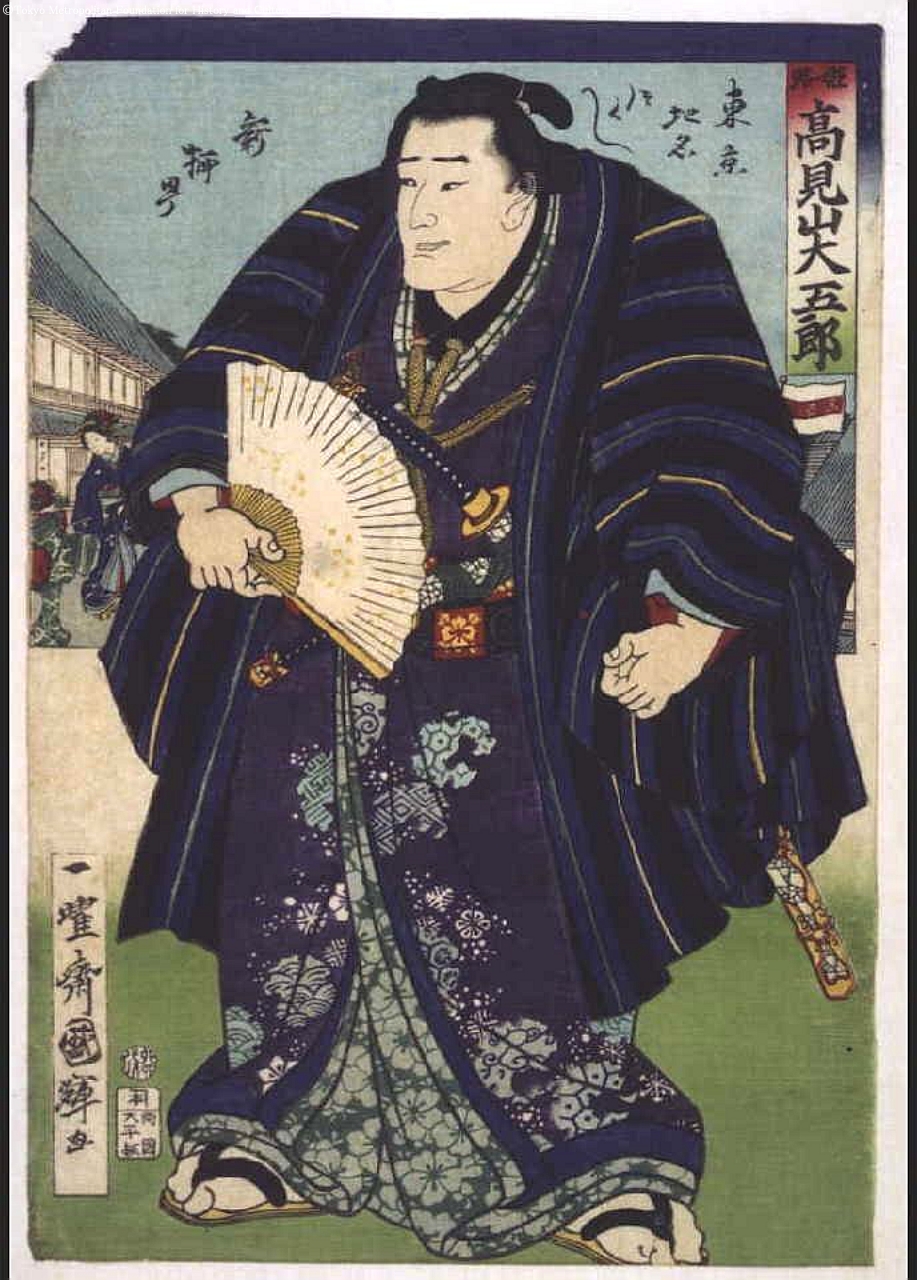
Standing Portrait of the Sumō Wrestler Takamiyama Daigorō
高見山大五郎立姿之図
ca. 1870–1874
Color woodblock print (nishiki-e), ōban
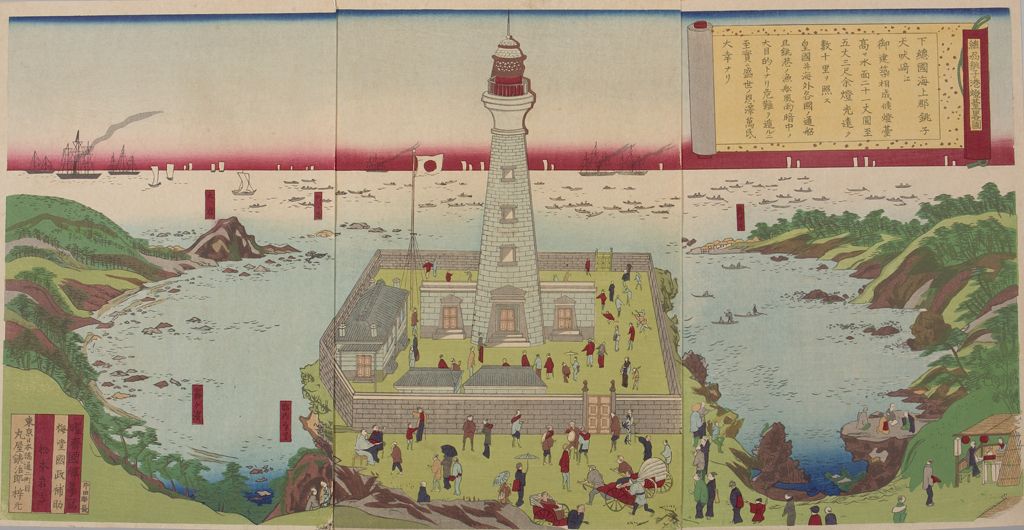
Harbor with Lighthouse and American Men and Ships
Meiji period, late 19th century
Color woodblock print (nishiki-e), ōban triptych
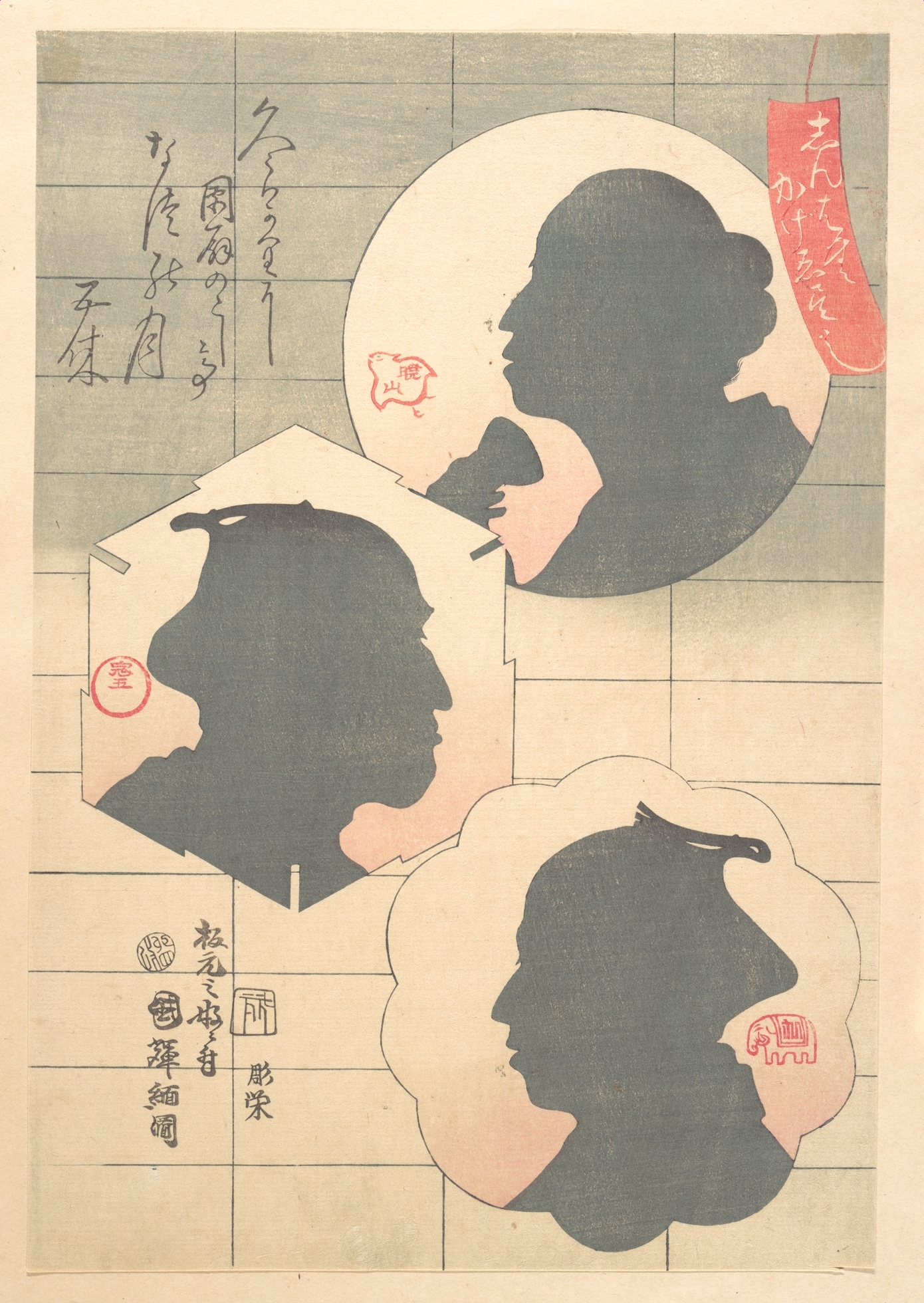
Silhouette Image of a Kabuki Actor
Meiji era, ca. 1869–1874
Color woodblock print (nishiki-e), ōban
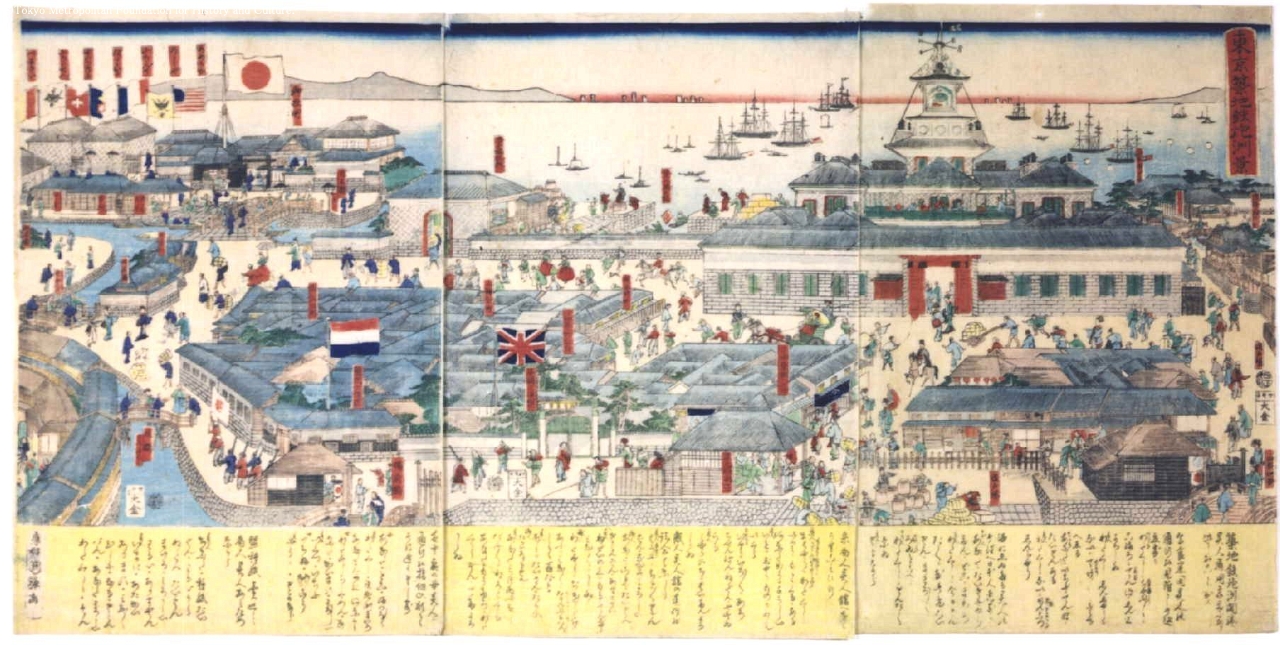
View of Teppōzu and Tsukiji, Tokyo (Tōkyō Teppōzu Tsukiji no zu)
東京鉄砲洲築地之図
ca. 1869–1872
Color woodblock print (nishiki-e), ōban
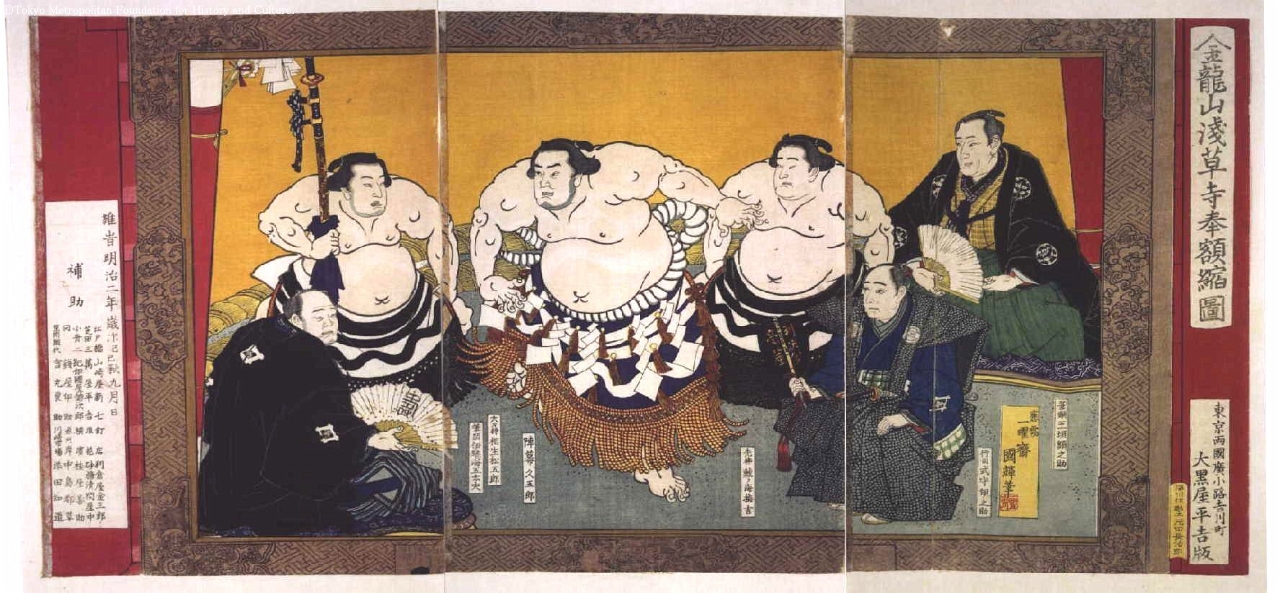
Sumō at the Kinryūzan Sensōji Temple (Kinryūzan Sensōji sumō no zu)
金龍山浅草寺相撲之図
early Meiji, ca. 1869–1873
Color woodblock print (nishiki-e), ōban triptych