
The actor Fujikawa Tomokichi II as Okaru, wife of Kanpei
- Date:
- early 19th century
- Medium:
- Color woodblock print; oban
- Source:
- Art Institute of Chicago
Description
This oban color woodblock print (nishiki-e), held by the Art Institute of Chicago (reference 32964, Frederick W. Gookin Collection), depicts the kabuki actor Fujikawa Tomokichi II in the role of Okaru, wife of Kanpei, one of the most celebrated female characters in the perennially popular play Kanadehon Chushingura — the dramatized account of the Forty-Seven Ronin and their long-meditated revenge for the death of their lord. The Okaru role is one of the great onnagata vehicles in the kabuki repertoire: Okaru is the loyal and tragic wife of Hayano Kanpei, a low-ranking member of the disgraced retinue who eventually rejoins the vendetta at the cost of his life. Fujikawa Tomokichi II (active in the first half of the nineteenth century) was a well-known onnagata of the Edo stage, and Kuniyasu's print belongs to the steady stream of yakusha-e produced in support of Chushingura productions throughout the Edo period. The sheet, at 34.2 by 22 cm, is in the standard oban format used for single-actor portraits and entered the Art Institute through the Frederick W. Gookin Collection. It is a representative example of Kuniyasu's actor-portrait practice and of the close commercial relationship between Edo print designers and the kabuki theatres of the Bunka-Bunsei decades.
More Prints by Utagawa Kuniyasu

Beauty representing spring, from an untitled series of beauties representing the four seasons
c. 1818/30
Color woodblock print; oban

Woman holding puppet of actor Onoe Kikugoro III as Gokuin Sen'emon
c. 1820s
Color woodblock print; sheet from oban pentaptych
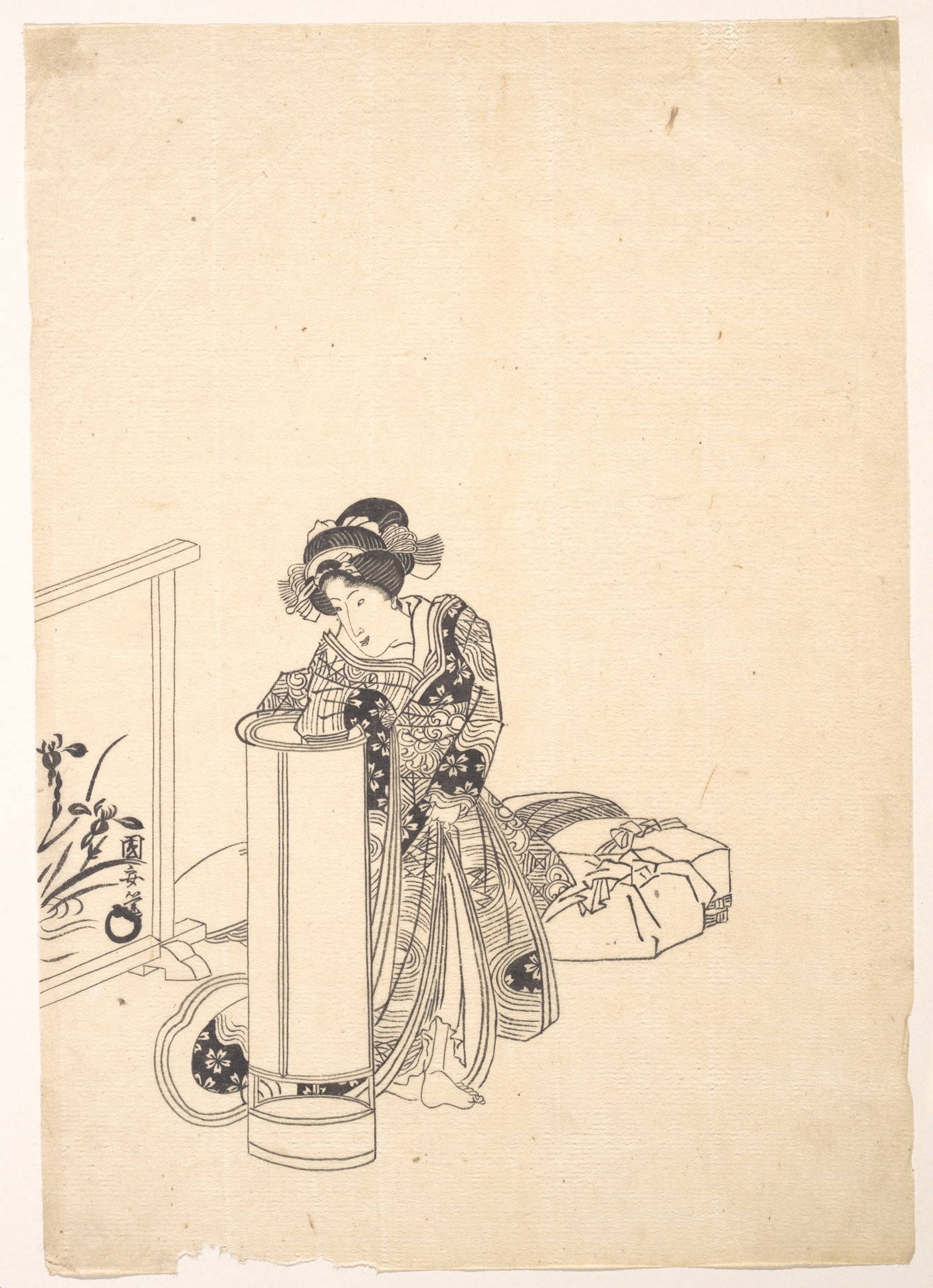
Young Woman Leaning over a Tall Lamp
early 19th century
Monochrome woodblock print; ink on paper

Beauty representing autumn, from an untitled series of beauties representing the four seasons
c. 1818/30
Color woodblock print; oban
More Mount Fuji Prints
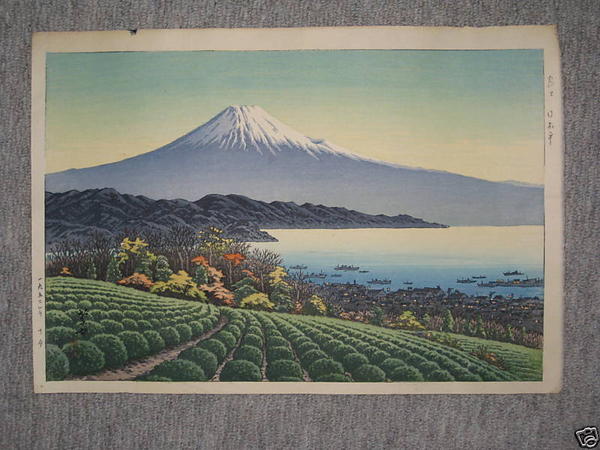
Fuji from tea farm
Woodblock print

Akasaka, Fujikawa, Okazaki, Chiryu, and Narumi, from the series "Famous Places on the Fifty-three Stations of the Tokaido, Five Stations (Tokaido gojusan eki goshuku meisho)"
c. 1830/35
Color woodblock print; oban
![Mount Fuji on a Moonlit Night, Kawai Bridge (Tsukiyo no Fuji [Kawaibashi]), from the series "Selection of Views of the Tokaido (Tokaido fukei senshu)" by Kawase Hasui](https://www.artic.edu/iiif/2/d0960668-1e73-339a-b182-fb995a54bff0/full/843,/0/default.jpg)
Mount Fuji on a Moonlit Night, Kawai Bridge (Tsukiyo no Fuji [Kawaibashi]), from the series "Selection of Views of the Tokaido (Tokaido fukei senshu)"
1947
Color woodblock print; oban

Mt. Fuji in Rain (Ame no Fuji)
n.d.
Color woodblock print
Featured in Collections
Curated cross-cuts that include this print.
Frequently Asked Questions
The actor Fujikawa Tomokichi II as Okaru, wife of Kanpei was created by Utagawa Kuniyasu (歌川国安) in early 19th century.
The actor Fujikawa Tomokichi II as Okaru, wife of Kanpei depicts mount fuji.