Oiwa's Ghost (Oiwa no borei)
- Date:
- 1860s
- Medium:
- Color woodblock print
- Source:
- Art Institute of Chicago
Description
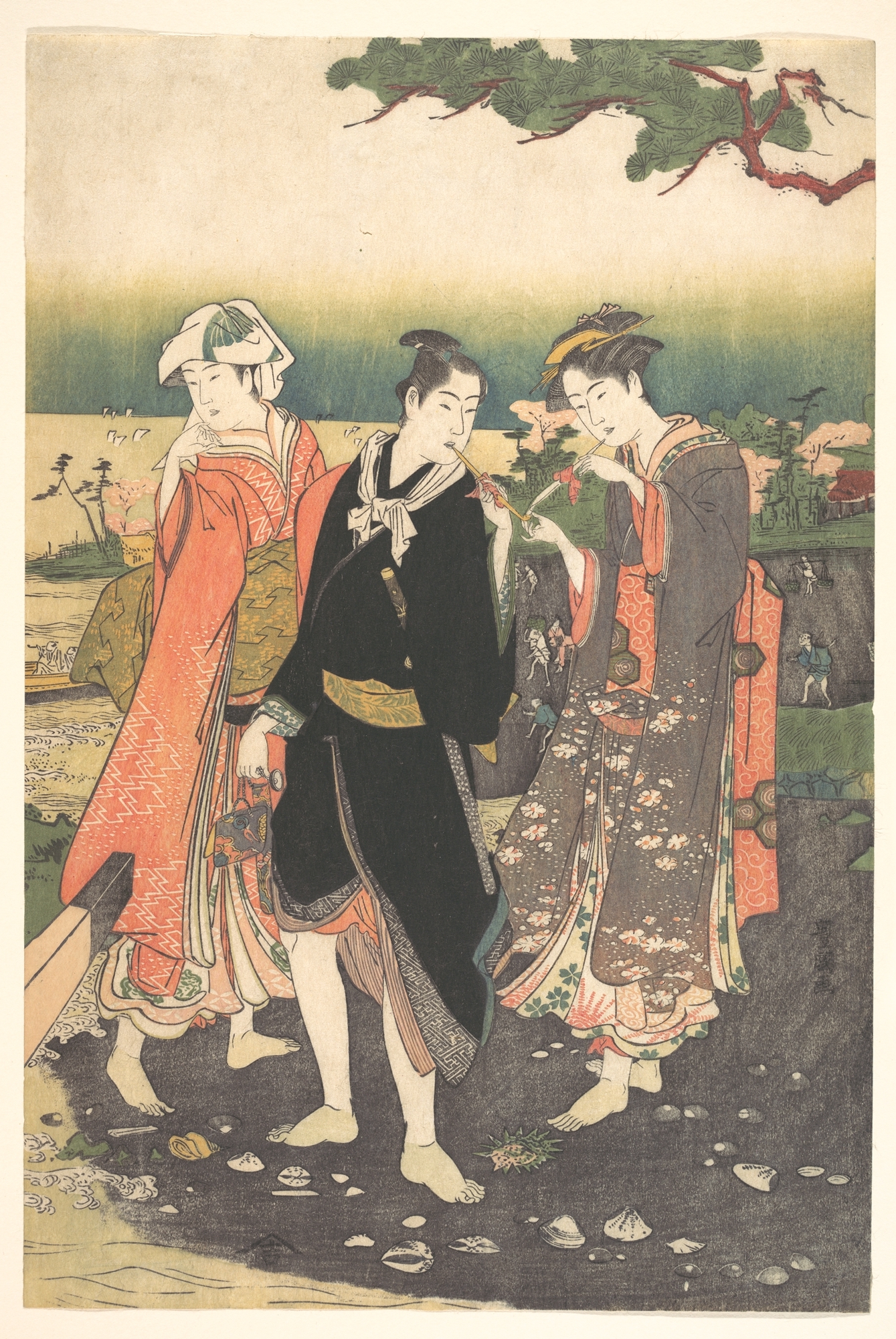
This Utagawa Toyokuni print, recorded by the Art Institute of Chicago and depicting Oiwa no borei, the ghost of Oiwa, engages one of the most enduring supernatural figures in Japanese theatrical culture. Oiwa, the disfigured spirit at the center of the kabuki ghost play Yotsuya Kaidan, became a touchstone for Edo audiences across the nineteenth century, and Edo [ukiyo-e](/glossary/ukiyo-e) [yakusha-e](/glossary/yakusha-e) and related prints repeatedly returned to her image. Toyokuni renders the apparition with a mix of theatrical and supernatural cues: the iconographic markers of Oiwa's transformation are present, but the figure is also clearly rooted in stage presentation rather than abstract demonology. His treatment of expression and posture keeps the ghost recognizably theatrical, suitable for an audience that had encountered Oiwa primarily through kabuki performance. The composition isolates the figure against a relatively quiet ground so that contour, pattern, and gesture carry the full expressive weight of the sheet. As a piece of Edo ukiyo-e in the ghostly and supernatural register, the print reflects the period's appetite for spirit imagery as well as the central role of Utagawa school designers in shaping that imagery. The work is also valuable as a reminder that Toyokuni's career encompassed not only celebratory and portrait modes but also the darker and more uncanny material that flourished in late Edo popular culture.