
Dutchman Strolling (Orandajin yuko)
和蘭人遊行
- Date:
- 1861
- Medium:
- Woodblock print (nishiki-e), ink and color on paper; oban
- Source:
- Art Institute of Chicago
Description
This 1861 color woodblock print (nishiki-e) in ōban format, held by the Art Institute of Chicago (accession number 1926.1624, gift of Emily Crane Chadbourne), belongs to the genre of Yokohama-e (横浜絵), prints depicting foreigners and Western life in the newly opened treaty port of Yokohama. The title "Orandajin yūkō" ("Dutchman Strolling") identifies the figure as a Dutchman, although in Yokohama-e of this period the term oranda often functioned as a generic label for any Western European or, by extension, any foreigner in Western dress. Yokohama had been opened to international trade in 1859, and the sudden visible presence of Americans, British, Dutch, Russians, and French traders, sailors, diplomats, and their families produced an enormous appetite among Edo audiences for prints depicting these exotic newcomers. Utagawa Yoshifuji was one of the most prolific Yokohama-e designers of 1860 and 1861, working alongside his teacher Kuniyoshi's other pupils such as Utagawa Yoshitora and Sadahide. His prints of the period combine a curiosity about Western costume, technology, and pastimes with the broader Edo print idiom, producing images that are both ethnographic documents and pieces of popular entertainment. The print is part of the Art Institute of Chicago's substantial collection of Japanese woodblock prints and is a representative example of Yoshifuji's contribution to the brief but intense Yokohama-e boom of the early 1860s.
More Prints by Utagawa Yoshifuji

Five Men Doing the Work of Ten Bodies (Gonin jushin no hataraki)
五人十身の働き
1861
Woodblock print (nishiki-e), ink and color on paper; oban
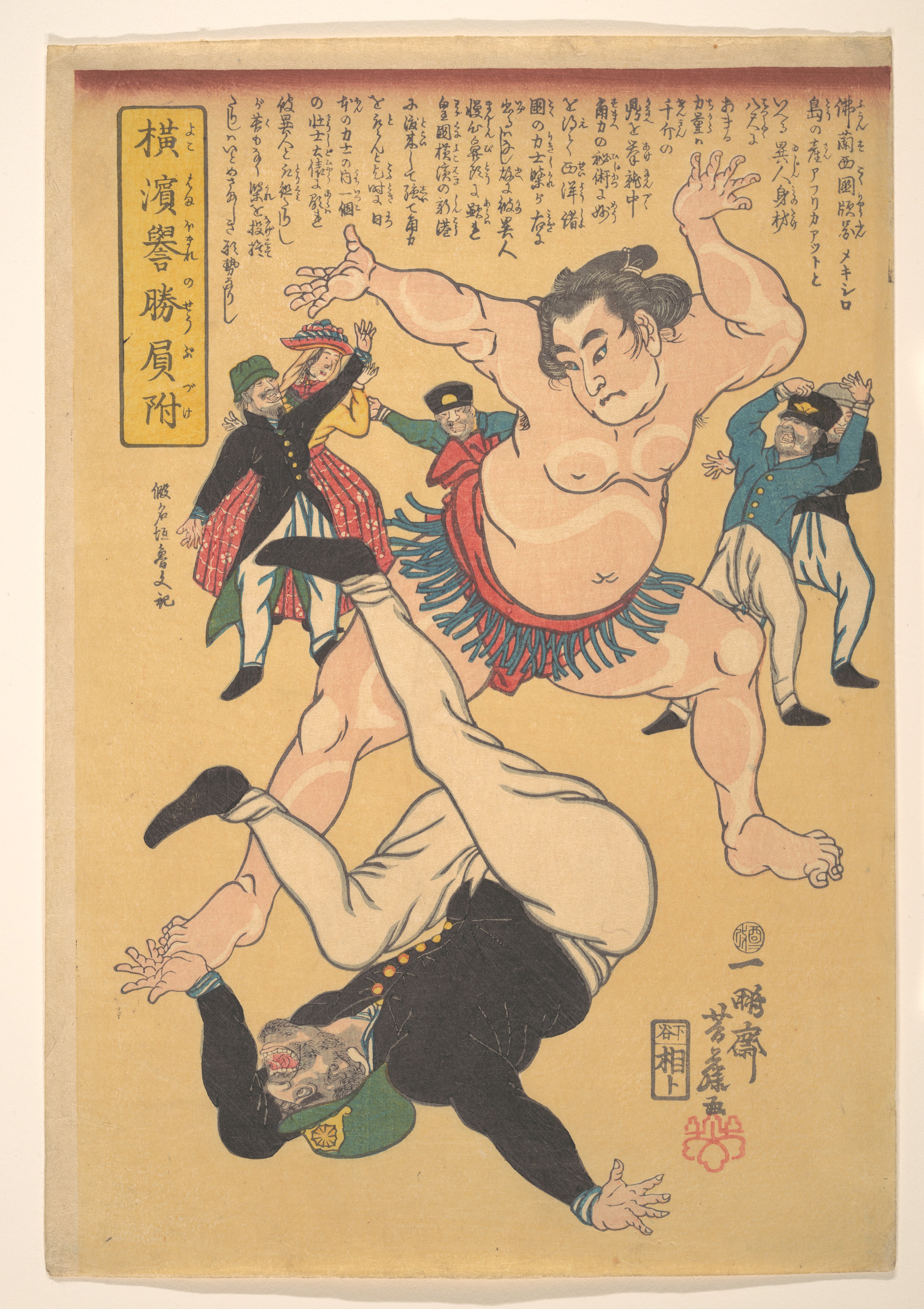
Yokohama Sumo Wrestler Defeating a Foreigner
2nd month, 1861
Woodblock print (nishiki-e), ink and color on paper

Woman Seamstress with Landscape Fan, from the series Toto Meisho Kurabe
東都名所競
1860s
Woodblock print (nishiki-e), ink and color on paper
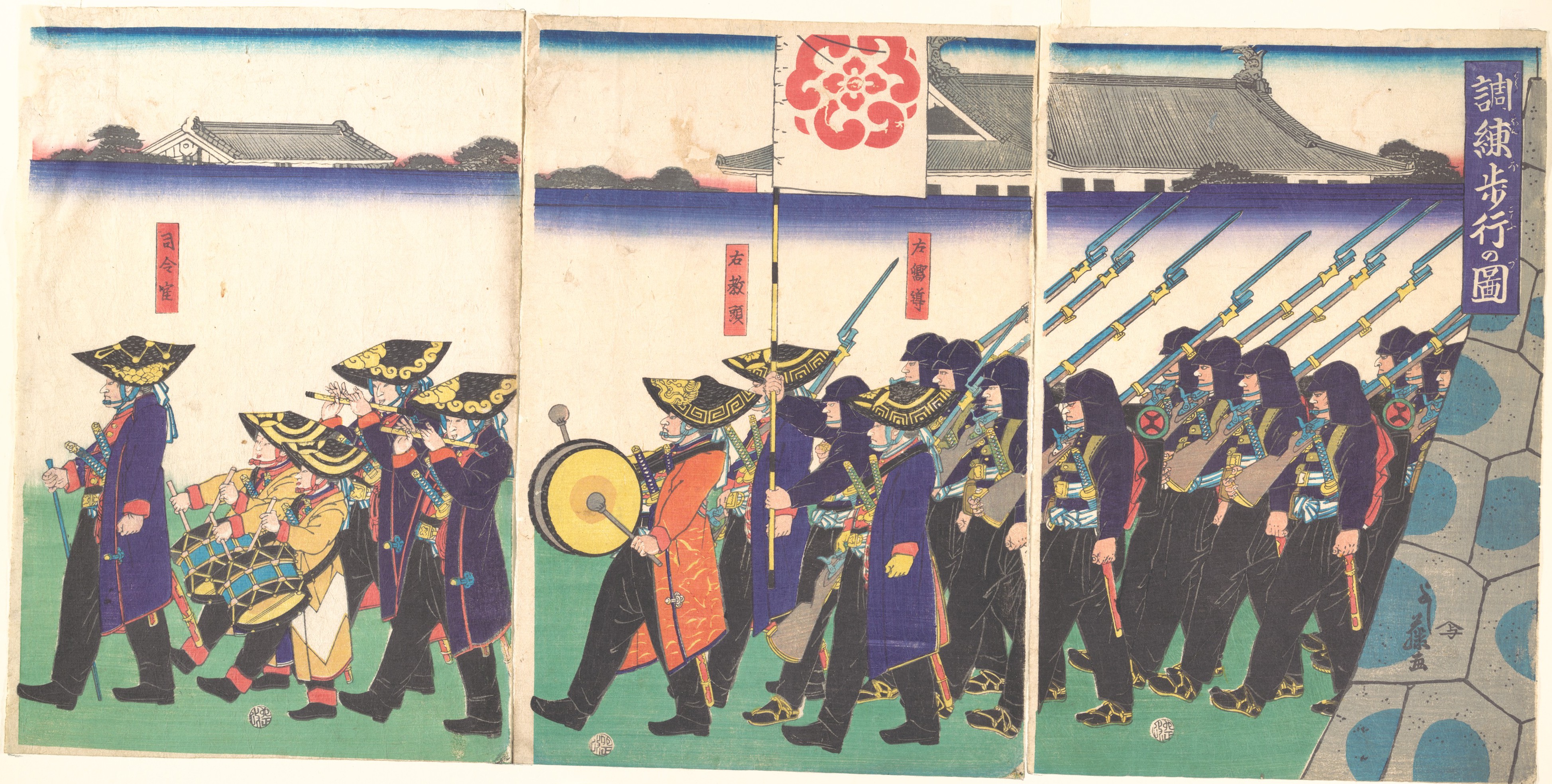
Parade of the Emperor's Troops
1867
Triptych of woodblock prints (nishiki-e), ink and color on paper; oban
Frequently Asked Questions
Dutchman Strolling (Orandajin yuko) (和蘭人遊行) was created by Utagawa Yoshifuji (歌川芳藤) in 1861.