
Biography
Utagawa Yoshifuji (歌川芳藤, 1828-1887), who also worked under the art name Ippōsai Yoshifuji (一鵬斎芳藤), was a late-Edo and early-Meiji ukiyo-e designer active in Edo (Tokyo) and a pupil of the great Utagawa Kuniyoshi (1797-1861). Although Yoshifuji produced a substantial body of conventional yakusha-e (actor prints), musha-e (warrior prints), historical scenes, and Yokohama-e (prints depicting foreigners in the newly opened treaty port), he is best remembered as a leading designer of omocha-e (玩具絵), the popular Japanese genre of "toy prints" produced specifically for children. His prolific output in this category earned him the affectionate nickname "Omocha Yoshifuji" (the Toy Yoshifuji).
Yoshifuji, whose real name was Nishimura Tōtarō, entered the studio of Utagawa Kuniyoshi as a young man and emerged as one of the most accomplished of the dense generation of Kuniyoshi pupils, whose ranks also included Tsukioka Yoshitoshi, Utagawa Yoshiiku, Kawanabe Kyōsai, and Utagawa Yoshikazu. Like his teacher, Yoshifuji was a versatile and imaginative draughtsman with a strong taste for visual wit, optical games, and inventive composition, qualities that would become hallmarks of his mature omocha-e practice. From the late 1840s through the early 1860s his output spanned the standard Utagawa school genres: portraits of kabuki actors, scenes from historical romances such as the Chūshingura cycle and the campaigns of Toyotomi Hideyoshi and Oda Nobunaga, and the new genre of Yokohama-e that flourished after the opening of the port of Yokohama in 1859.
It is the omocha-e genre, however, that defines Yoshifuji's place in Japanese print history. Omocha-e were inexpensive woodblock-printed sheets aimed at the children's market, encompassing a wide range of subtypes: kumiage-e (組上絵, cut-and-assemble paper construction prints that built up into models of buildings, palanquins, or boats), sugoroku (双六, illustrated board games played with dice), karuta (歌留多, illustrated playing cards), visual puzzle prints in which a complex composition could be read as either one image or many figures, and clever transformation and trick prints. They sometimes carried educational content as well, teaching children the syllabary, the names of provinces, or the costumes of foreign nations. Yoshifuji designed prints of every kind across the late 1850s, 1860s, and 1870s, and is regarded as the foremost designer of the genre.
A recurring formal device in Yoshifuji's omocha-e is the multi-figure optical puzzle, in which a group of human bodies, animals, or objects is arranged to suggest a different reading at a distance, a tradition with roots in the older yose-e or "gathered picture" idiom. His celebrated 1861 print "Five Men Doing the Work of Ten Bodies" (Gonin jūshin no hataraki), held by the Art Institute of Chicago and the Metropolitan Museum of Art, depicts five entwined male figures whose limbs combine to suggest ten people at work, a kind of visual riddle that delighted children and adults alike.
With the Meiji Restoration of 1868, Yoshifuji turned increasingly to large historical triptychs of episodes from the unification wars of the sixteenth century, including the campaigns of Toyotomi Hideyoshi. He continued to design for the children's market into the 1880s. Today Yoshifuji's prints are held by the Metropolitan Museum of Art, the Art Institute of Chicago, and other public collections.
Key Facts
- Active Period
- 1828–1887
- Nationality
- 🇯🇵Japan
- Movement
- Ukiyo-e
- Works Indexed
- 9
Frequently Asked Questions
Utagawa Yoshifuji (歌川芳藤, 1828-1887), who also worked under the art name Ippōsai Yoshifuji (一鵬斎芳藤), was a late-Edo and early-Meiji ukiyo-e designer active in Edo (Tokyo) and a pupil of the great Utagawa Kuniyoshi (1797-1861). Although Yoshifuji produced a substantial body of conventional yakusha-e (actor prints), musha-e (warrior prints), historical scenes, and Yokohama-e (prints depicting foreigners in the newly opened treaty port), he is best remembered as a leading designer of omocha-e (玩具絵), the popular Japanese genre of "toy prints" produced specifically for children. His prolific output in this category earned him the affectionate nickname "Omocha Yoshifuji" (the Toy Yoshifuji).
Utagawa Yoshifuji was active from 1828 to 1887. They were associated with the Ukiyo-e movement.
Utagawa Yoshifuji's work was shaped by the Ukiyo-e tradition in Japanese woodblock printmaking. Ukiyo-e: ## What is ukiyo-e? Ukiyo-e ([浮世絵](/glossary/ukiyo-e)) — literally "pictures of the floating world" — is the Edo-period Japanese print and painting tradition that flourished from roughly 1660 to 1868, depicting the pleasures of urban life in Edo (modern Tokyo): courtesans, kabuki actors, sumo wrestlers, famous landscapes, and seasonal beauties.
Original prints by Utagawa Yoshifuji can be found in collections including Art Institute of Chicago, Metropolitan Museum of Art.
Woodblock Prints by Utagawa Yoshifuji (9)

Five Men Doing the Work of Ten Bodies (Gonin jushin no hataraki)
五人十身の働き
1861
Woodblock print (nishiki-e), ink and color on paper; oban
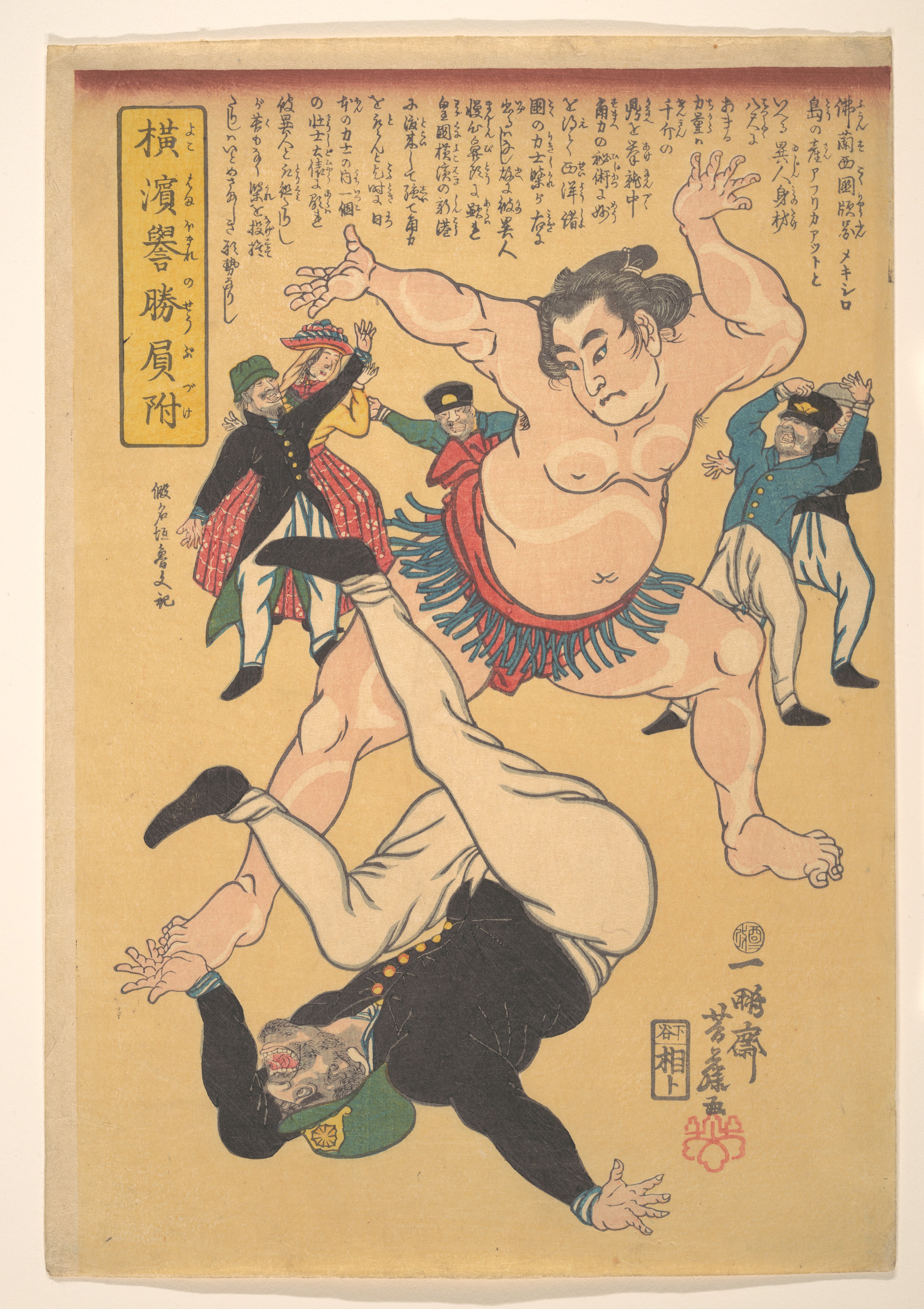
Yokohama Sumo Wrestler Defeating a Foreigner
2nd month, 1861
Woodblock print (nishiki-e), ink and color on paper
Dutchman Strolling (Orandajin yuko)
和蘭人遊行
1861
Woodblock print (nishiki-e), ink and color on paper; oban
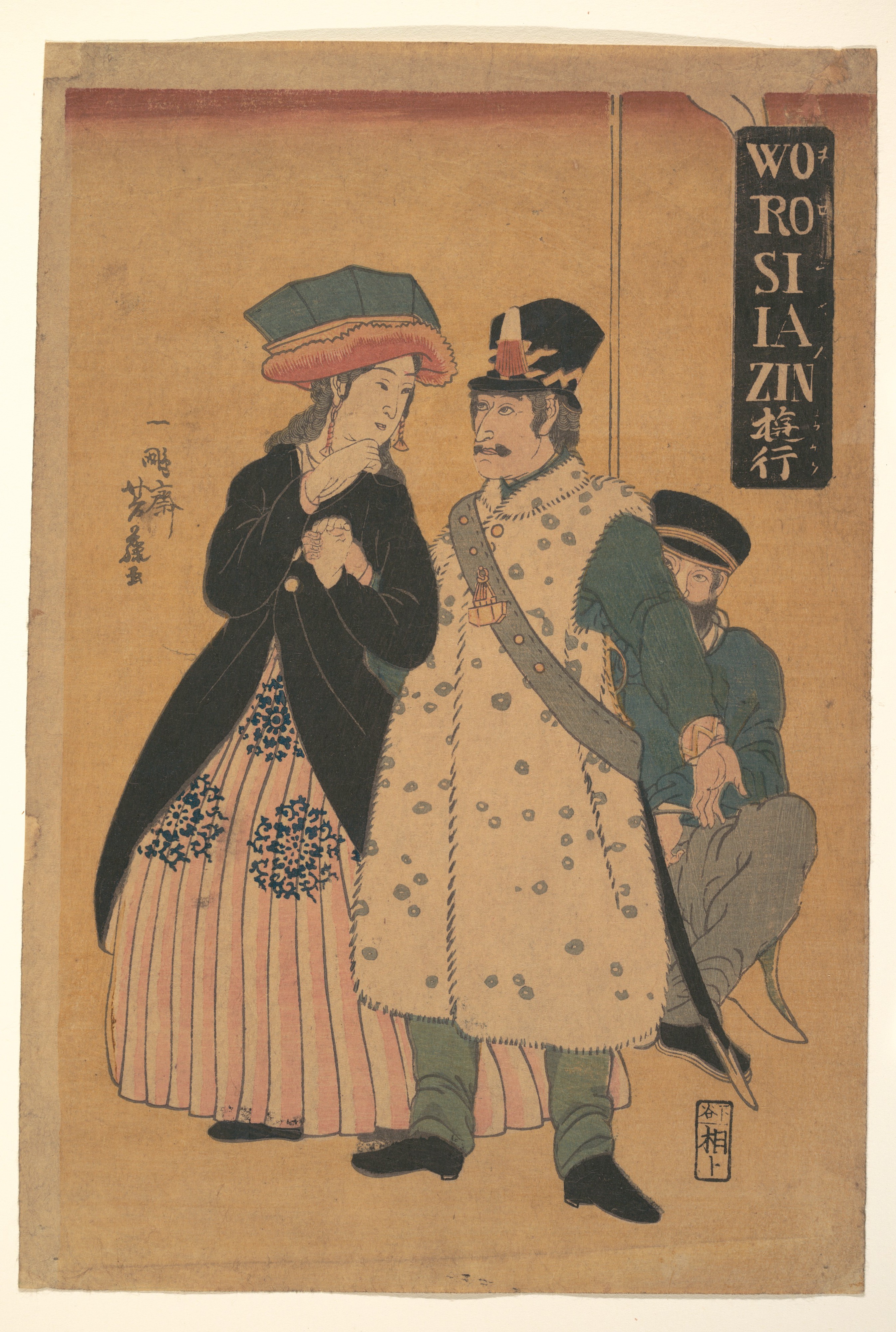
Russians Strolling
February 1861
Woodblock print (nishiki-e), ink and color on paper; oban

Act 12 (Junidanme), from the series The Storehouse of Loyal Retainers (Kanadehon Chushingura)
仮名手本忠臣蔵 十二段目
1862
Woodblock print (nishiki-e), ink and color on paper; oban
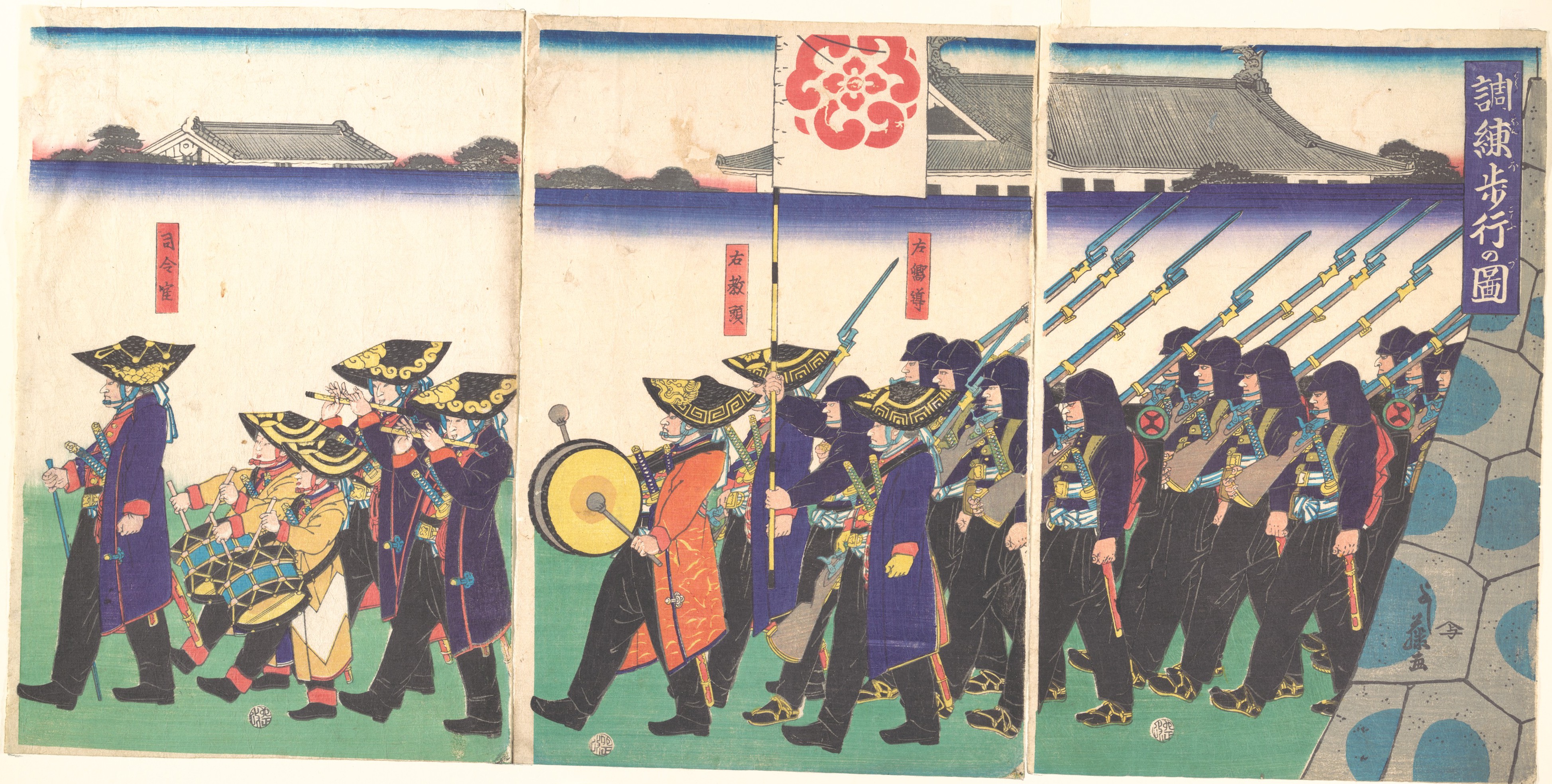
Parade of the Emperor's Troops
1867
Triptych of woodblock prints (nishiki-e), ink and color on paper; oban

Mori Ranmaru Killed in Battle at Honnoji (Honnoji ni Mori Ranmaru uchijini no zu), from the series The Record of Toyotomi's Achievements (Toyotomi kunkoki)
本能寺に森蘭丸討死之図
1886
Woodblock print (nishiki-e), ink and color on paper; oban triptych

Lord Oda Nobunaga Viewing the Restoration of Kiyosu Castle (Oda Nobunaga ko Kiyosujo shuzen goran no zu)
織田信長公清洲城修繕御覧之図
1888 (printed posthumously)
Woodblock print (nishiki-e), ink and color on paper; oban triptych

Woman Seamstress with Landscape Fan, from the series Toto Meisho Kurabe
東都名所競
1860s
Woodblock print (nishiki-e), ink and color on paper