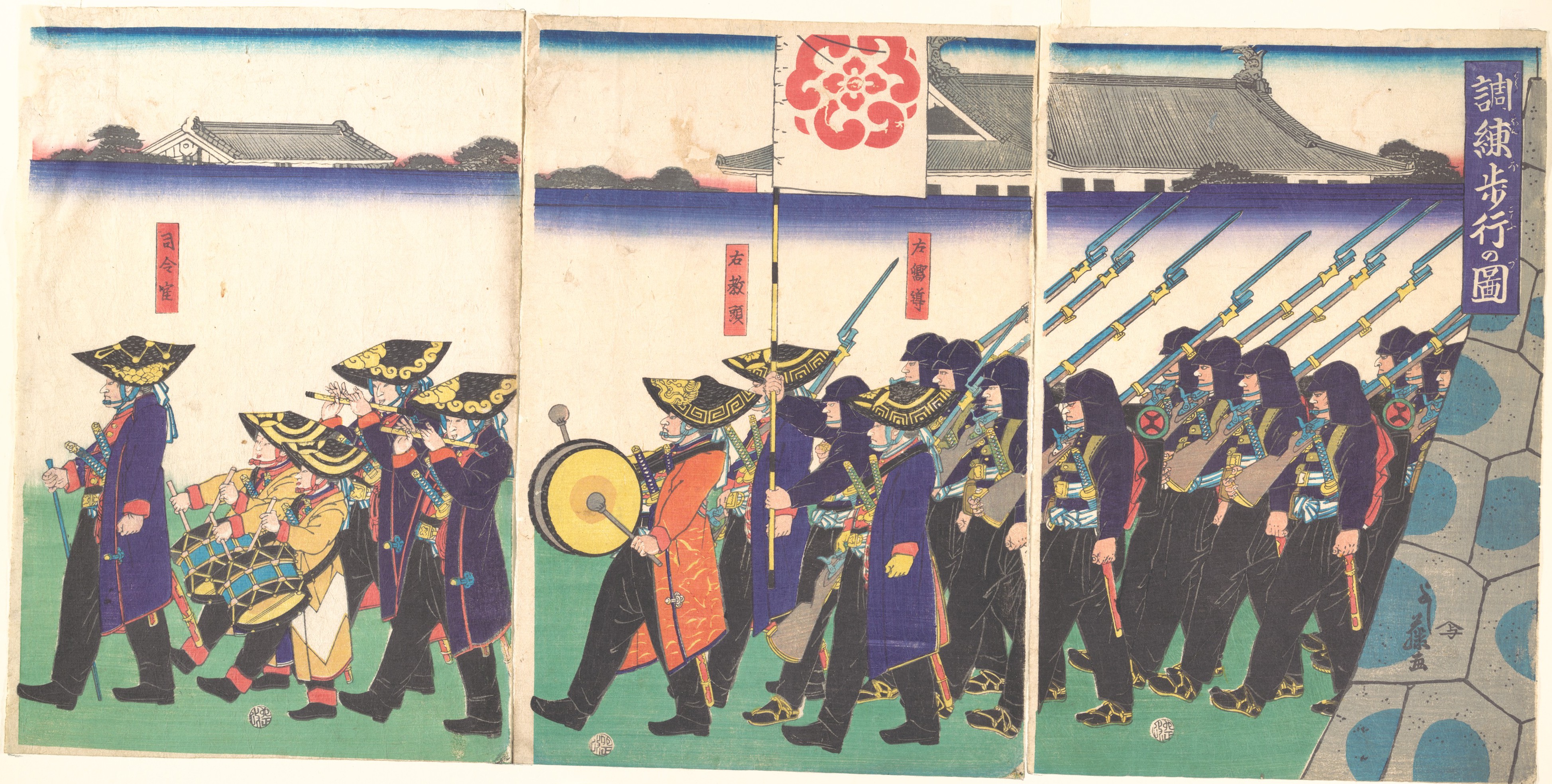
Parade of the Emperor's Troops
- Date:
- 1867
- Medium:
- Triptych of woodblock prints (nishiki-e), ink and color on paper; oban
- Source:
- Metropolitan Museum of Art
Description
This 1867 woodblock print (nishiki-e) triptych in ōban format, held by the Metropolitan Museum of Art (accession number JP3424), depicts a parade of imperial troops in the final year of the Tokugawa shogunate. The print was produced in the last year of the Keiō era, immediately before the formal transfer of power from the shogunate to the imperial court that constituted the Meiji Restoration of 1868. The image therefore documents a transitional moment in Japanese political history, when imperial military forces were beginning to assert themselves as the legitimate centre of armed authority in the country. The triptych format, with its wide horizontal span across three ōban sheets, allowed Utagawa Yoshifuji to depict the parade as a long procession of mounted and foot soldiers passing across the composition, a scale of military spectacle that ōban triptychs had been designed to accommodate since the early nineteenth century. Yoshifuji's later musha-e and historical prints would continue to develop this triptych mode, particularly in the historical campaigns of Nobunaga and Hideyoshi that he depicted in the 1880s. The print is part of the Metropolitan Museum's collection of nineteenth-century Japanese prints and is a useful witness to the rapidly shifting visual politics of the final years of the Edo period.
More Prints by Utagawa Yoshifuji

Five Men Doing the Work of Ten Bodies (Gonin jushin no hataraki)
五人十身の働き
1861
Woodblock print (nishiki-e), ink and color on paper; oban
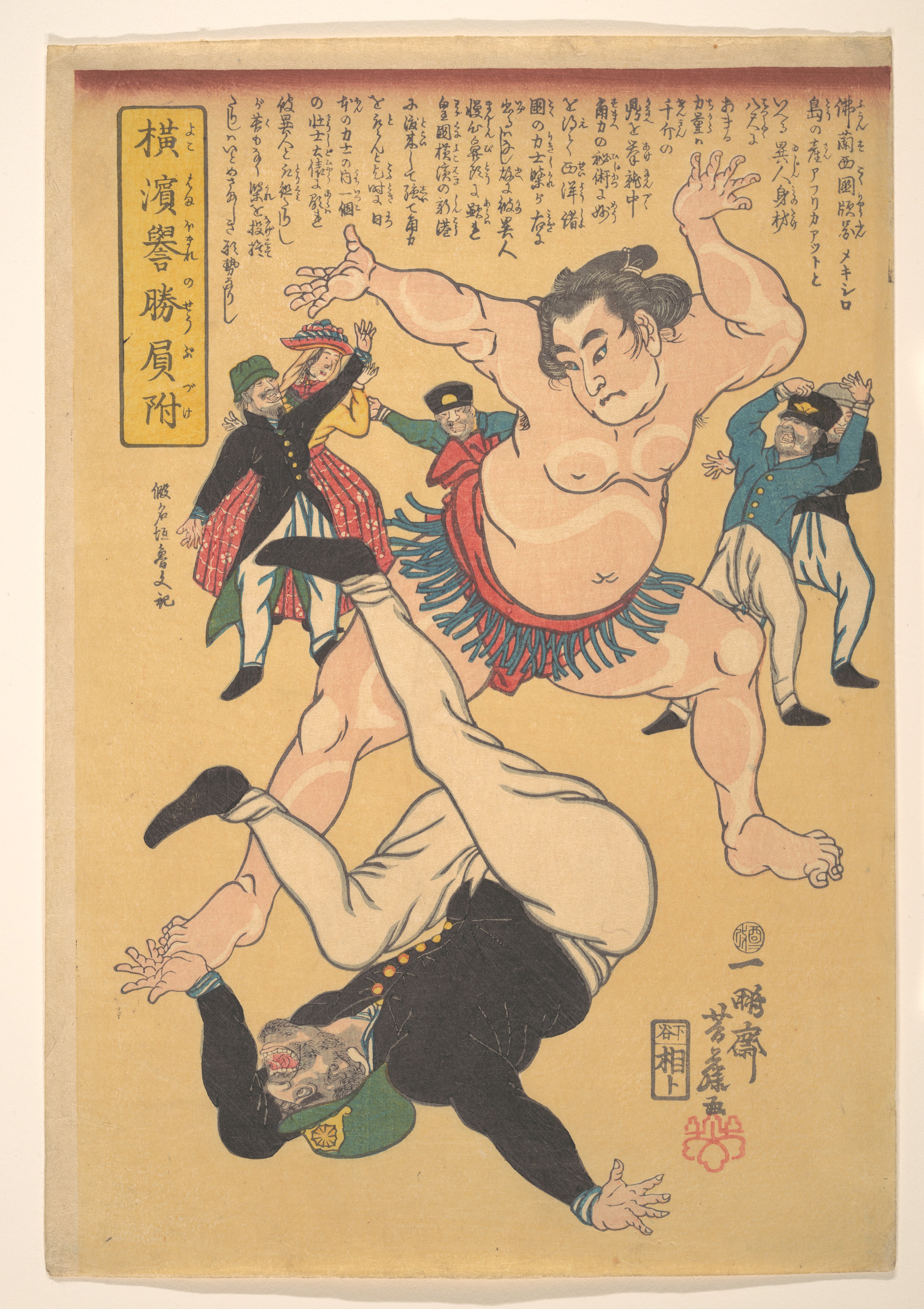
Yokohama Sumo Wrestler Defeating a Foreigner
2nd month, 1861
Woodblock print (nishiki-e), ink and color on paper

Woman Seamstress with Landscape Fan, from the series Toto Meisho Kurabe
東都名所競
1860s
Woodblock print (nishiki-e), ink and color on paper

Dutchman Strolling (Orandajin yuko)
和蘭人遊行
1861
Woodblock print (nishiki-e), ink and color on paper; oban
Frequently Asked Questions
Parade of the Emperor's Troops was created by Utagawa Yoshifuji (歌川芳藤) in 1867.