
Five Men Doing the Work of Ten Bodies (Gonin jushin no hataraki)
五人十身の働き
- Date:
- 1861
- Medium:
- Woodblock print (nishiki-e), ink and color on paper; oban
- Source:
- Art Institute of Chicago
Description
Five foreign men in military-style uniforms of green, red, blue, and black tumble and interlock in a vertical acrobatic pile against a solid yellow ground, their white trousers and black boots splayed outward while one figure at right, in a blue headwrap, grips a black open umbrella and a small bell. Each figure is labeled with a cartouche naming his nationality, and a title cartouche with red ground and black characters sits in the upper right; a black-bordered rectangular frame contains the whole scene. The palette is limited to flat yellow, red, green, blue, black, and white with fine black outlines, and an artist's signature and seal appear at upper left. Utagawa Yoshifuji, 1861, nishiki-e woodblock print, oban.
More Prints by Utagawa Yoshifuji
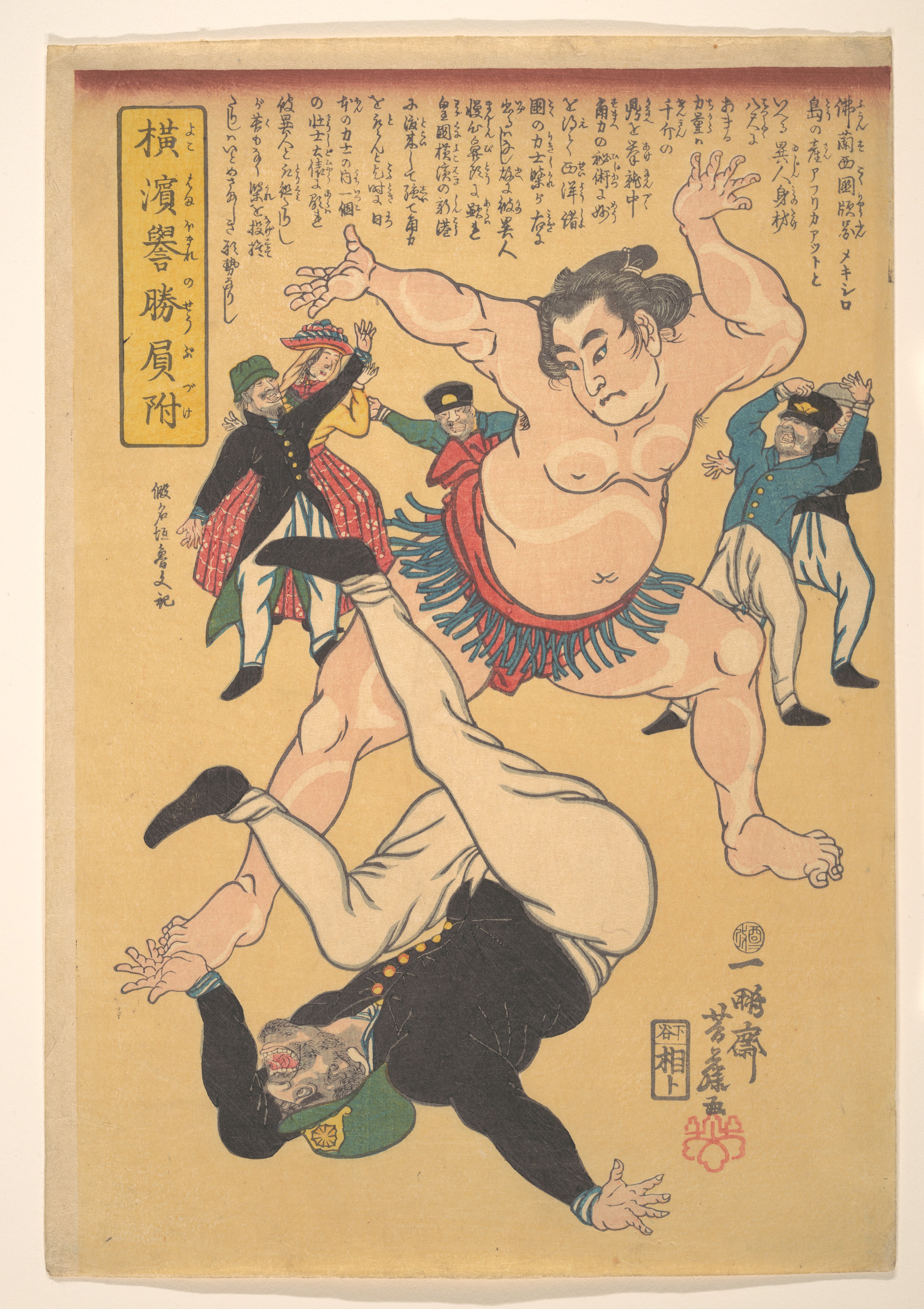
Yokohama Sumo Wrestler Defeating a Foreigner
2nd month, 1861
Woodblock print (nishiki-e), ink and color on paper

Woman Seamstress with Landscape Fan, from the series Toto Meisho Kurabe
東都名所競
1860s
Woodblock print (nishiki-e), ink and color on paper
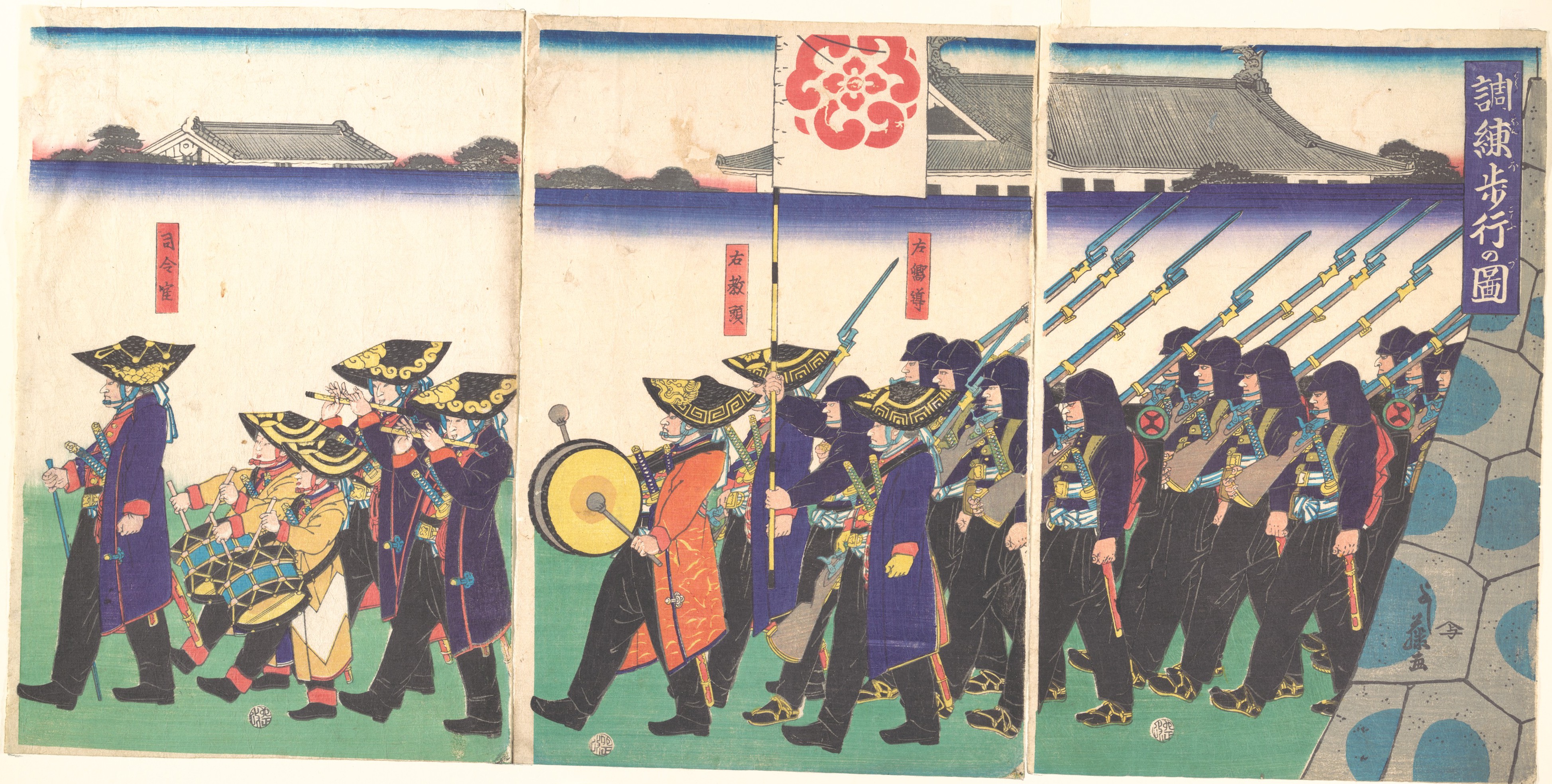
Parade of the Emperor's Troops
1867
Triptych of woodblock prints (nishiki-e), ink and color on paper; oban

Dutchman Strolling (Orandajin yuko)
和蘭人遊行
1861
Woodblock print (nishiki-e), ink and color on paper; oban
Frequently Asked Questions
Five Men Doing the Work of Ten Bodies (Gonin jushin no hataraki) (五人十身の働き) was created by Utagawa Yoshifuji (歌川芳藤) in 1861.