
Mori Ranmaru Killed in Battle at Honnoji (Honnoji ni Mori Ranmaru uchijini no zu), from the series The Record of Toyotomi's Achievements (Toyotomi kunkoki)
本能寺に森蘭丸討死之図
- Date:
- 1886
- Medium:
- Woodblock print (nishiki-e), ink and color on paper; oban triptych
- Source:
- Art Institute of Chicago
Description
This 1886 color woodblock print (nishiki-e) triptych in ōban format, held by the Art Institute of Chicago (accession number 1995.206.3), depicts the death in battle of Mori Ranmaru at the Honnō-ji temple in Kyoto, one of the most famous episodes in the violent unification wars of late-sixteenth-century Japan. Mori Ranmaru (1565-1582) was the close attendant and reputed favourite of the warlord Oda Nobunaga, and the two died together at Honnō-ji in June 1582 when one of Nobunaga's generals, Akechi Mitsuhide, unexpectedly turned on his lord and attacked the temple where Nobunaga was lodged. The episode is one of the foundational moments of the late-Sengoku period and has been a perennial favourite of Japanese theatre and print culture. Utagawa Yoshifuji's print belongs to a series titled "The Record of Toyotomi's Achievements" (Toyotomi kunkōki), one of the many cycles of the 1880s celebrating the deeds of Toyotomi Hideyoshi, the general who avenged Nobunaga's death and went on to unify the country. The triptych dates from the year before Yoshifuji's death and is a representative example of his late-career musha-e (warrior print) practice, in which the dramatic violence and theatrical staging of late-Edo battle prints continued into the Meiji period. It is part of the Art Institute of Chicago's Japanese print collection.
More Prints by Utagawa Yoshifuji

Five Men Doing the Work of Ten Bodies (Gonin jushin no hataraki)
五人十身の働き
1861
Woodblock print (nishiki-e), ink and color on paper; oban
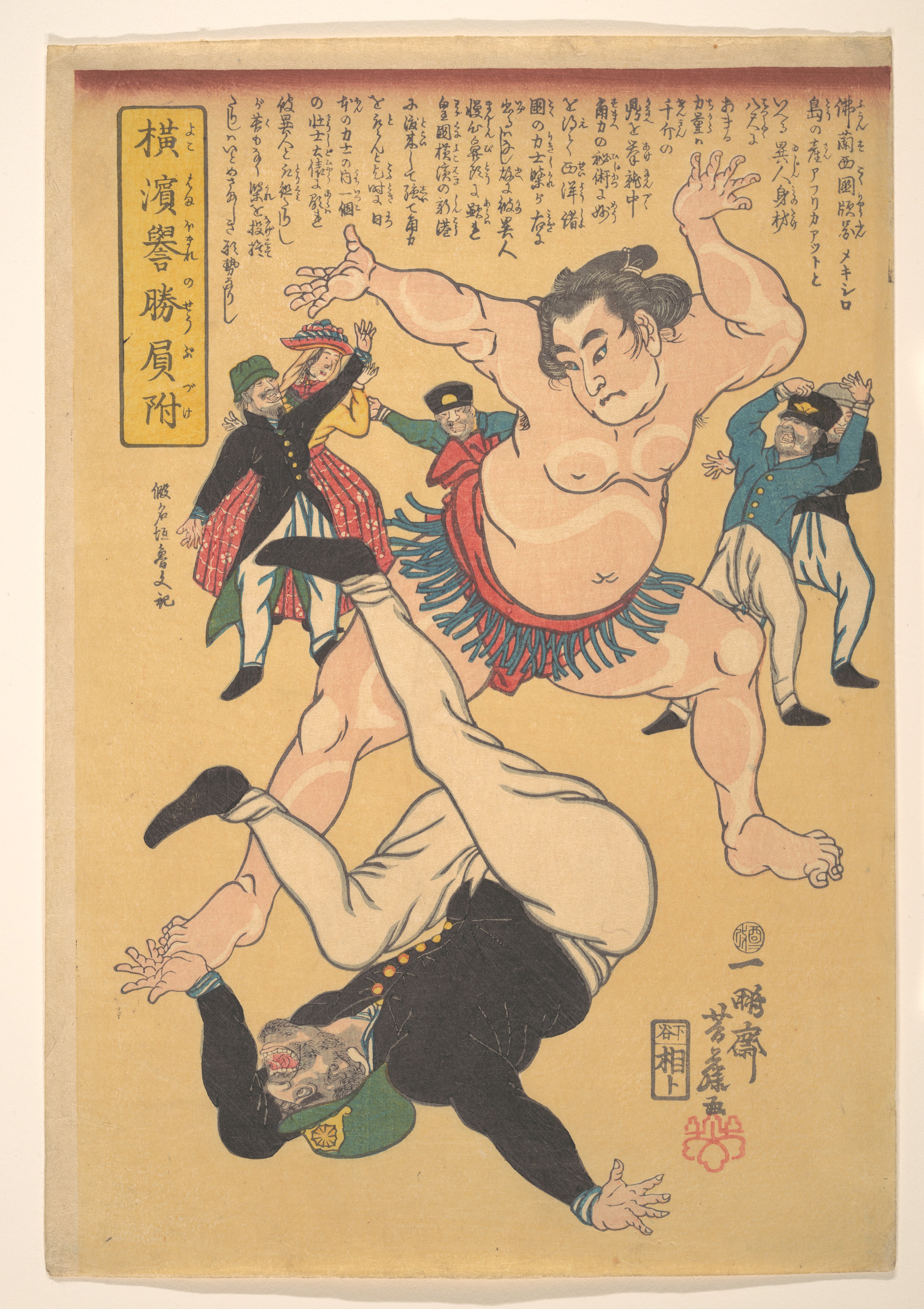
Yokohama Sumo Wrestler Defeating a Foreigner
2nd month, 1861
Woodblock print (nishiki-e), ink and color on paper

Woman Seamstress with Landscape Fan, from the series Toto Meisho Kurabe
東都名所競
1860s
Woodblock print (nishiki-e), ink and color on paper
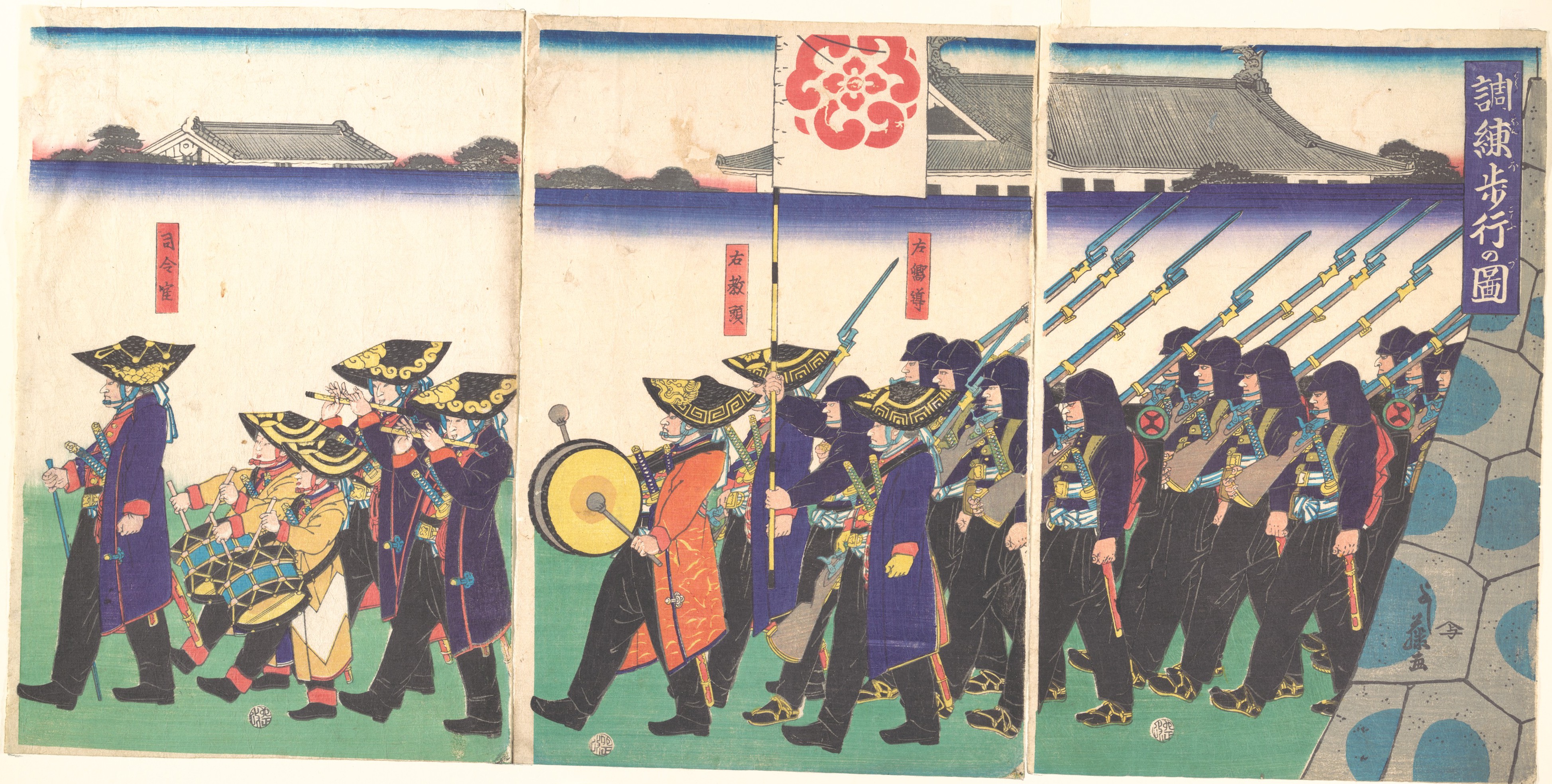
Parade of the Emperor's Troops
1867
Triptych of woodblock prints (nishiki-e), ink and color on paper; oban
Frequently Asked Questions
Mori Ranmaru Killed in Battle at Honnoji (Honnoji ni Mori Ranmaru uchijini no zu), from the series The Record of Toyotomi's Achievements (Toyotomi kunkoki) (本能寺に森蘭丸討死之図) was created by Utagawa Yoshifuji (歌川芳藤) in 1886.