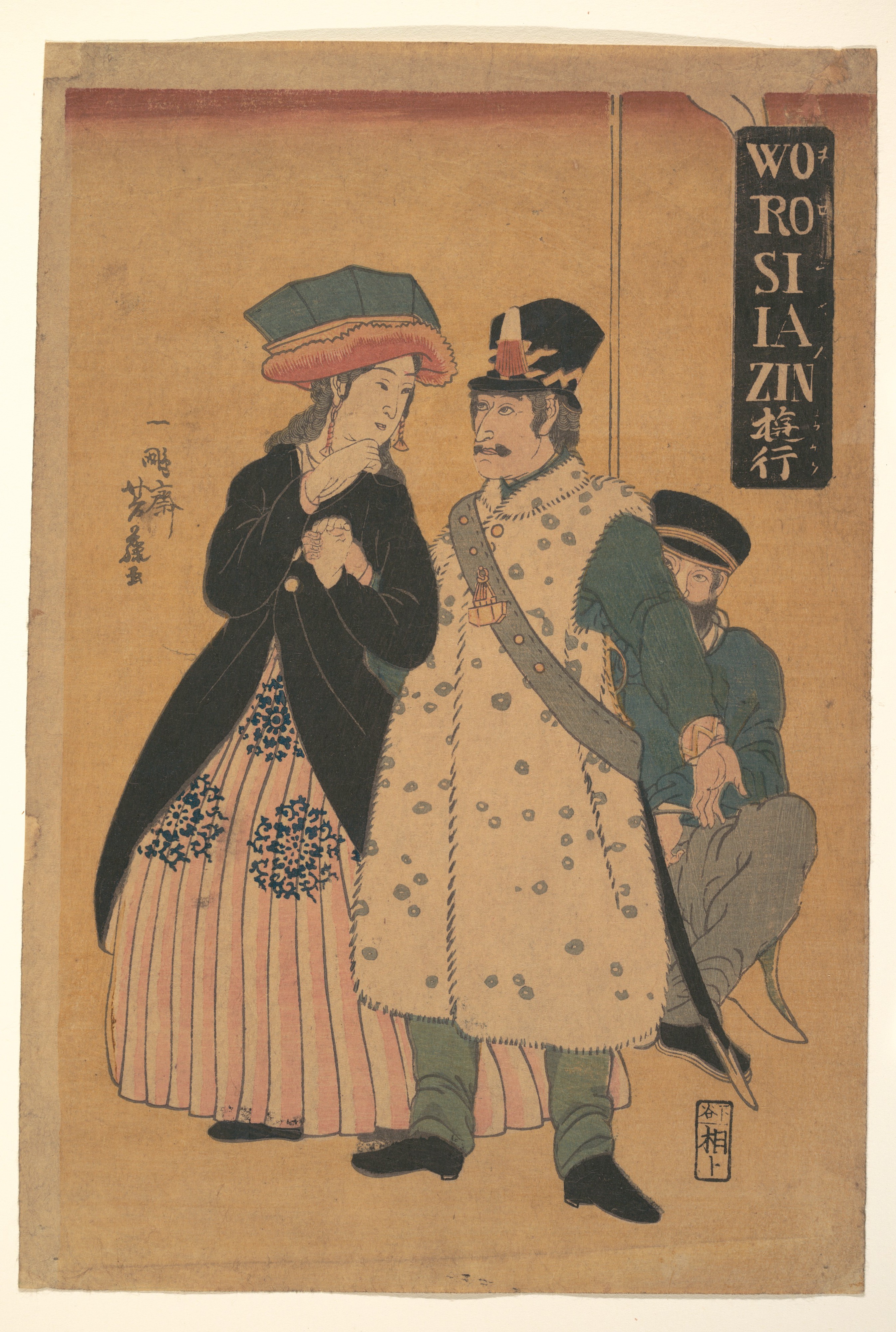
Russians Strolling
- Date:
- February 1861
- Medium:
- Woodblock print (nishiki-e), ink and color on paper; oban
- Source:
- Metropolitan Museum of Art
Description
This February 1861 woodblock print (nishiki-e) in ōban format, held by the Metropolitan Museum of Art (accession number JP3322), depicts a group of Russians walking together in the newly opened treaty port of Yokohama. The print belongs to the Yokohama-e (横浜絵) tradition, the brief but intense vogue of 1860 and 1861 for prints depicting the foreign traders, sailors, diplomats, and their families who had arrived in Yokohama after the opening of Japan in 1859. Utagawa Yoshifuji was one of the leading Yokohama-e designers of the period, working alongside his teacher Kuniyoshi's other pupils to satisfy Edo audiences' enormous appetite for prints documenting the appearance, costume, customs, and technology of the Western newcomers. Russia, whose interests in Japan dated back to the late eighteenth century and whose envoy Yevfimy Putyatin had negotiated the Treaty of Shimoda in 1855, was one of the five nations granted treaty-port access in the Ansei Treaties of 1858. Russians at Yokohama were therefore a distinctive and identifiable foreign community in the early Meiji decades. The print measures approximately 14 by 9.5 inches and is part of the Metropolitan Museum's substantial Yokohama-e holdings, a documentary record of one of the most consequential cultural encounters in modern Japanese history. The sheet is held in the Met's Asian Art collection.
More Prints by Utagawa Yoshifuji

Five Men Doing the Work of Ten Bodies (Gonin jushin no hataraki)
五人十身の働き
1861
Woodblock print (nishiki-e), ink and color on paper; oban
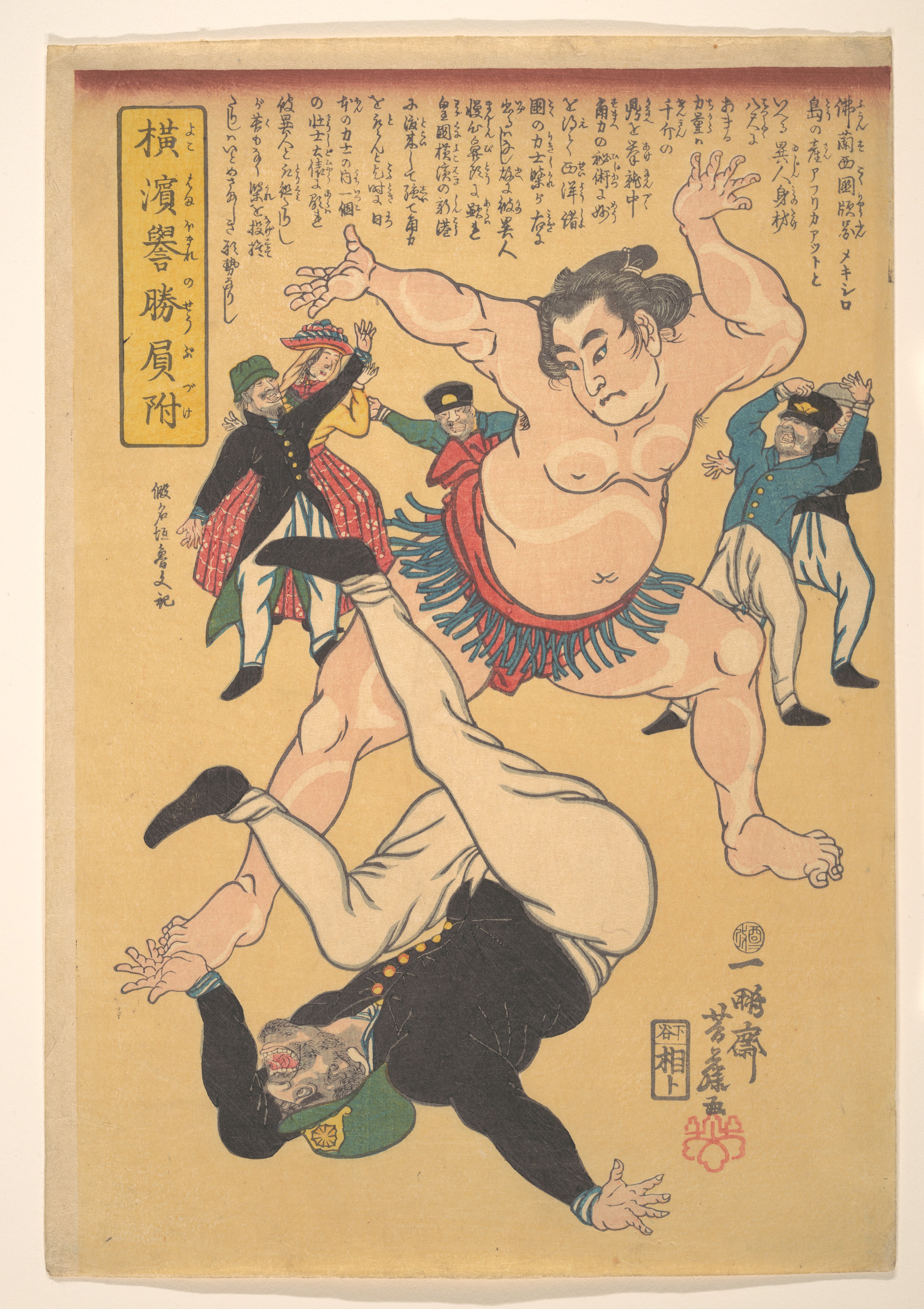
Yokohama Sumo Wrestler Defeating a Foreigner
2nd month, 1861
Woodblock print (nishiki-e), ink and color on paper

Woman Seamstress with Landscape Fan, from the series Toto Meisho Kurabe
東都名所競
1860s
Woodblock print (nishiki-e), ink and color on paper
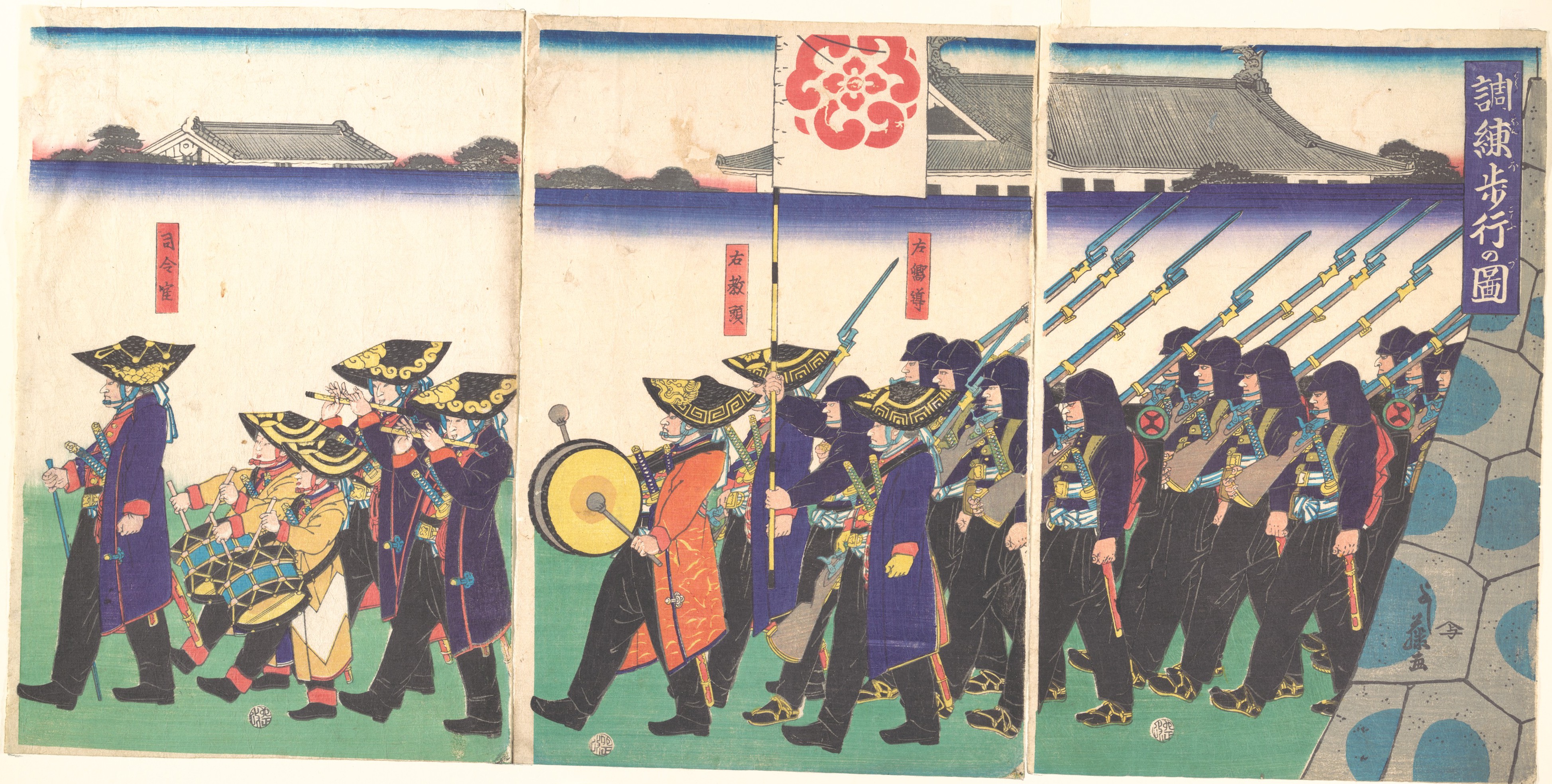
Parade of the Emperor's Troops
1867
Triptych of woodblock prints (nishiki-e), ink and color on paper; oban
Frequently Asked Questions
Russians Strolling was created by Utagawa Yoshifuji (歌川芳藤) in February 1861.