
The Great Elephant from a Foreign Land (Ikoku watari dai zo no zu)
異国渡大象之図
- Date:
- 1863
- Medium:
- Color woodblock print (nishiki-e), oban triptych
- Source:
- Art Institute of Chicago
Description
This 1863 woodblock print, an ōban triptych titled "The Great Elephant from a Foreign Land" (Ikoku watari dai zō no zu), is held by the Art Institute of Chicago (accession number 1926.1807, gift of Emily Crane Chadbourne). The print belongs to the rich genre of late-Edo news prints that responded to the foreign curiosities arriving in Japan in the wake of the country's opening to the West in 1854, and specifically to the tradition of zō no zu (elephant pictures) that had a long history in Japanese print culture going back to the celebrated arrival of an elephant in Edo in the 1720s. The Bakumatsu period saw a fresh wave of such imports as foreign animal shows toured the treaty ports, and Yoshiharu's triptych adapts the late-Utagawa idiom to capture the spectacle of a live elephant on Japanese soil. The composition spreads across three ōban sheets to give the animal its full proportions, and the date of 1863 places it in the most active years of his Bakumatsu output, when the Edo print industry was producing a steady stream of topical prints documenting foreign novelties, political crises, and street rumours. The print is a representative example of the news-print sensibility that animated Utagawa-school designers in their final pre-Meiji years and is part of the Art Institute of Chicago's substantial collection of Japanese woodblock prints, much of which entered the museum through the Chadbourne gift.
More Prints by Utagawa Yoshiharu

The Plum Blossom that Flew on Lightning from Chikushino
1857
Woodblock print (nishiki-e); ink and color on paper
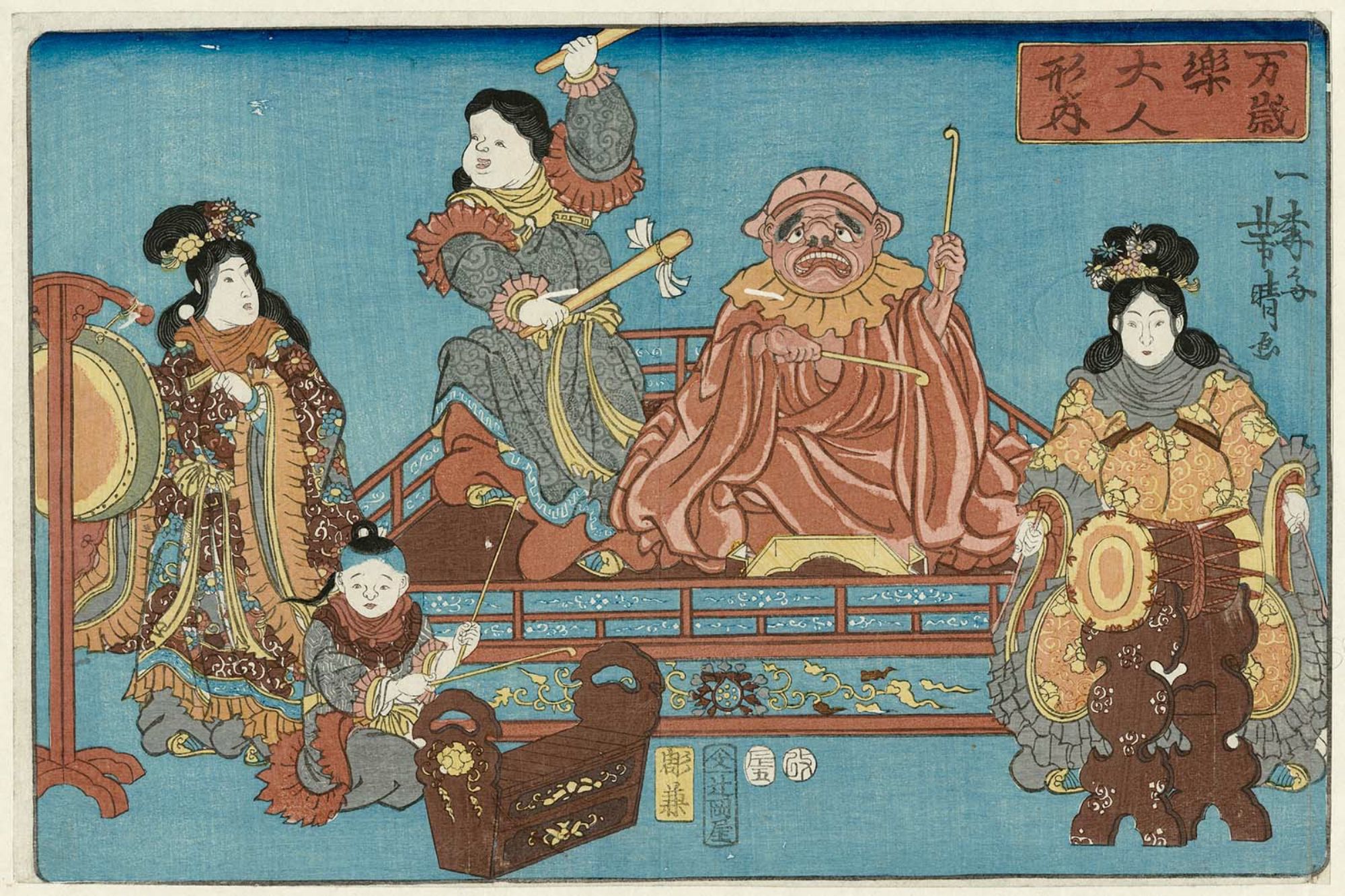
Comic Music (Manzaigaku), from the series Large Dolls
1856
Woodblock print (nishiki-e); ink and color on paper

The Brave Woman Tomoe Gozen and Takezo Saburoemon, from the series Famous Warriors in Combat
1856
Woodblock print (nishiki-e); ink and color on paper
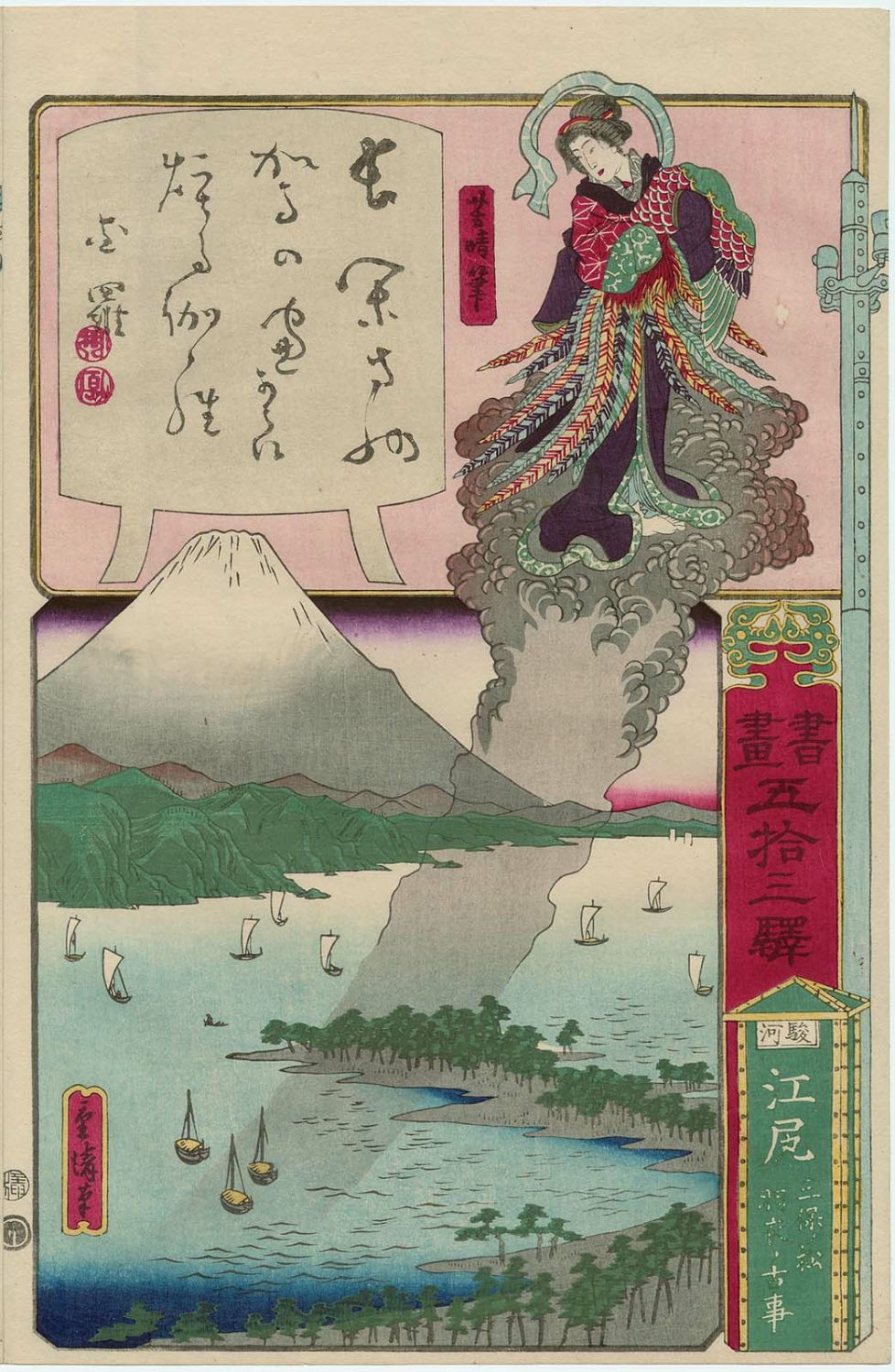
Ejiri in Suruga Province: The Old Story of the Pine of Miho and the Feather Robe
1872
Woodblock print (nishiki-e); ink and color on paper
Frequently Asked Questions
The Great Elephant from a Foreign Land (Ikoku watari dai zo no zu) (異国渡大象之図) was created by Utagawa Yoshiharu (歌川芳春) in 1863.