
Aiban Landscape from a Series
- Date:
- 19th century
- Medium:
- Woodblock print on paper (nishiki-e), aiban format
- Source:
- Victoria and Albert Museum
Description
This nineteenth-century single-sheet woodblock print in aiban format, held by the Victoria and Albert Museum (accession number E.13858A-1886), is a landscape print belonging to a longer numbered series. The sheet measures 33 by 22.2 centimeters, the aiban dimensions favored for landscape series during the late Edo and early Meiji periods. Numbered landscape series — descended from the great Hokusai and Hiroshige projects of the 1830s — remained a staple of the Edo print trade through the middle decades of the nineteenth century, and the Utagawa school produced numerous such series in modest aiban editions for distribution through urban booksellers and print shops. The print was purchased by the Victoria and Albert Museum in 1886 from S. M. Franck & Co. as part of a substantial group of Yoshimune sheets acquired together; the trailing "A" in the accession number indicates that it is one sheet from a sequence of numbered prints catalogued under the same primary number. Landscape series sheets by less-documented Utagawa pupils like Yoshimune are an undervalued portion of the late ukiyo-e tradition, recording the geographical literacy and topographical genres that continued to flourish in the Bakumatsu period. The sheet is held in the V&A's collection of Japanese woodblock prints and is accessible through the museum's online catalogue.
More Prints by Utagawa Yoshimune

Figure on Plain Ground
19th century
Woodblock print on paper (nishiki-e), chūban format

Procession of Wrestlers for a Fundraising Match (Kanjin ozumo dohyo-iri no zu)
early 1850s
Color woodblock print; oban triptych
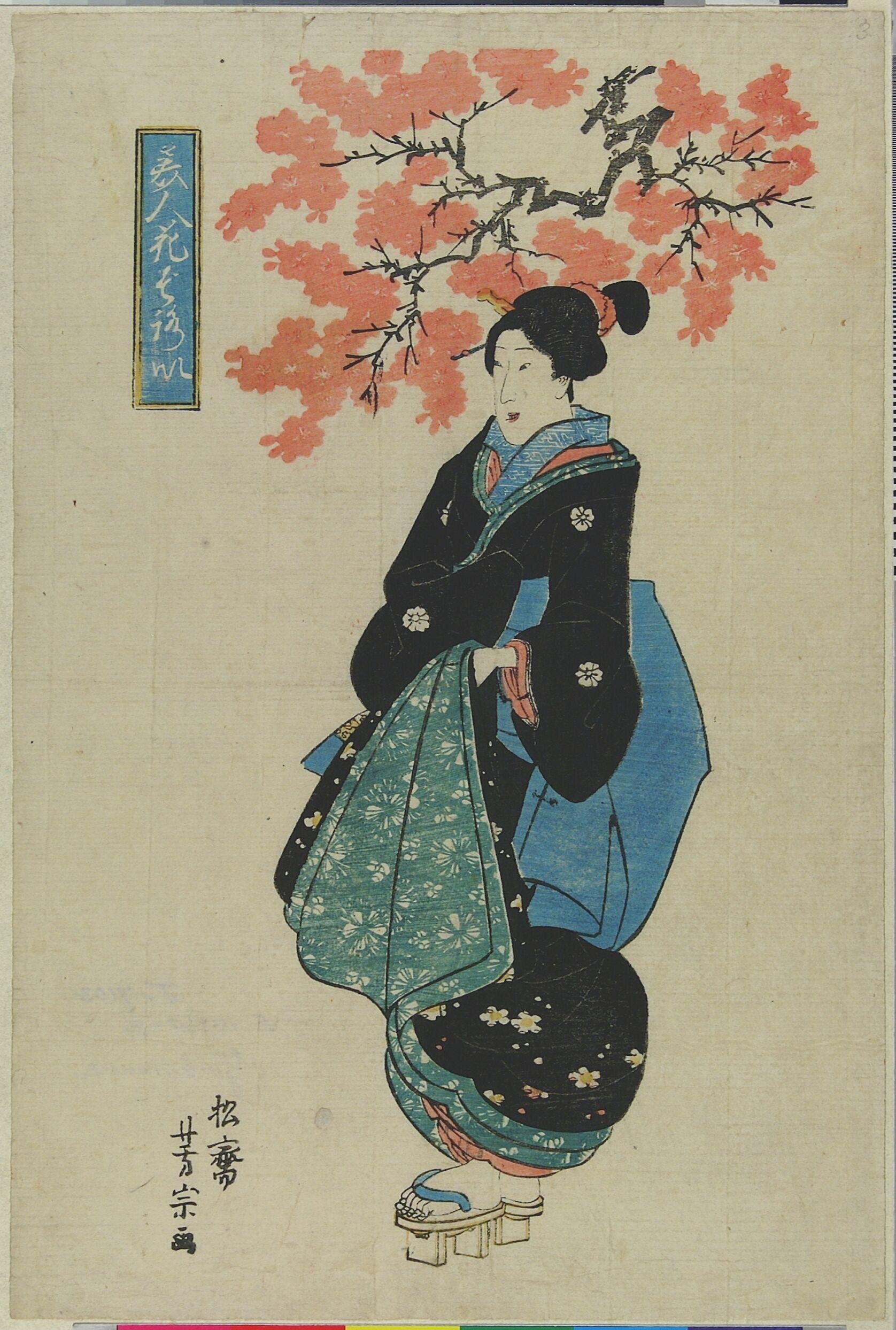
Figure on Plain Ground with Blossoms
19th century
Woodblock print on paper (nishiki-e), aiban format

Figures in Sea-scene (triptych)
19th century
Woodblock print on paper (nishiki-e), ōban triptych
Frequently Asked Questions
Aiban Landscape from a Series was created by Utagawa Yoshimune (歌川芳宗) in 19th century.