
Figures in Sea-scene (triptych)
- Date:
- 19th century
- Medium:
- Woodblock print on paper (nishiki-e), ōban triptych
- Source:
- Victoria and Albert Museum
Description
This nineteenth-century woodblock print triptych, held by the Victoria and Albert Museum (accession number E.13862-1886), is a three-sheet nishiki-e composition in ōban format depicting figures in a sea scene. Each sheet measures 35.6 by 24.8 centimeters, the standard ōban dimensions used for Edo-period multi-panel narrative prints. The triptych was purchased by the museum in 1886 from the London-based dealer S. M. Franck & Co., who had been a primary supplier of Japanese prints to the Victoria and Albert Museum (then known as the South Kensington Museum) in the 1880s as part of the wider Victorian engagement with Japanese decorative arts following the opening of the country in 1859. Triptychs of figures in landscape or maritime settings were a staple of the Utagawa school, used to depict scenes from kabuki, the Genji and Heike narratives, and contemporary spectacles such as foreign ships entering Japanese ports. The print belongs to a large group of Yoshimune sheets acquired by the museum in the same purchase, suggesting that Franck had assembled an inventory of the artist's commercial output from contemporary Edo and Meiji publishers. The triptych is preserved in the V&A's collection of Japanese prints and is accessible through the museum's IIIF image platform.
More Prints by Utagawa Yoshimune

Figure on Plain Ground
19th century
Woodblock print on paper (nishiki-e), chūban format

Aiban Landscape from a Series
19th century
Woodblock print on paper (nishiki-e), aiban format

Procession of Wrestlers for a Fundraising Match (Kanjin ozumo dohyo-iri no zu)
early 1850s
Color woodblock print; oban triptych
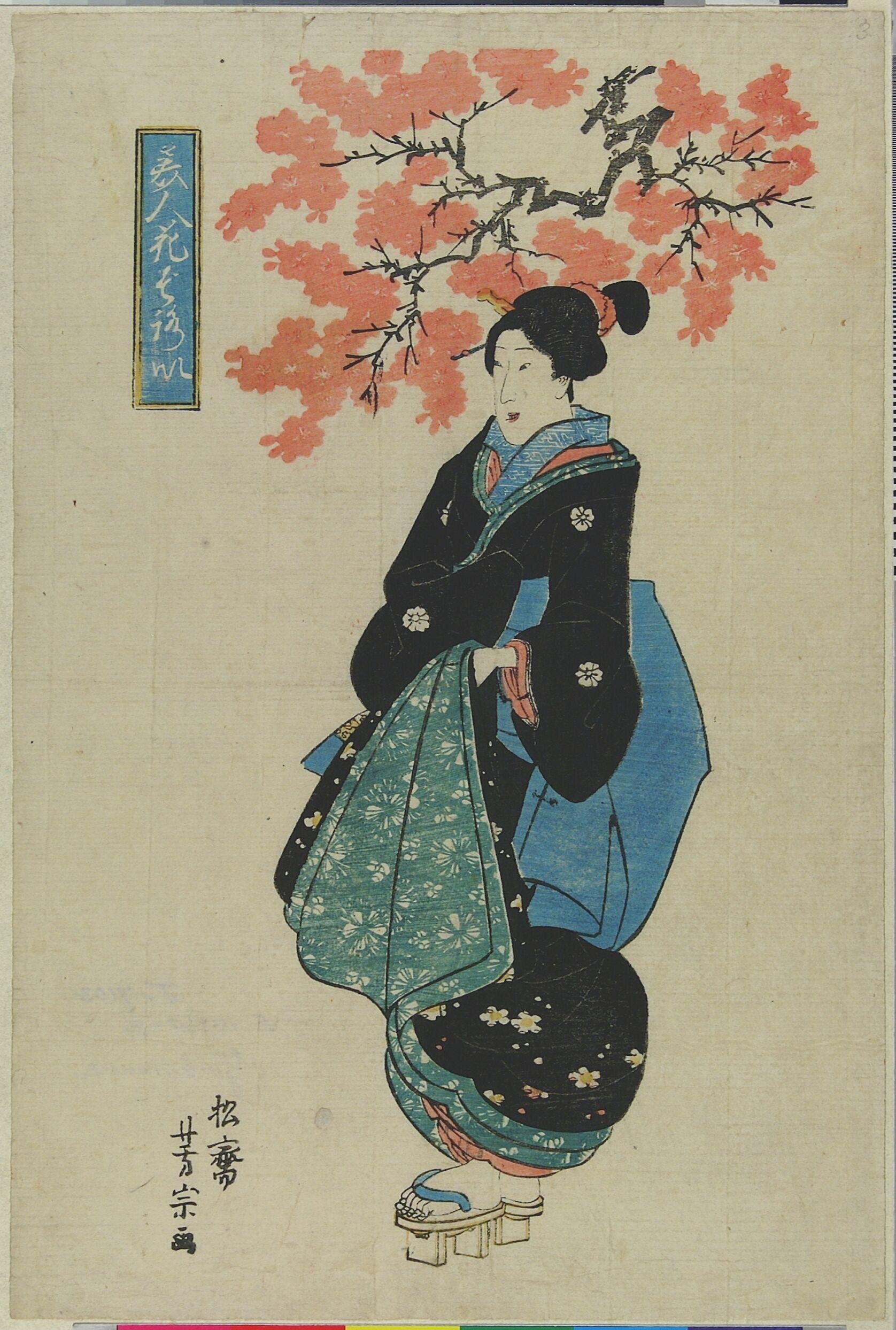
Figure on Plain Ground with Blossoms
19th century
Woodblock print on paper (nishiki-e), aiban format
Frequently Asked Questions
Figures in Sea-scene (triptych) was created by Utagawa Yoshimune (歌川芳宗) in 19th century.