
Sino-Japanese War: Two Generals at the Battle of Fenghuangcheng (Nisshin gekisen ryosho Hoojo sen no zu)
- Date:
- 1894
- Medium:
- Color woodblock print; oban triptych
- Source:
- Art Institute of Chicago
Description
This 1894 oban triptych, in the collection of the Art Institute of Chicago, is a sensō-e (war print) depicting Japanese generals leading the assault on the Chinese town of Fenghuangcheng during the First Sino-Japanese War. Fenghuangcheng, a fortified town near the Korean border in southern Manchuria, fell to Japanese forces on 30 October 1894 after a brief engagement; the action came in the weeks following the decisive Japanese victories at Pyongyang and the Yalu River and confirmed the Imperial Japanese Army's ability to push its campaign onto the Chinese mainland. Watanabe Nobukazu's triptych follows the conventions of the sensō-e form: identifiable senior officers in white tropical uniform stand at the visual center of the composition, while Japanese infantry in disciplined ranks advance with bolt-action rifles across the middle ground, and the distant horizon carries the smoke of artillery fire. The print is signed in the artist name Yōsai Nobukazu and was published in the dense first wave of Sino-Japanese War prints rushed to market in late 1894. As with other works in the genre, it served simultaneously as visual reportage, as patriotic propaganda for a domestic audience, and as a commercial product in a print market that had briefly revived around the demand for war reporting. It is part of the Art Institute of Chicago's holdings of Meiji woodblock prints.
More Prints by Watanabe Nobukazu
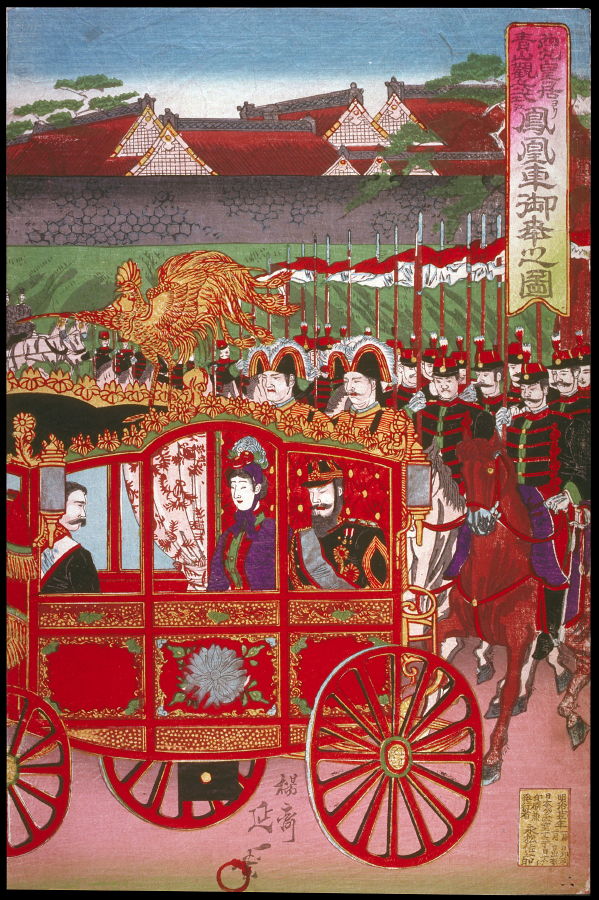
The Imperial Phoenix Carriage Leaves the Palace for the Military Review at Aoyama (right panel)
1892
Color woodcut; right panel of a triptych
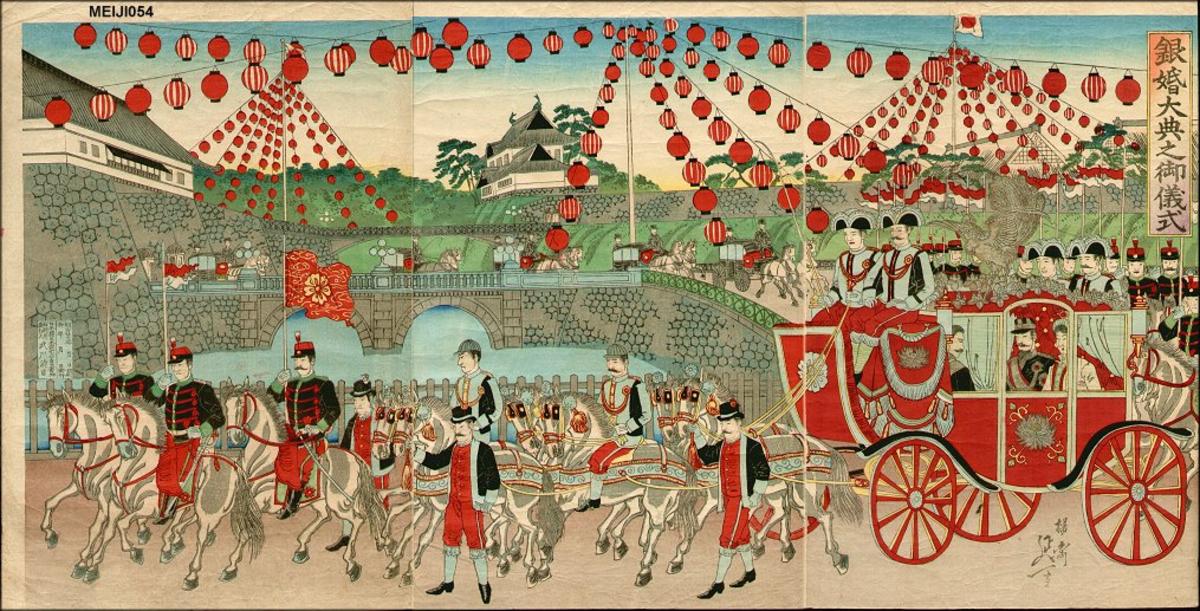
Silver Wedding Anniversary State Ceremony (Ginkon taiten no gi shiki)
銀婚大典之御儀式
1894
Color woodblock print; oban triptych

The Imperial Phoenix Carriage Leaves the Palace for the Military Review at Aoyama (left panel)
1892
Color woodcut; left panel of a triptych

Great Victory of Our Forces at the Battle of Pyongyang (Heijo gekisen waga gun taisho no zu)
1894
Color woodblock print; oban triptych
Frequently Asked Questions
Sino-Japanese War: Two Generals at the Battle of Fenghuangcheng (Nisshin gekisen ryosho Hoojo sen no zu) was created by Watanabe Nobukazu (渡辺延一) in 1894.