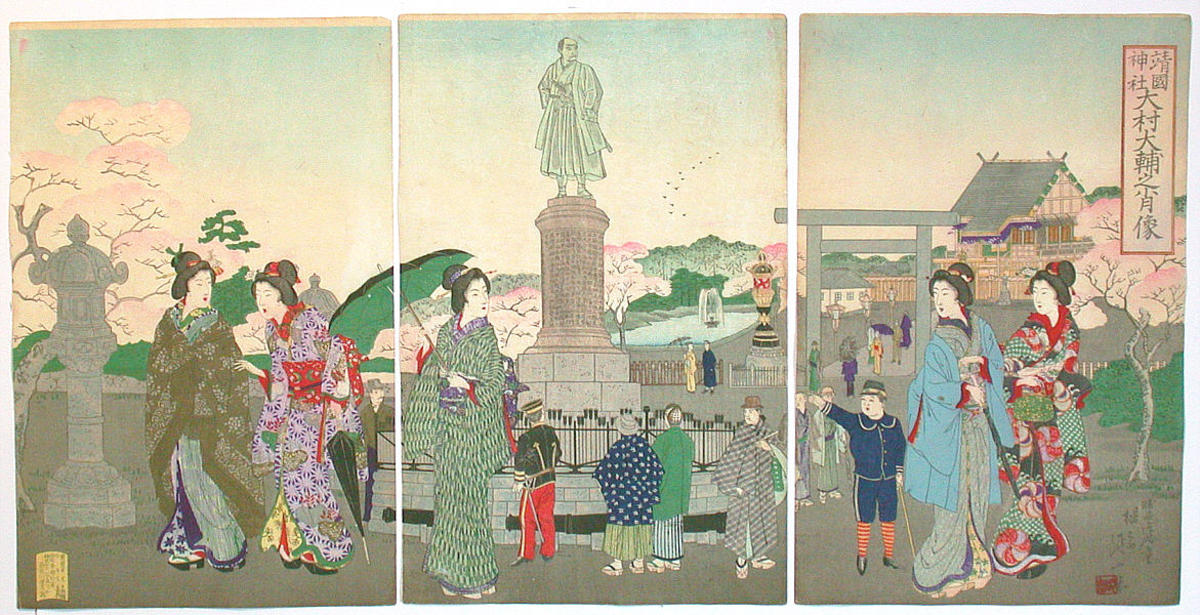
Yasukuni Shrine — Statue of Ōmura Masujirō (Yasukuni Jinja, Ōmura Masujirō no Shōzō)
靖国神社 大村益次郎の彫像
- Date:
- 1893
- Medium:
- Color woodblock print; oban triptych
- Source:
- ukiyo-e.org
Description
This 1893 oban triptych, signed in the artist name Yōsai Nobukazu, depicts visitors strolling around the bronze statue of the Meiji military strategist Ōmura Masujirō at Yasukuni Shrine in Tokyo. Ōmura, a samurai of Chōshū and one of the principal architects of the new conscript army, was assassinated in Kyoto in 1869; in 1893 the bronze statue at Yasukuni, by the sculptor Ōkuma Ujihiro, was unveiled as the first Western-style public bronze of a modern Japanese subject and as a foundational martyr-monument for the Imperial Japanese Army. Watanabe Nobukazu's triptych, published by Hasegawa Tsunejirō, stages the new monument as a site of civic pilgrimage, with Tokyo residents in a mix of Western and Japanese dress gathered at its base and the architecture of the shrine precinct rendered in atmospheric detail. The print sits at the intersection of news reportage, religious imagery, and political iconography that characterized Meiji visual culture at its most state-aligned, and it documents the early visual formation of Yasukuni's identity as a shrine to the military dead. As a primary source for Meiji urban visual culture in the years between the constitutional founding of 1889 and the outbreak of the Sino-Japanese War in 1894, it is among Nobukazu's most informative prints.
More Prints by Watanabe Nobukazu

Sino-Japanese War: Two Generals at the Battle of Fenghuangcheng (Nisshin gekisen ryosho Hoojo sen no zu)
1894
Color woodblock print; oban triptych
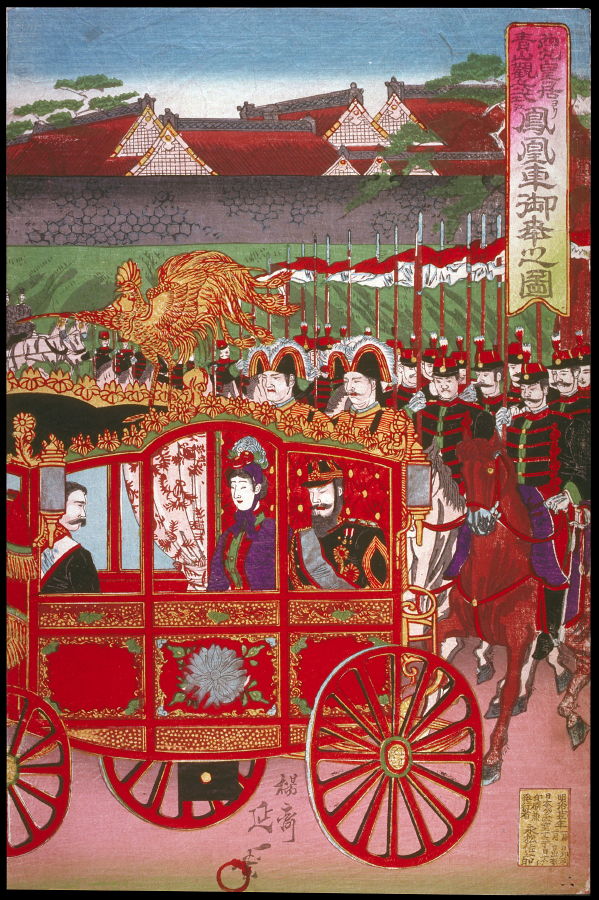
The Imperial Phoenix Carriage Leaves the Palace for the Military Review at Aoyama (right panel)
1892
Color woodcut; right panel of a triptych
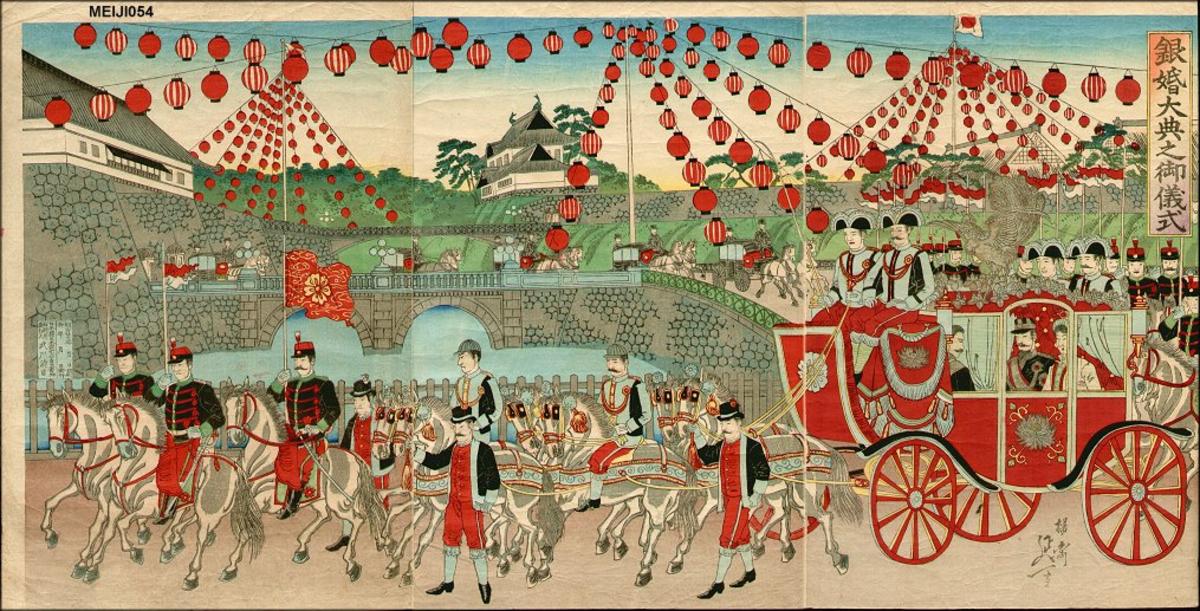
Silver Wedding Anniversary State Ceremony (Ginkon taiten no gi shiki)
銀婚大典之御儀式
1894
Color woodblock print; oban triptych

The Imperial Phoenix Carriage Leaves the Palace for the Military Review at Aoyama (left panel)
1892
Color woodcut; left panel of a triptych
Frequently Asked Questions
Yasukuni Shrine — Statue of Ōmura Masujirō (Yasukuni Jinja, Ōmura Masujirō no Shōzō) (靖国神社 大村益次郎の彫像) was created by Watanabe Nobukazu (渡辺延一) in 1893.