
Masks
- Medium:
- Limited-edition lithograph on handmade Japanese rice paper
- Image courtesy of
- Hanga Ten (London)
Description
Kabuki is associated principally with painted faces rather than physical masks, but mask use survives in particular dance repertoires — Shakkyo's lion, Tsuchigumo's spider-spirit, and the henge mono transformation pieces — and the codified painted visages themselves function maskwise as fixed signs of character type. Yamada's print likely groups several such faces or masks across the sheet, drawn from her observation of Tokyo theatre during the six years she lived in the city. The lithographic process retains the linear precision of her pencil work alongside watercolour-like tonal washes, each colour drawn on a separate stone or plate and registered onto handmade Japanese paper. The absorbent washi pulls pigment unevenly into its fibres, producing a softened edge that approximates the surface of her original drawings. Within her wider practice, the kabuki subjects constitute a sustained investigation of stylised expression: how a human face, through paint and convention, becomes legible as a type. The lithograph editions, comparatively few in number, extended that drawing-based inquiry into a multiple-image format.
More Prints by Juliane Yamada


More Kabuki Prints
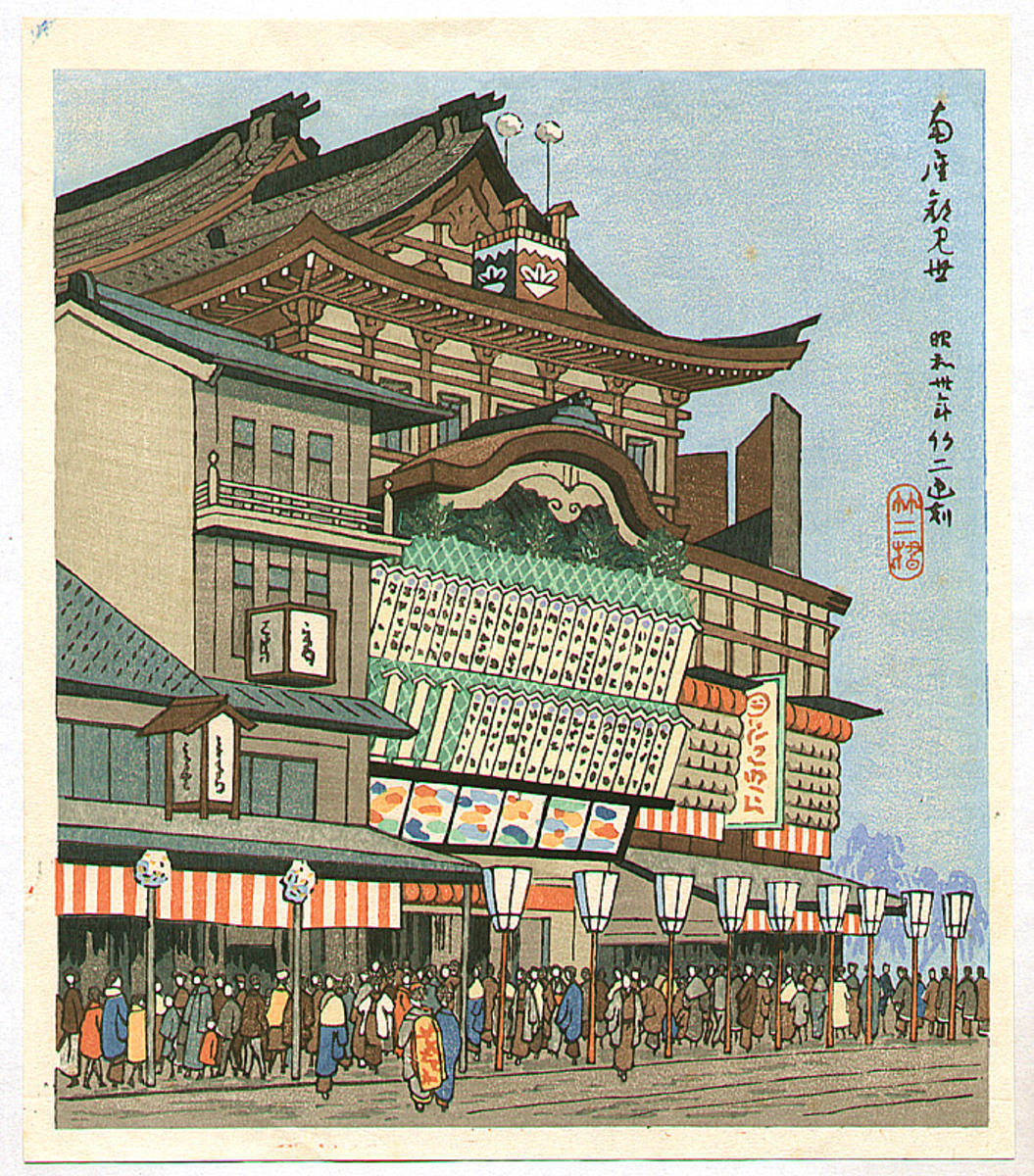
Kabuki Theater
歌舞伎
Woodblock print
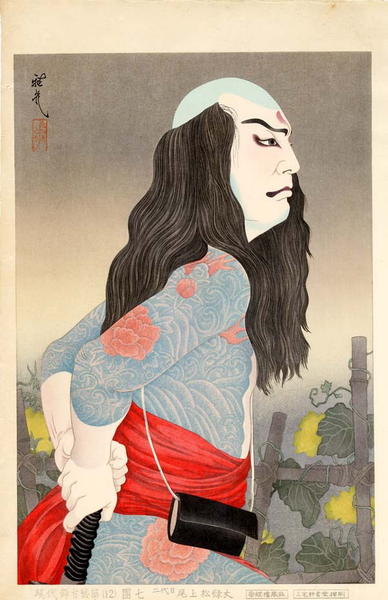
Onoe Shoroku II as the tattooed villain Danshichi
1955
Woodblock print

View of Kabuki Theater from Matsuya (Ginza Matsuya yori Kabukiza), no. 3 from the series "Pictures of Ginza, First Series (Gashu Ginza dai isshu)"
1928
Color lithograph

Distant View of Mitsukoshi Movie Theater in Shinjuku from the Sixth Floor of Hoteiya (Hoteiya rokkai kara Shinjuku Mitsukoshi Musashi no kan enbo zu), no. 1 from the series "Scenery of Shinjuku (Gashu Shinjuku fukei)"
1930
Color lithograph
Frequently Asked Questions
Masks was created by Juliane Yamada.
Masks depicts kabuki.