
Hagi garden
- Medium:
- Mokuhanga (Japanese woodblock)
- Image courtesy of
- Saru Gallery
Description
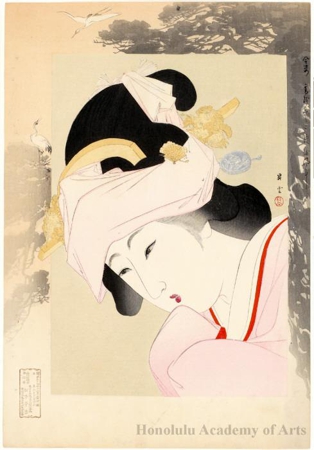
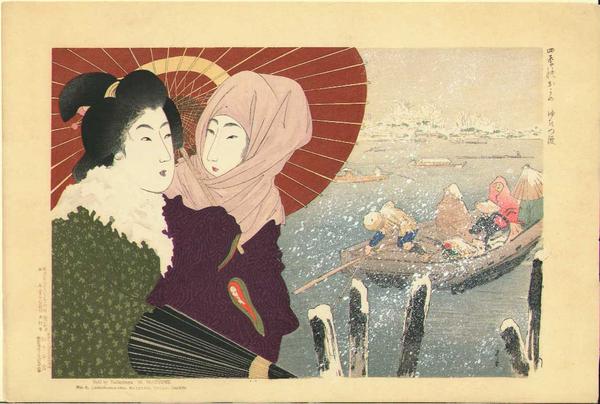
A garden scene built around hagi (bush clover, Lespedeza), the cascading autumn shrub that traditionally signals the seventh lunar month and figures prominently in classical waka poetry. The composition would typically place one or two figures, often women in seasonal kimono, beneath or beside the arching hagi sprays, the small purple-pink flowers picked out in graduated bokashi against pale washi. Shoun was attentive to the calendrical iconography of Tokyo's public and temple gardens — Mukōjima Hyakkaen and the hagi tunnels at Ryūgan-ji were popular hagi-viewing sites in the late Meiji and Taishō periods — and his garden prints function as both bijin-ga and meisho-e. The print belongs to a recurring set of garden subjects in Shoun's output, in which seasonal flora carries the descriptive weight that landscape would in earlier Hiroshige-school work, and figures are scaled down to register as participants within a botanical setting rather than as the dominant subject.
More Prints by Yamamoto Shoun


More Gardens Prints
![[Garden of] Taj Mahal, No. 1 (Taji Maharu no niwa, dai ichi) by Hiroshi Yoshida](https://www.artic.edu/iiif/2/230993a7-d4f0-c979-c267-127d48e1ef1c/full/843,/0/default.jpg)
[Garden of] Taj Mahal, No. 1 (Taji Maharu no niwa, dai ichi)
Taji Maharu no niwa, dai ichi
1931
Color woodblock print; oban

Kiyozumi Garden in Moonlight
January 1938
Woodblock print, ink and color on paper

Moon over Kiyosumi Garden (Tsuki no Kiyosumien)
1938
Color woodblock print; oban
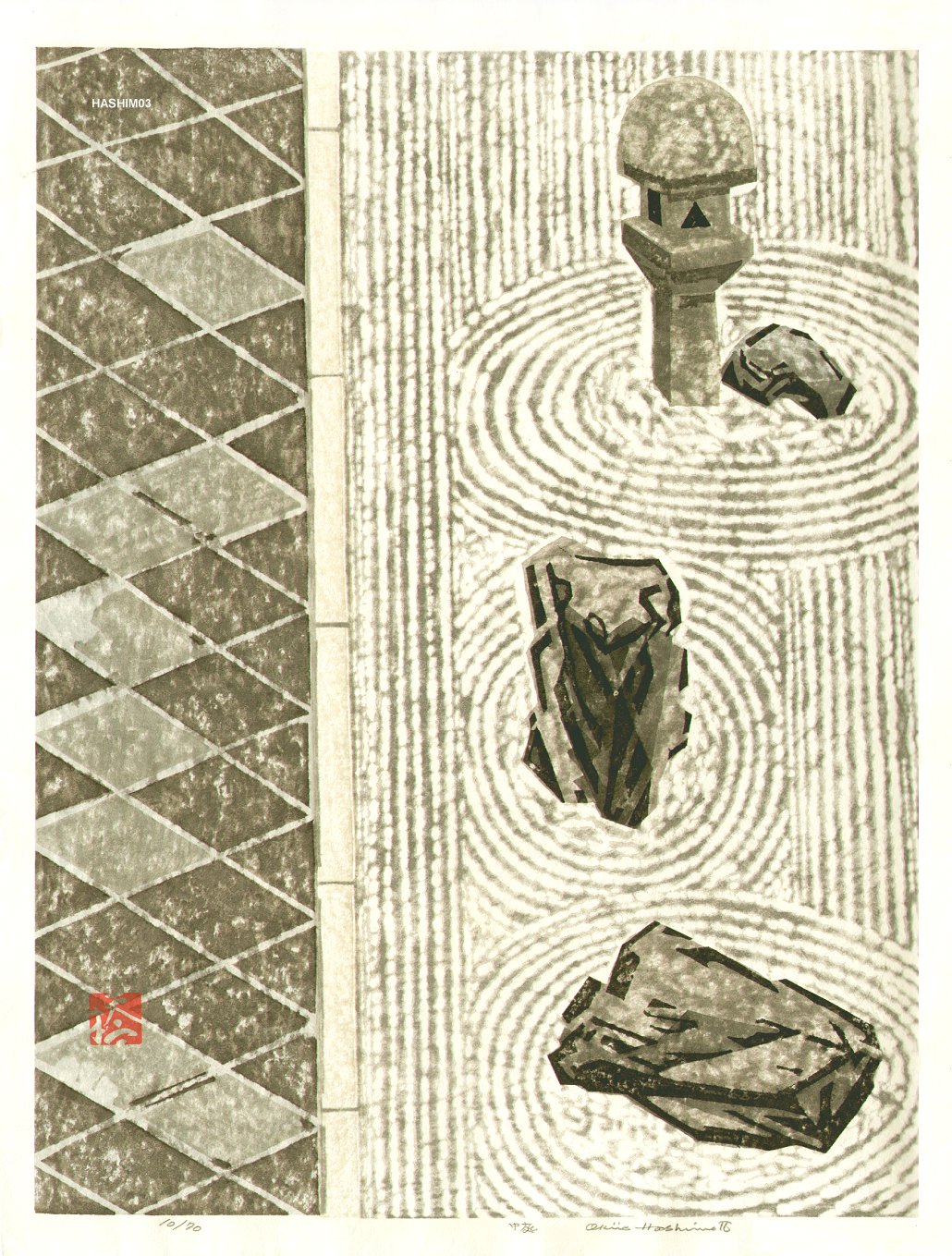
Rock garden
10/70, 1966
Woodblock print
Featured in Collections
Curated cross-cuts that include this print.
Frequently Asked Questions
Hagi garden was created by Yamamoto Shoun (山本昇雲).
Hagi garden depicts gardens.