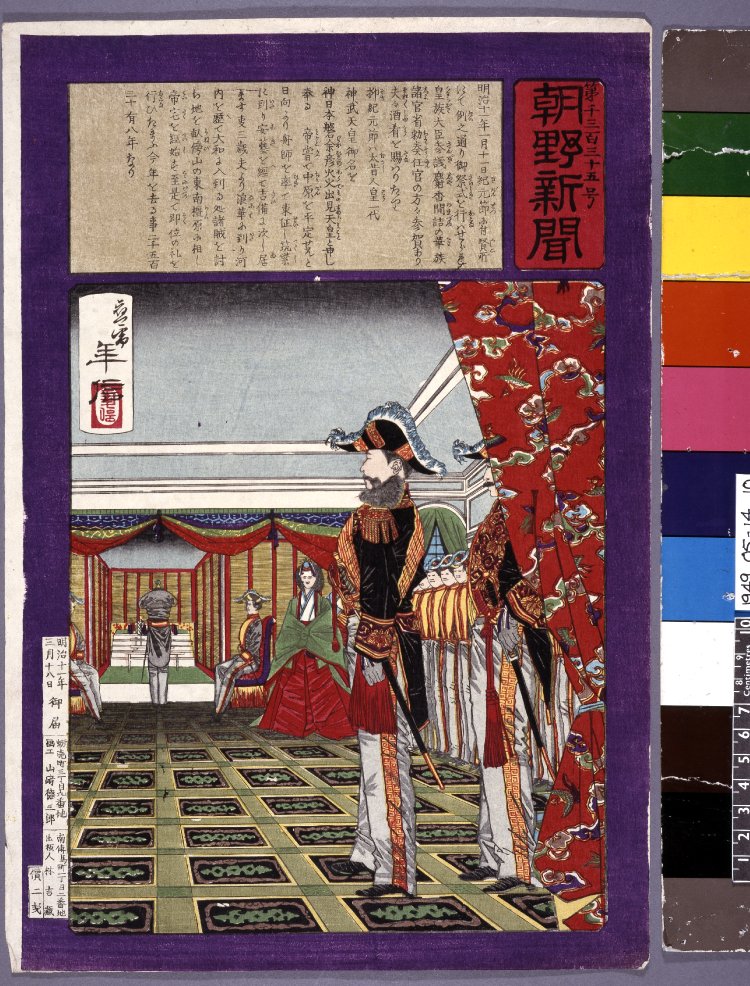
Chōya Shimbun, no. 1335
朝野新聞
- Date:
- 18 March 1878 (Meiji 11)
- Medium:
- Color woodblock print (nishiki-e shimbun); ink and color on paper
- Source:
- British Museum
Description
From the British Museum's collection of Meiji nishiki-e shinbun, this March 1878 print, identified as Chōya Shimbun, no. 1335, depicts the Emperor Meiji attending New Year Shinto ceremonies at the imperial palace. The Chōya shimbun was one of the leading political newspapers of early Meiji Tokyo, and its commissioning of color woodblock supplements established a new pattern for the relationship between print journalism and the woodblock industry. Toshinobu was the principal designer of the Chōya shimbun nishiki-e in 1878, and the prints he produced for the paper covered a wide range of contemporary subjects, from imperial ceremonies and political events to sensational crimes and human-interest stories. The Shinto observance depicted in this print, conducted on the grounds of the imperial palace at the start of the new year, was one of the carefully staged rituals through which the new Meiji state asserted the centrality of the emperor in the redesigned national religious order. Toshinobu's composition places the youthful emperor in formal court attire at the center, surrounded by attendant courtiers and priests, with the palace architecture providing the spatial frame. The British Museum's impression preserves the original Meiji color palette and the publisher's seal, and it remains a key document of how the new institution of the illustrated newspaper visualized and disseminated the state's emerging political iconography. The print stands among the most accomplished examples of the brief but historically significant nishiki-e shinbun genre.
More Prints by Yamazaki Toshinobu
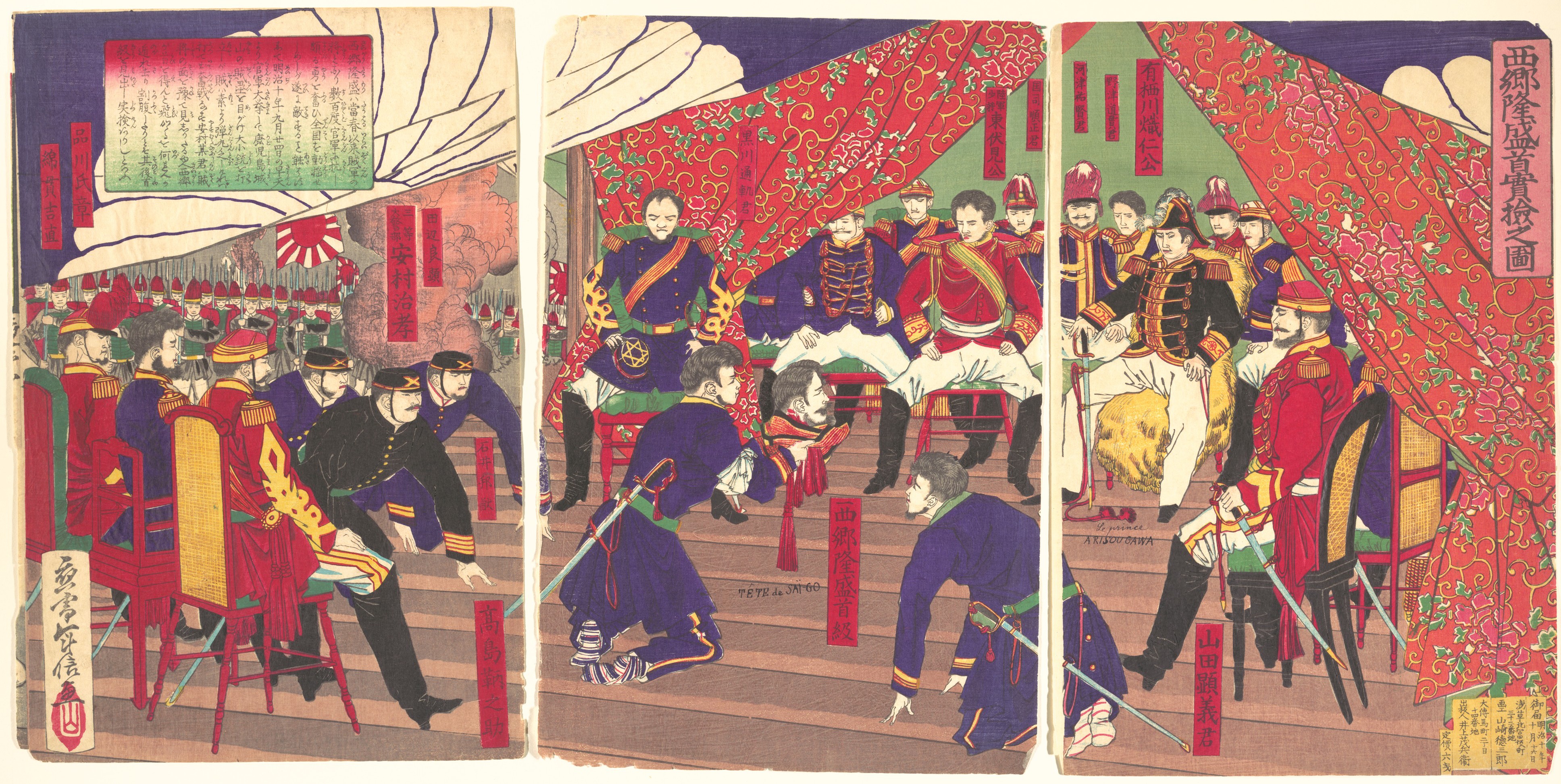
Presentation of the Head of Saigo to the Prince Arisogawa (Saigō ryūsei kubi jikken)
西郷隆盛首実検
Oct. 16, 1877 (Meiji 10)
Triptych of woodblock prints; ink and color on paper
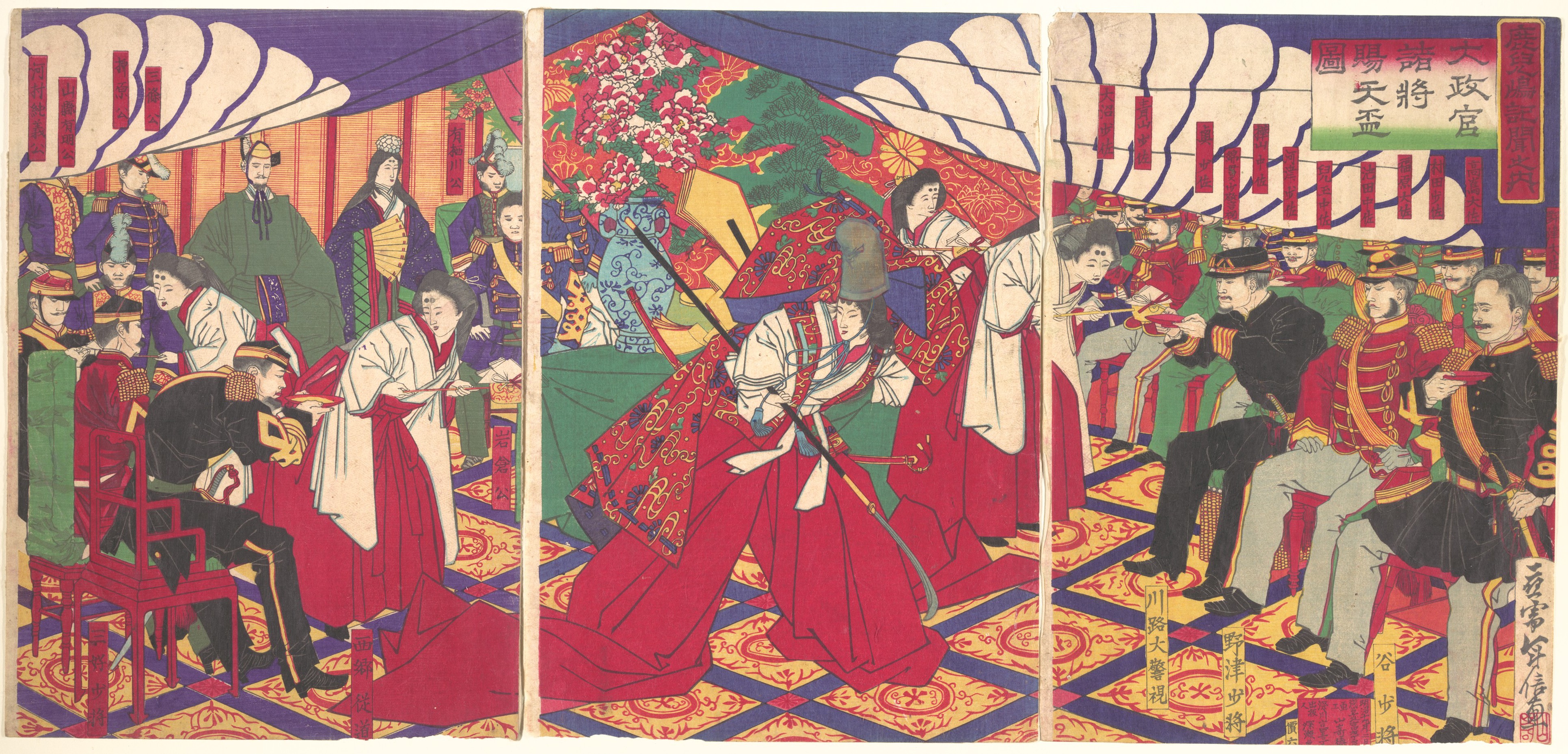
Commanders Receiving the Emperor's Drinking Cups (Taiseikan shōshō shiten)
大政官将相賜典
1886 (Meiji 19)
Triptych of woodblock prints; ink and color on paper

Empire Day of Japan (Kigensetsu)
紀元節
1878 (Meiji 11)
Color woodblock print; ink and color on paper

Hongan-ji Shōnyo and Shimotsuma Raikei, from Ishiyama Daigunkiki
石山大軍記 第二号
1878 (Meiji 11)
Color woodblock print (nishiki-e); ink and color on paper
Frequently Asked Questions
Chōya Shimbun, no. 1335 (朝野新聞) was created by Yamazaki Toshinobu (山崎年信) in 18 March 1878 (Meiji 11).