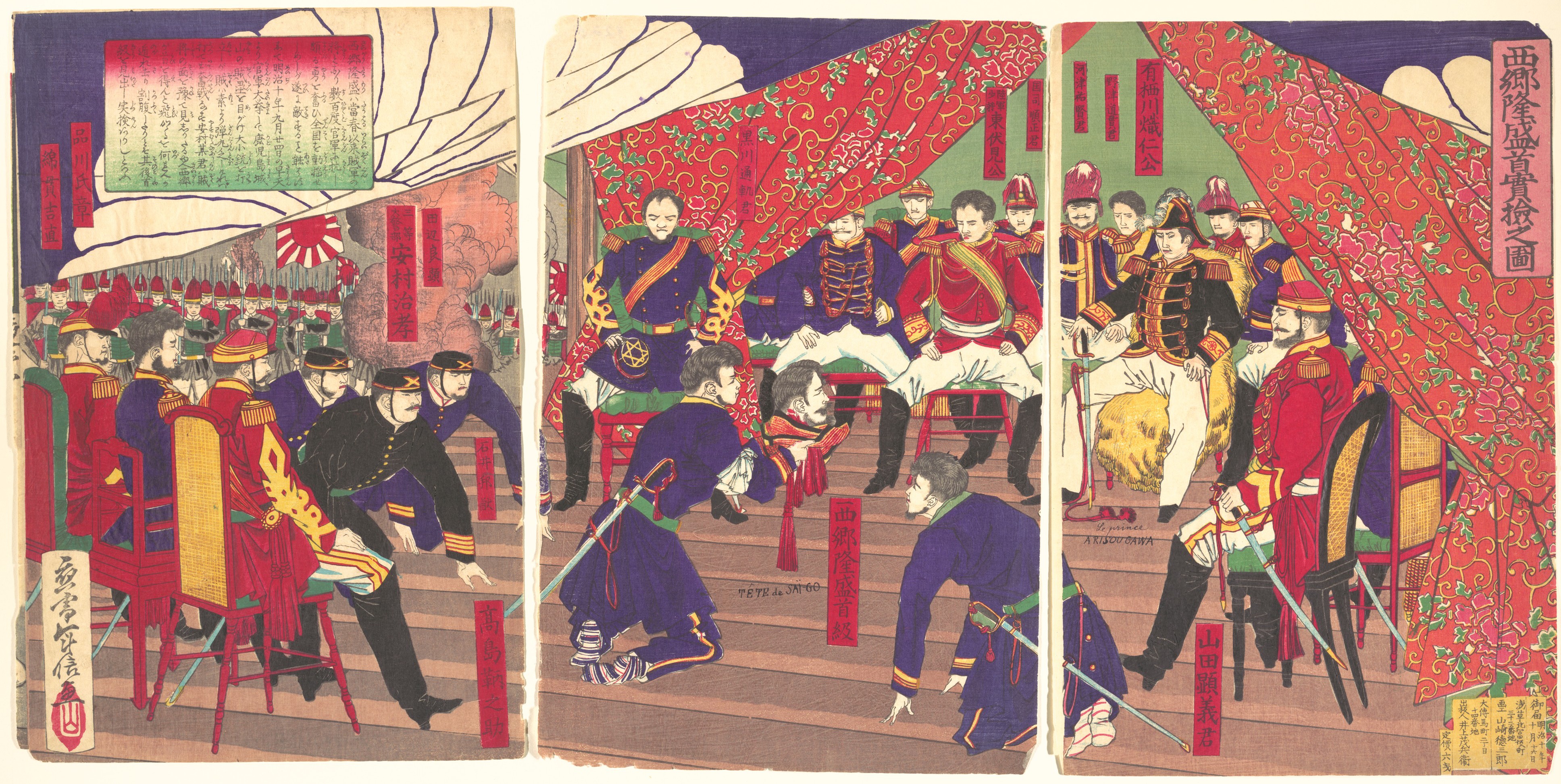
Presentation of the Head of Saigo to the Prince Arisogawa (Saigō ryūsei kubi jikken)
西郷隆盛首実検
- Date:
- Oct. 16, 1877 (Meiji 10)
- Medium:
- Triptych of woodblock prints; ink and color on paper
- Source:
- Metropolitan Museum of Art
Description
Held by the Metropolitan Museum of Art, this triptych of October 16, 1877, depicts one of the most charged scenes in the visual record of the Satsuma Rebellion: the formal presentation of the severed head of Saigō Takamori to Prince Arisogawa Taruhito, the imperial commander who led the government forces against the Satsuma rebels. The historical event took place on September 24, 1877, at Shiroyama in Kagoshima, where Saigō, mortally wounded and faced with certain defeat, committed seppuku and was decapitated by his lieutenant Beppu Shinsuke to spare him capture. Toshinobu's composition arranges the imperial officers in formal seated rows around a low table on which the cleaned head is displayed for ceremonial verification (kubi jikken), the traditional martial inspection by which a rebel's identity was confirmed. The prince sits in the place of honor, distinguished by court robes, while subordinate officers in Western-style Meiji uniforms or hybrid military dress complete the assembly. The choice of subject is politically charged: although Saigō had been one of the architects of the Meiji Restoration, his rebellion against the government he had helped create made him the focal figure of the most serious internal challenge of the era's first decade. Toshinobu's print belongs to the immediate post-rebellion outpouring of commemorative prints that confirmed the government's victory while preserving the iconography of the defeated rebel, who would eventually be rehabilitated in public memory as a tragic hero. The triptych format, vivid Meiji aniline coloring, and the precise depiction of military insignia and ceremonial protocol exemplify the new senso-e war-print genre that Toshinobu and his fellow Yoshitoshi students helped to establish. The Met's impression preserves the original publisher's full color scheme and is among the most influential surviving documents of how the woodblock industry processed and disseminated the news of Saigō's death in the weeks following the rebellion's end.
More Prints by Yamazaki Toshinobu
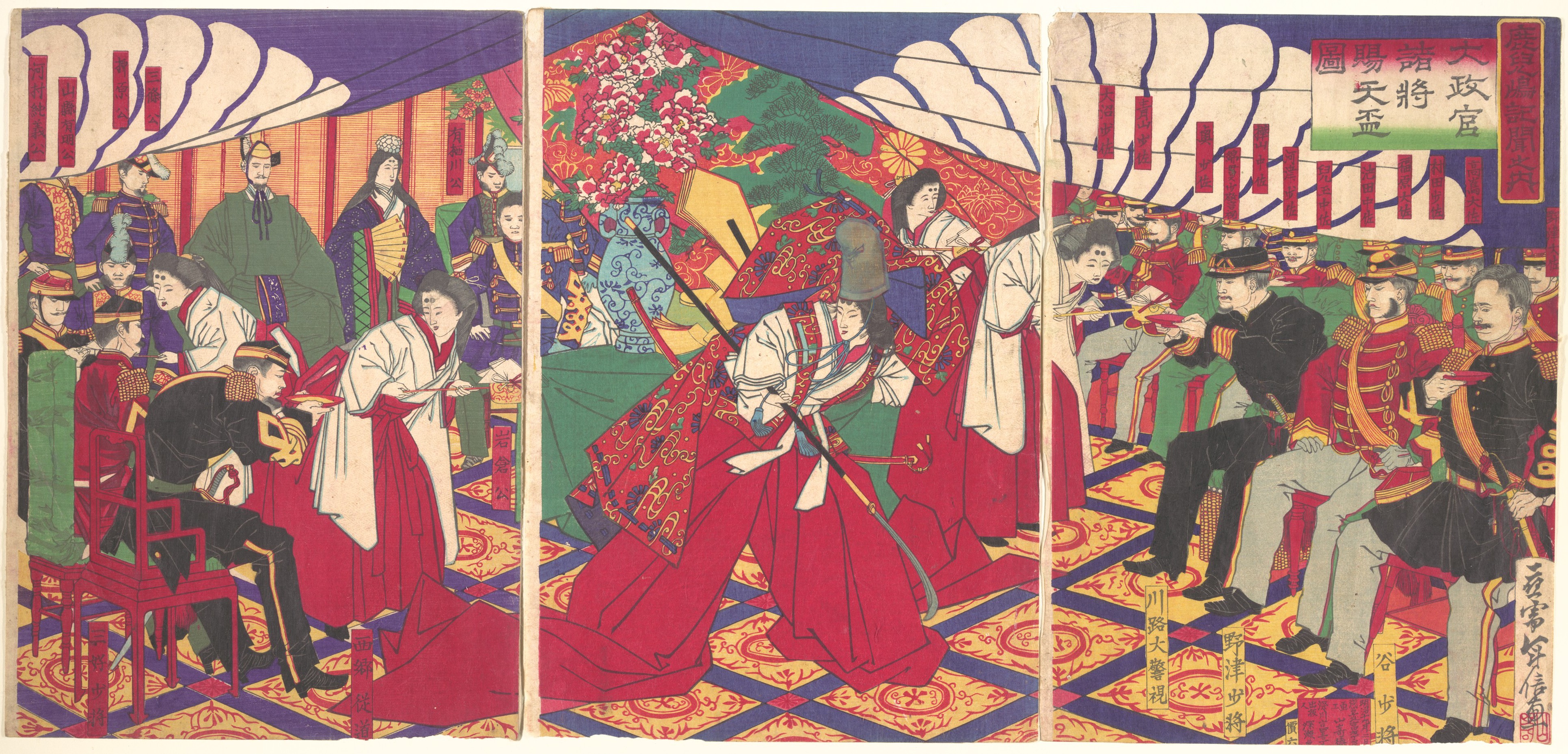
Commanders Receiving the Emperor's Drinking Cups (Taiseikan shōshō shiten)
大政官将相賜典
1886 (Meiji 19)
Triptych of woodblock prints; ink and color on paper

Empire Day of Japan (Kigensetsu)
紀元節
1878 (Meiji 11)
Color woodblock print; ink and color on paper

Hongan-ji Shōnyo and Shimotsuma Raikei, from Ishiyama Daigunkiki
石山大軍記 第二号
1878 (Meiji 11)
Color woodblock print (nishiki-e); ink and color on paper

Rebels Besieged at Mount Takachiho (Gyakuto Takachiho rōzan)
逆徒高千穂籠山
1877 (Meiji 10)
Color woodblock print (nishiki-e); ink and color on paper
Frequently Asked Questions
Presentation of the Head of Saigo to the Prince Arisogawa (Saigō ryūsei kubi jikken) (西郷隆盛首実検) was created by Yamazaki Toshinobu (山崎年信) in Oct. 16, 1877 (Meiji 10).