
Empire Day of Japan (Kigensetsu)
紀元節
- Date:
- 1878 (Meiji 11)
- Medium:
- Color woodblock print; ink and color on paper
Description
This 1878 color woodblock triptych, held by the British Museum and accessible through Wikimedia Commons, was published as a supplement to the Chōya shimbun newspaper to commemorate the first major public celebration of Kigensetsu, the Empire Day that the new Meiji government had established to mark the mythological founding of Japan by the first emperor Jinmu Tennō on the eleventh day of the second month in 660 BCE. The holiday, instituted in 1872 and observed publicly from 1873 onward, was one of the most ambitious of the regime's invented traditions, intended to anchor the modern Meiji imperial state in a deep mythic past predating Buddhism, the Chinese influence, and even the historical foundation of Japanese civilization. Toshinobu's composition shows the elaborate festival processions, ceremonial banners, and crowds that gathered in central Tokyo for the holiday, with the imperial palace as the geographic and symbolic focus. The print is a particularly important document of how the Meiji regime used the woodblock medium and the new institution of the illustrated newspaper to publicize its emerging political and religious calendar. The bright magentas, purples, and synthetic greens that distinguish the print are characteristic Meiji aniline pigments, recently arrived from Europe and rapidly adopted by the Tokyo print industry. The British Museum's impression entered the collection through the major mid-twentieth-century acquisitions of Japanese popular prints, and its presence in the Chōya shimbun context confirms Toshinobu's central role in the newspaper's lavishly illustrated journalism of the late 1870s.
More Prints by Yamazaki Toshinobu
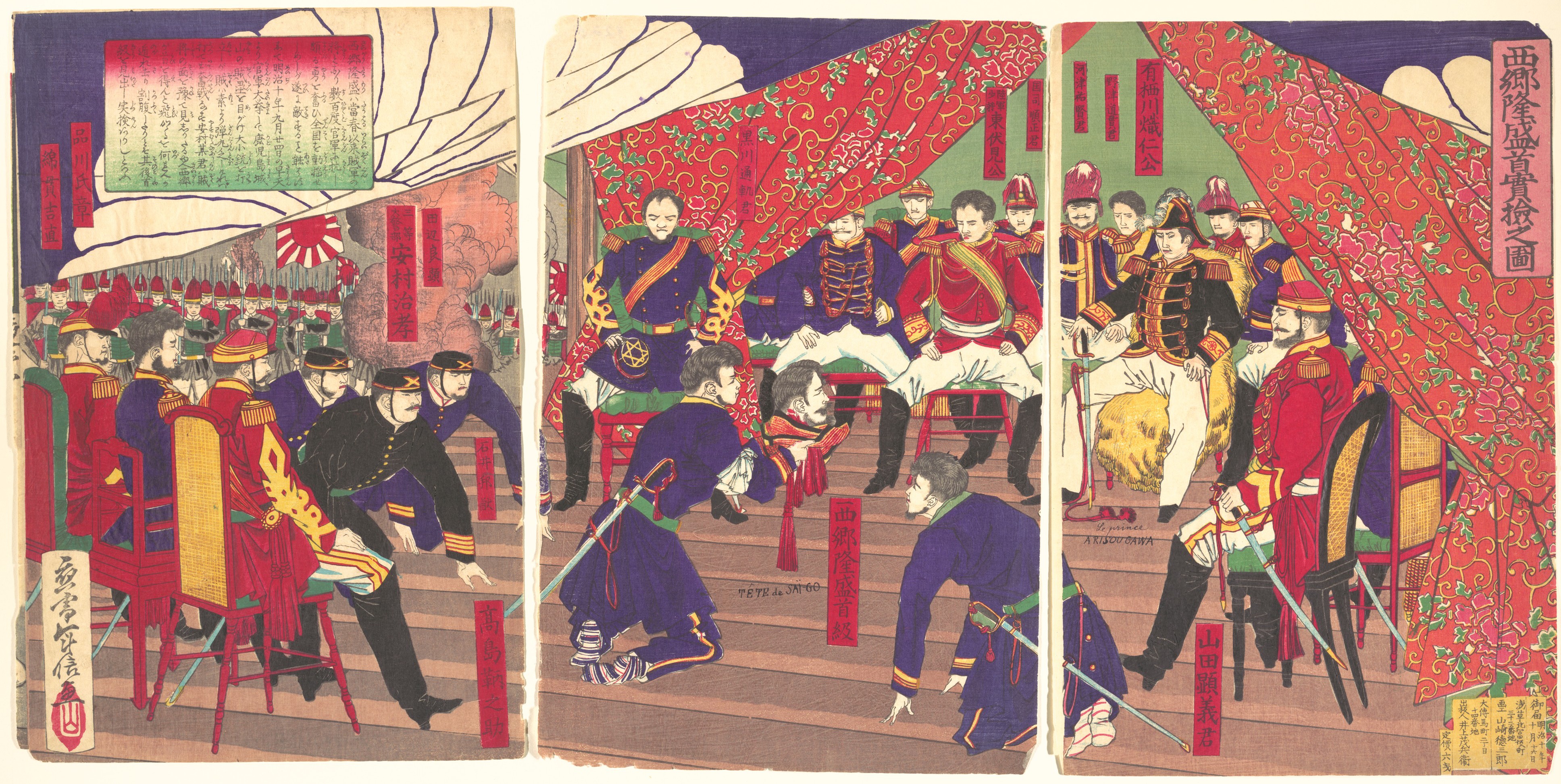
Presentation of the Head of Saigo to the Prince Arisogawa (Saigō ryūsei kubi jikken)
西郷隆盛首実検
Oct. 16, 1877 (Meiji 10)
Triptych of woodblock prints; ink and color on paper
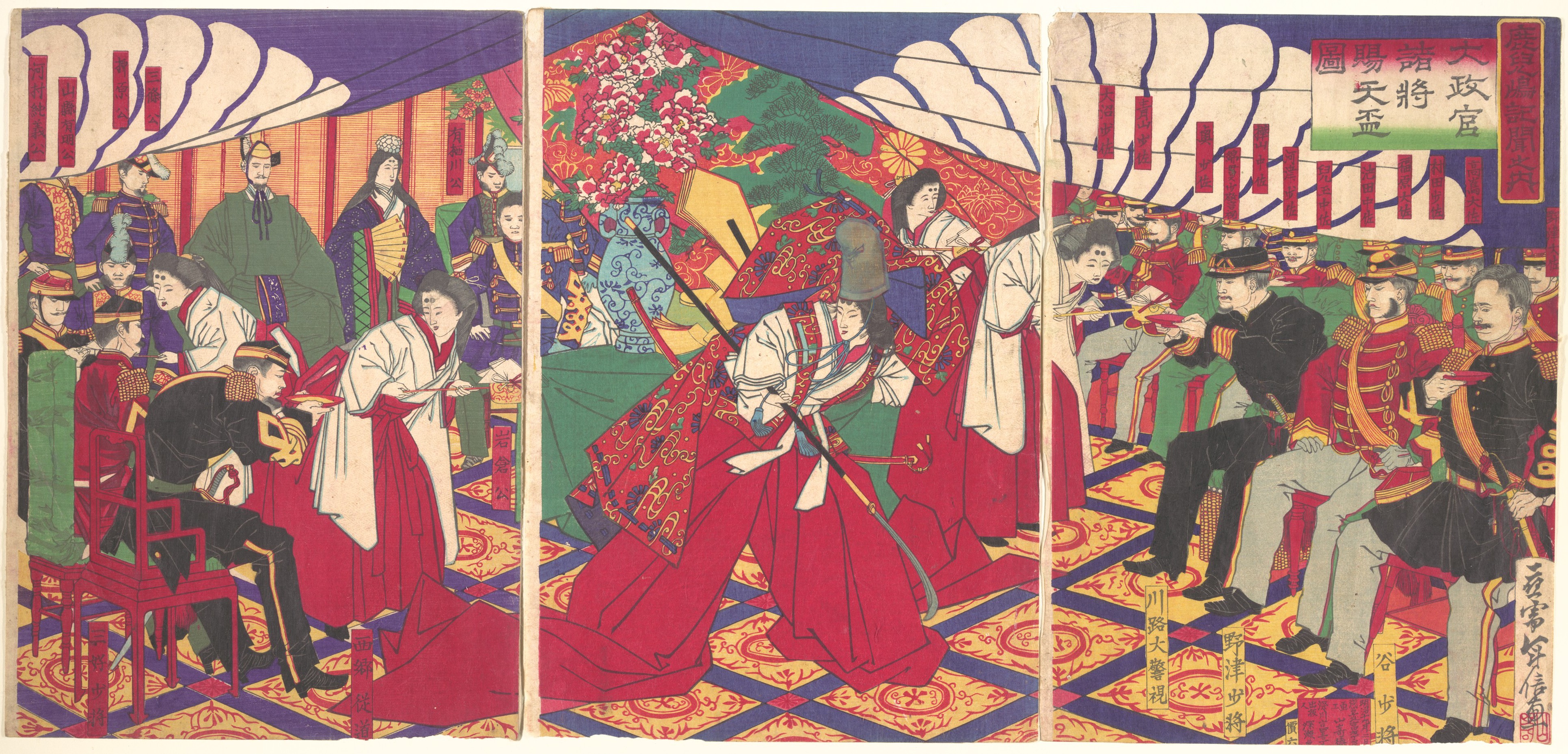
Commanders Receiving the Emperor's Drinking Cups (Taiseikan shōshō shiten)
大政官将相賜典
1886 (Meiji 19)
Triptych of woodblock prints; ink and color on paper

Hongan-ji Shōnyo and Shimotsuma Raikei, from Ishiyama Daigunkiki
石山大軍記 第二号
1878 (Meiji 11)
Color woodblock print (nishiki-e); ink and color on paper

Rebels Besieged at Mount Takachiho (Gyakuto Takachiho rōzan)
逆徒高千穂籠山
1877 (Meiji 10)
Color woodblock print (nishiki-e); ink and color on paper
Frequently Asked Questions
Empire Day of Japan (Kigensetsu) (紀元節) was created by Yamazaki Toshinobu (山崎年信) in 1878 (Meiji 11).