
Rebels Besieged at Mount Takachiho (Gyakuto Takachiho rōzan)
逆徒高千穂籠山
- Date:
- 1877 (Meiji 10)
- Medium:
- Color woodblock print (nishiki-e); ink and color on paper
Description
This 1877 Satsuma Rebellion print, held by the National Diet Library and accessible through Wikimedia Commons, depicts a phase of the campaign in which rebel forces were besieged at the Takachiho mountain stronghold in southern Kyushu. Mount Takachiho carries deep mythological significance in Japanese cultural memory as the site where the Sun Goddess's grandson Ninigi-no-Mikoto is said to have descended to earth, founding the imperial dynasty; the rebels' association with this site through Toshinobu's title (Gyakuto Takachiho rōzan, literally The Rebels' Besiegement at Takachiho) carries an implicit ironic charge, contrasting the legitimacy of imperial mythology with the illegitimacy of the rebel cause. The composition shows the rebel forces clustered defensively in the mountain terrain, with government troops arrayed around them in the encirclement that characterized the later phase of the rebellion as the imperial forces tightened their grip on the surviving Satsuma units. Toshinobu's print exemplifies the documentary mode of late-1870s war reporting, in which woodblock prints functioned both as journalism and as visual celebration of government victories. The aniline magentas, oranges, and saturated greens place the print firmly within the Meiji color palette, and the NDL's preserved impression remains a key document for understanding how the woodblock industry adapted Edo-period battle-print conventions to the demands of modern war reporting. The print is one of approximately thirty Satsuma-themed prints Toshinobu produced in 1877, a remarkable output for an artist barely twenty years old.
More Prints by Yamazaki Toshinobu
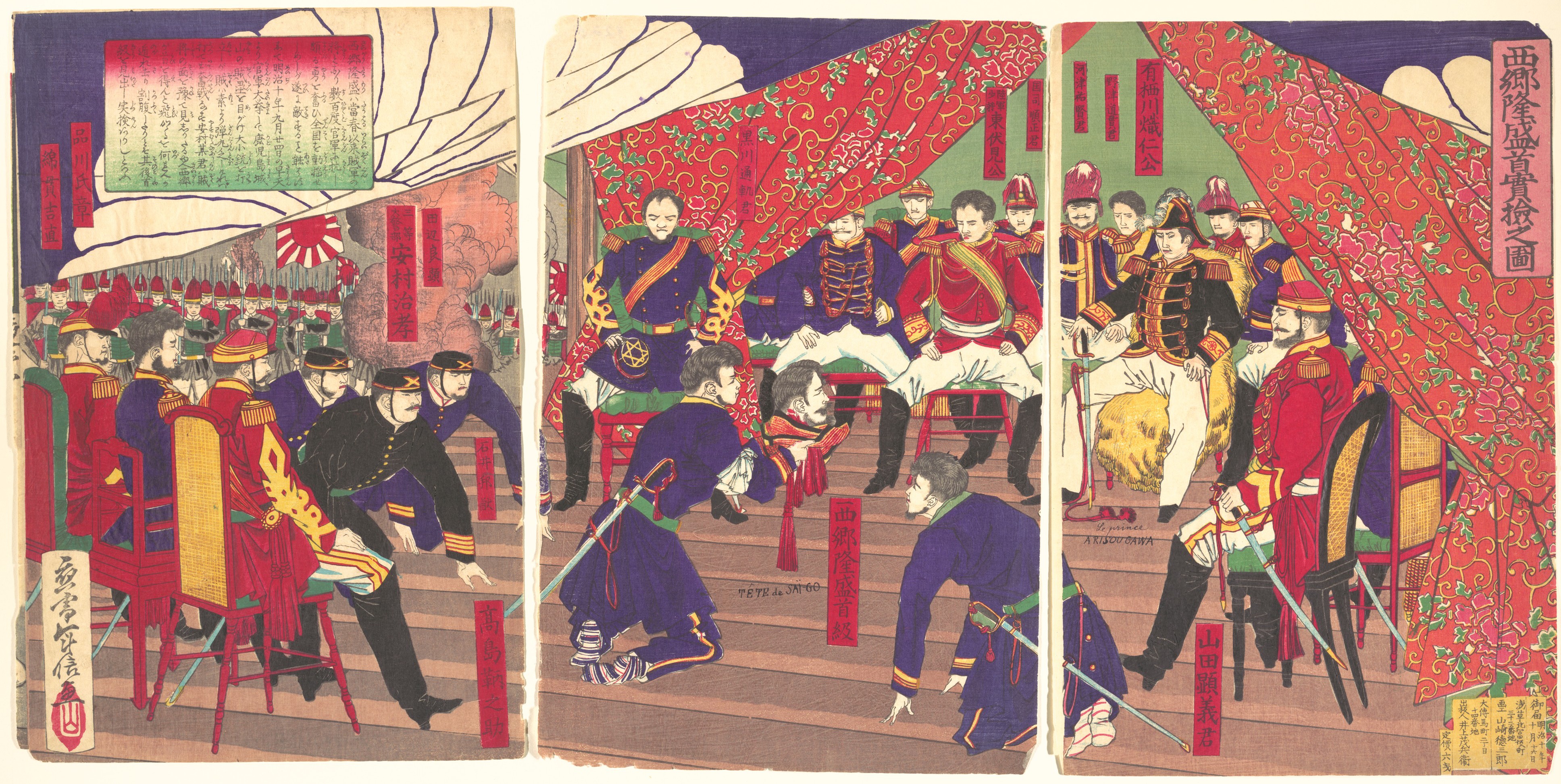
Presentation of the Head of Saigo to the Prince Arisogawa (Saigō ryūsei kubi jikken)
西郷隆盛首実検
Oct. 16, 1877 (Meiji 10)
Triptych of woodblock prints; ink and color on paper
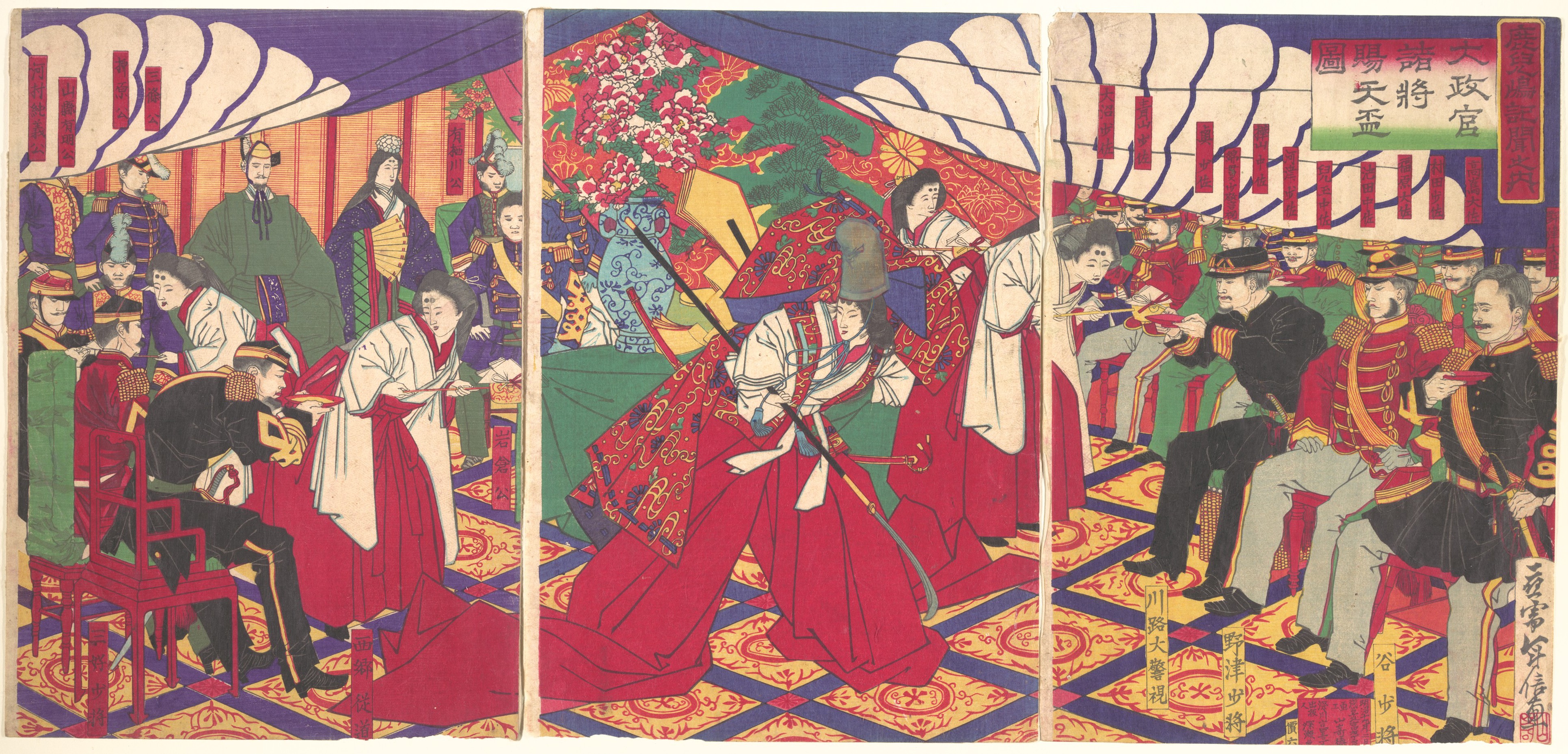
Commanders Receiving the Emperor's Drinking Cups (Taiseikan shōshō shiten)
大政官将相賜典
1886 (Meiji 19)
Triptych of woodblock prints; ink and color on paper

Empire Day of Japan (Kigensetsu)
紀元節
1878 (Meiji 11)
Color woodblock print; ink and color on paper

Hongan-ji Shōnyo and Shimotsuma Raikei, from Ishiyama Daigunkiki
石山大軍記 第二号
1878 (Meiji 11)
Color woodblock print (nishiki-e); ink and color on paper
Frequently Asked Questions
Rebels Besieged at Mount Takachiho (Gyakuto Takachiho rōzan) (逆徒高千穂籠山) was created by Yamazaki Toshinobu (山崎年信) in 1877 (Meiji 10).