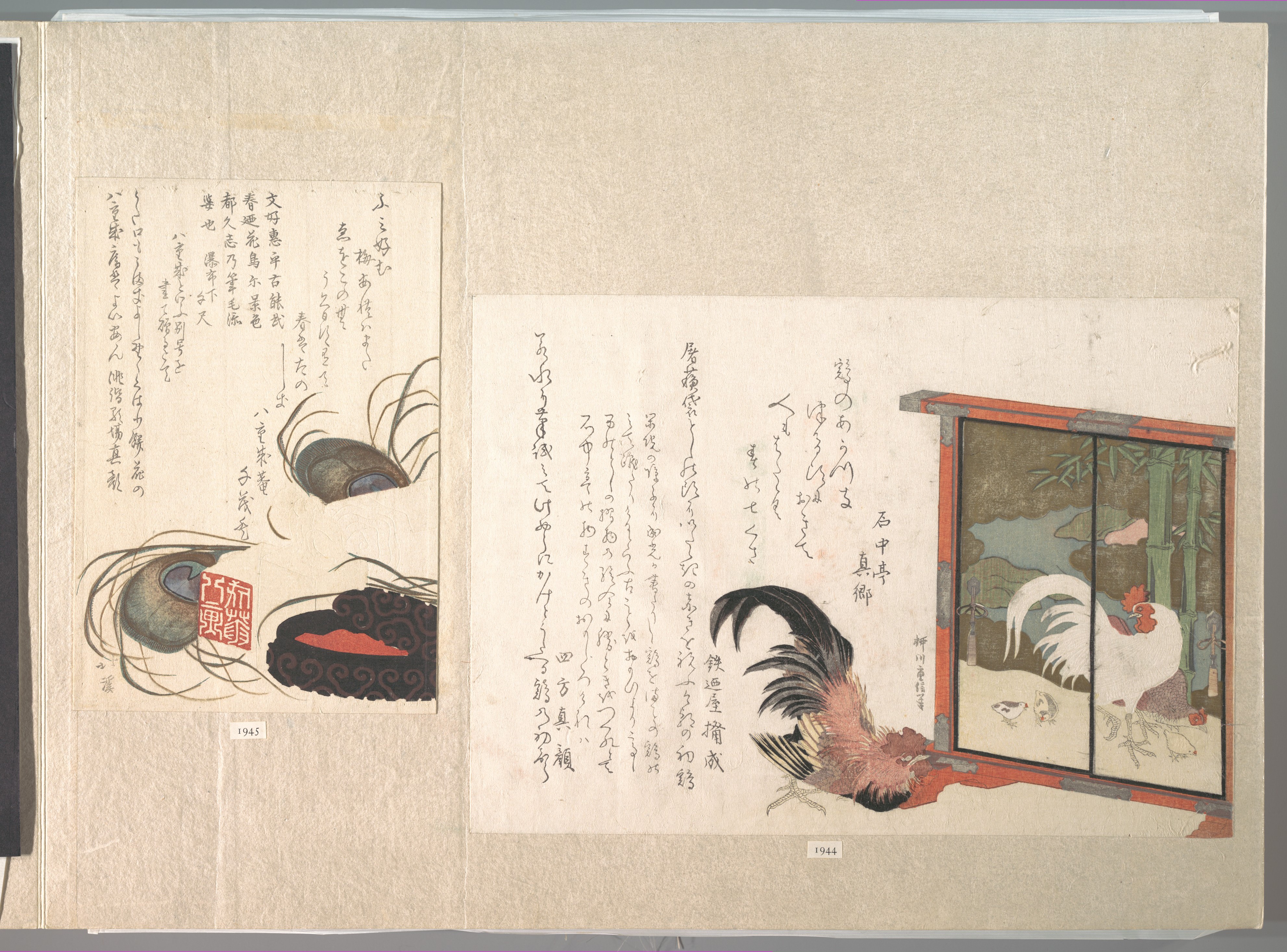
Cock Eyeing a Free-standing Screen Painted with Cock, Hen, and Chicks, from Spring Rain Surimono Album (Harusame surimono-jō), vol. 1
- Date:
- probably 1813
- Medium:
- Privately published woodblock prints (surimono) mounted in an album; ink and color on paper
- Source:
- Metropolitan Museum of Art
Description
A surimono of probably 1813 in the Metropolitan Museum of Art's collection, this print depicts a live cock eyeing a freestanding screen painted with a cock, a hen, and chicks — a visual joke (mitate) in which the represented bird confronts the painted simulacrum, with the chickens of the screen functioning as both decoy and family-portrait counterpoint to the real bird outside it. The probable 1813 date — early in Shigenobu's career, around the period of his marriage to Hokusai's daughter — makes this print a useful marker of his early style and of the studio idiom that he was inheriting from his master at this point. The play between live subject and pictorial double belongs to the broader Edo taste for trompe-l'œil and visual paradox that runs from Ōkyo's experiments earlier in the eighteenth century through to the late ukiyo-e mitate; Shigenobu treats it economically, in the small surimono format, with restrained color and careful attention to the screen's painted detail. As a New Year's surimono — 1813 was a year of the rooster in the twelve-year cycle — the print would have carried the symbolic charge of a zodiac-animal greeting card alongside its conceptual joke.
More Prints by Yanagawa Shigenobu

Court lady admiring plum blossoms
late 1820s
Color woodblock print; shikishiban, surimono

Courtesan with Flower Cart, from the series "Famous Flowers in Three Capitals (Santo meisho no hana)"
early 19th century
Color woodblock print; surimono
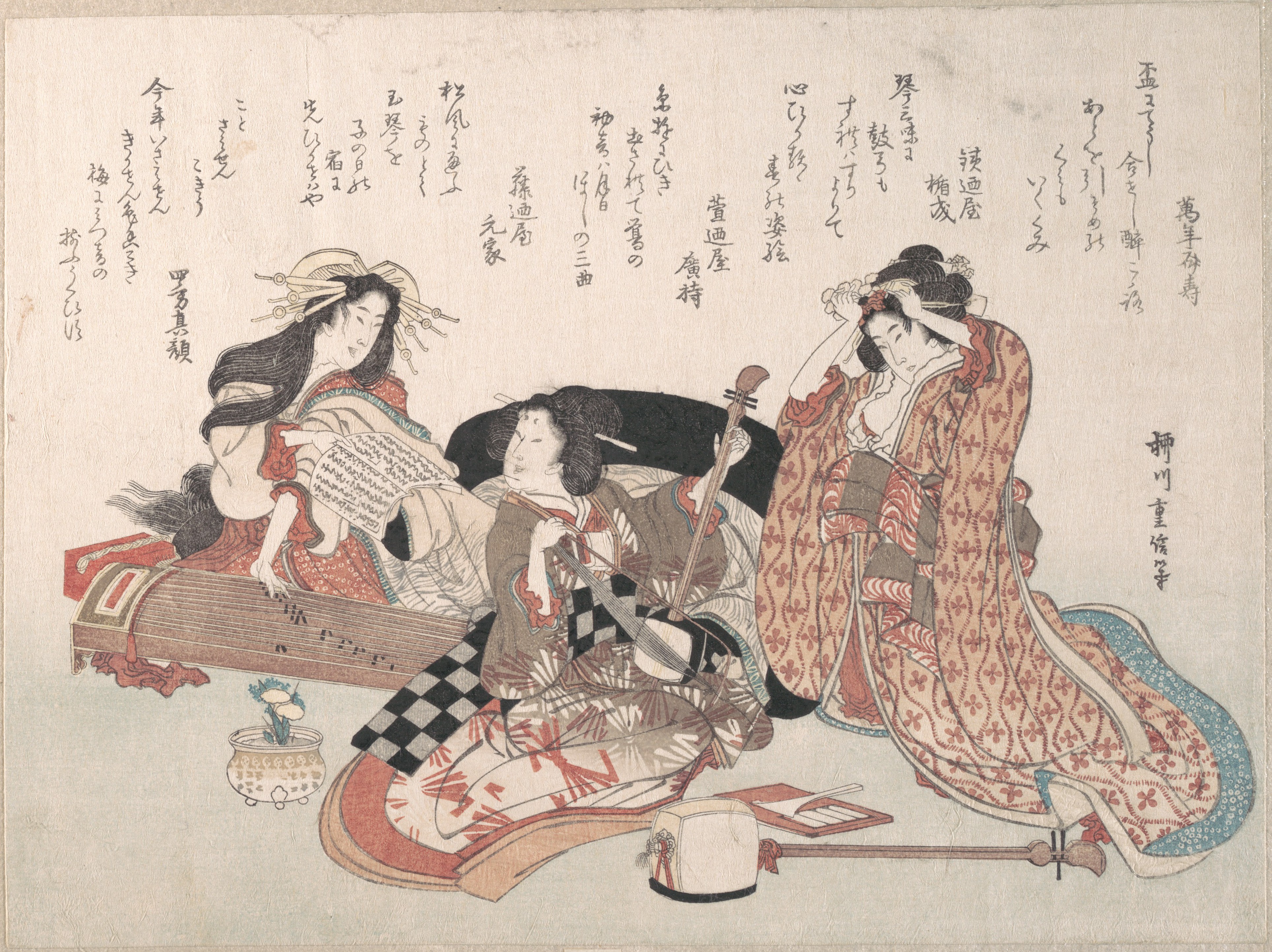
Women Playing Music
19th century
Woodblock print (surimono); ink and color on paper

Dancer in Momijigari, from an untitled series of nerimono festival dancers
c. 1823
Color woodblock print; shikishiban, surimono
More Spring Prints

Frequently Asked Questions
Cock Eyeing a Free-standing Screen Painted with Cock, Hen, and Chicks, from Spring Rain Surimono Album (Harusame surimono-jō), vol. 1 was created by Yanagawa Shigenobu (柳川重信) in probably 1813.
Cock Eyeing a Free-standing Screen Painted with Cock, Hen, and Chicks, from Spring Rain Surimono Album (Harusame surimono-jō), vol. 1 depicts spring and rain.