
Lin Hejing (Rin Nasei) with Crane
- Date:
- 19th century
- Medium:
- Color woodblock print; shikishiban, surimono
- Source:
- Art Institute of Chicago
Description
Lin Hejing (Rin Nasei) with Crane is a surimono by Yashima Gakutei produced around 1820 and now in the Art Institute of Chicago. Lin Hejing, the Song-dynasty Chinese recluse who is said to have retired to West Lake near Hangzhou and adopted plum trees as his wives and cranes as his children, became a touchstone of literati culture in East Asia. In Japan he was known as Rin Nasei and circulated widely as a subject in painting, ceramic decoration, and poetry; his pairing with a crane stood for cultivated seclusion and refined taste. Gakutei's choice of Lin Hejing for a surimono is therefore self-aware: the kyoka circles that commissioned these prints liked to position themselves as modern descendants of the literati ideal, and a print of the archetypal recluse spoke directly to their self-image. Trained in the Hokusai school under Katsushika Hokusai, Gakutei shapes the figure and bird with restrained line and carefully tuned color, leaving generous white space for the printed poems. Deluxe surimono printing techniques, including burnished metallic pigments and blind embossing, would have given the sheet a tactile presence in the hand quite different from a commercial woodblock print. As a kyoka-e by Yashima Gakutei in the Hokusai school manner, the image is both a tribute to a cherished Chinese precedent and a witty signal of the literary aspirations of the poetry circle that paid to produce it.
More Prints by Yashima Gakutei
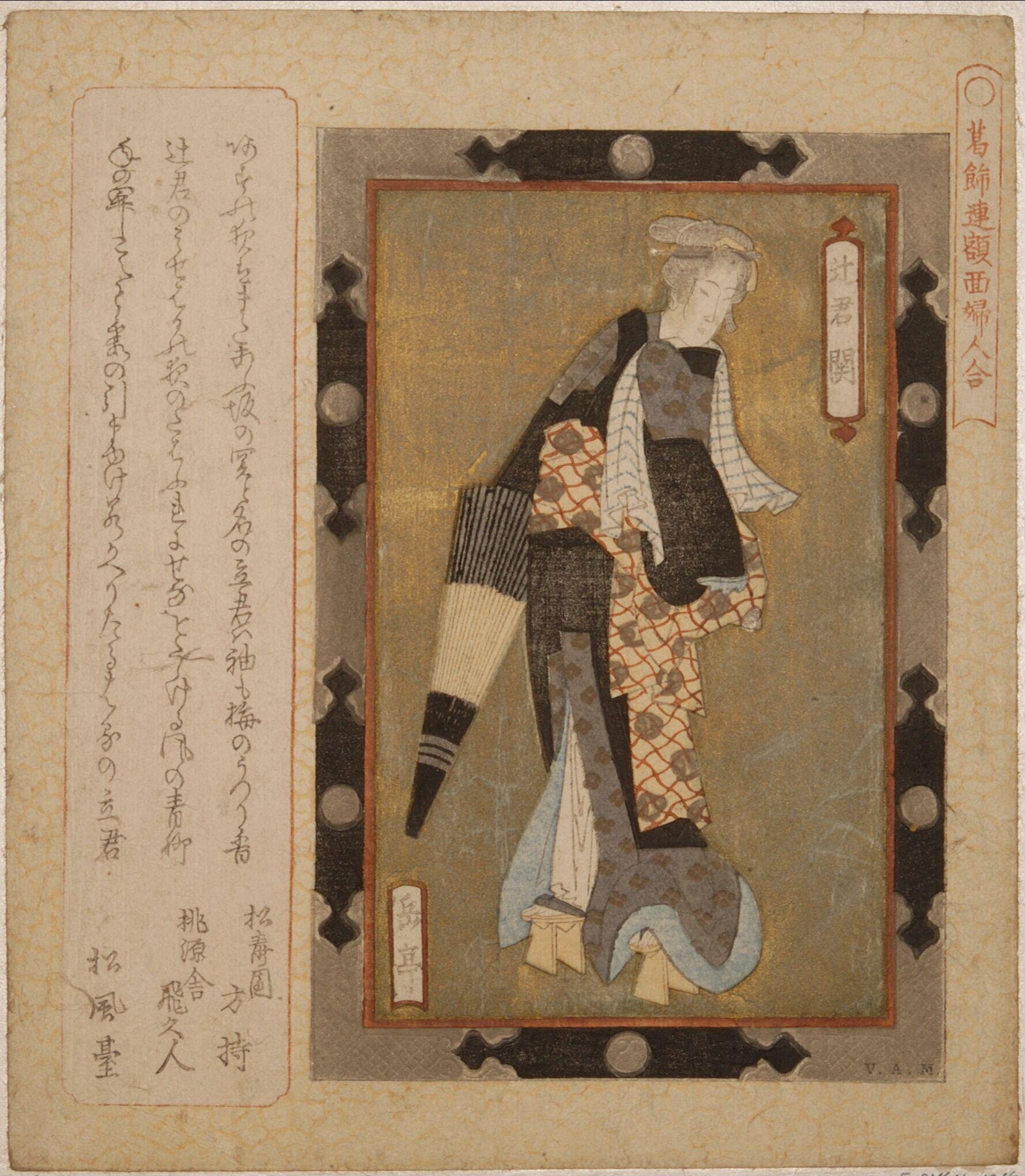
Tsujigimi Seki
ca. 1822

Komatsu Shigemori from the Tales of Heike
c. 1820
Woodblock print (surimono), ink and color on paper

Two Women Reading
19th century
Color woodblock print; shikishiban, surimono

Two Court Ladies Admiring Cherry Blossoms
19th century
Color woodblock print; surimono, vertical shikishiban diptych
More Birds & Flowers Prints
Frequently Asked Questions
Lin Hejing (Rin Nasei) with Crane was created by Yashima Gakutei (八島岳亭) in 19th century.
Lin Hejing (Rin Nasei) with Crane depicts birds & flowers.