
Edo Period Hairstyles for Wakashū, Adult Men, and Women, from Kōshoku kinmōzui (Illustrated Encyclopedia of Love)
好色訓蒙図彙
- Date:
- c. 1664-1689
- Medium:
- Woodblock-printed book; ink on paper
- Source:
- Wikimedia Commons
Description
A page from Yoshida Hambei's Kōshoku kinmōzui (Illustrated Encyclopedia of Love), published between approximately 1664 and 1689, depicting the principal hairstyles of late seventeenth-century Japanese society - styles for wakashū (adolescent boys, marked by the partially shaved crown and the forelock that distinguished pre-adult males), young men, adult men, and women of various social classes. The pictorial taxonomy of hairstyles was a recurring subject of seventeenth-century kinmō zui (illustrated encyclopaedia) publishing, since hairstyle in Edo-period Japan was one of the most rigorously coded markers of age, gender, social class, and occupational status - so much so that hairstyle alone could identify a stranger's place in the social order at a single glance. The wakashū hairstyle, with its distinctive maegami forelock above a shaved crown, marked a male as an adolescent and as a potential object of male homoerotic attention; the transition from wakashū to adult was marked by the genpuku coming-of-age ceremony at which the forelock was shaved and the adult male hairstyle adopted. Hambei's Kōshoku kinmōzui supplied seventeenth-century readers with a practical visual reference to all such social markers, treating love and erotic culture as legitimate subjects of pictorial encyclopaedic treatment - an attitude characteristic of the Genroku-period (1688-1704) urban popular culture for which Hambei and Saikaku were among the leading visual and literary spokesmen. The illustration is preserved in Wikimedia Commons in the public domain, adapted from a seventeenth-century edition of Kōshoku kinmōzui.
More Prints by Yoshida Hambei

Mermaid Encounter at Sea, from Ihara Saikaku's Budō denraiki
武道伝来記・人魚
1687
Woodblock-printed book; ink on paper

Sōgenbi, the Fiery Ghost of an Oil-Stealing Monk, from Shin Otogi Bōko
新御伽婢子・宗玄火
1683
Woodblock-printed book; ink on paper
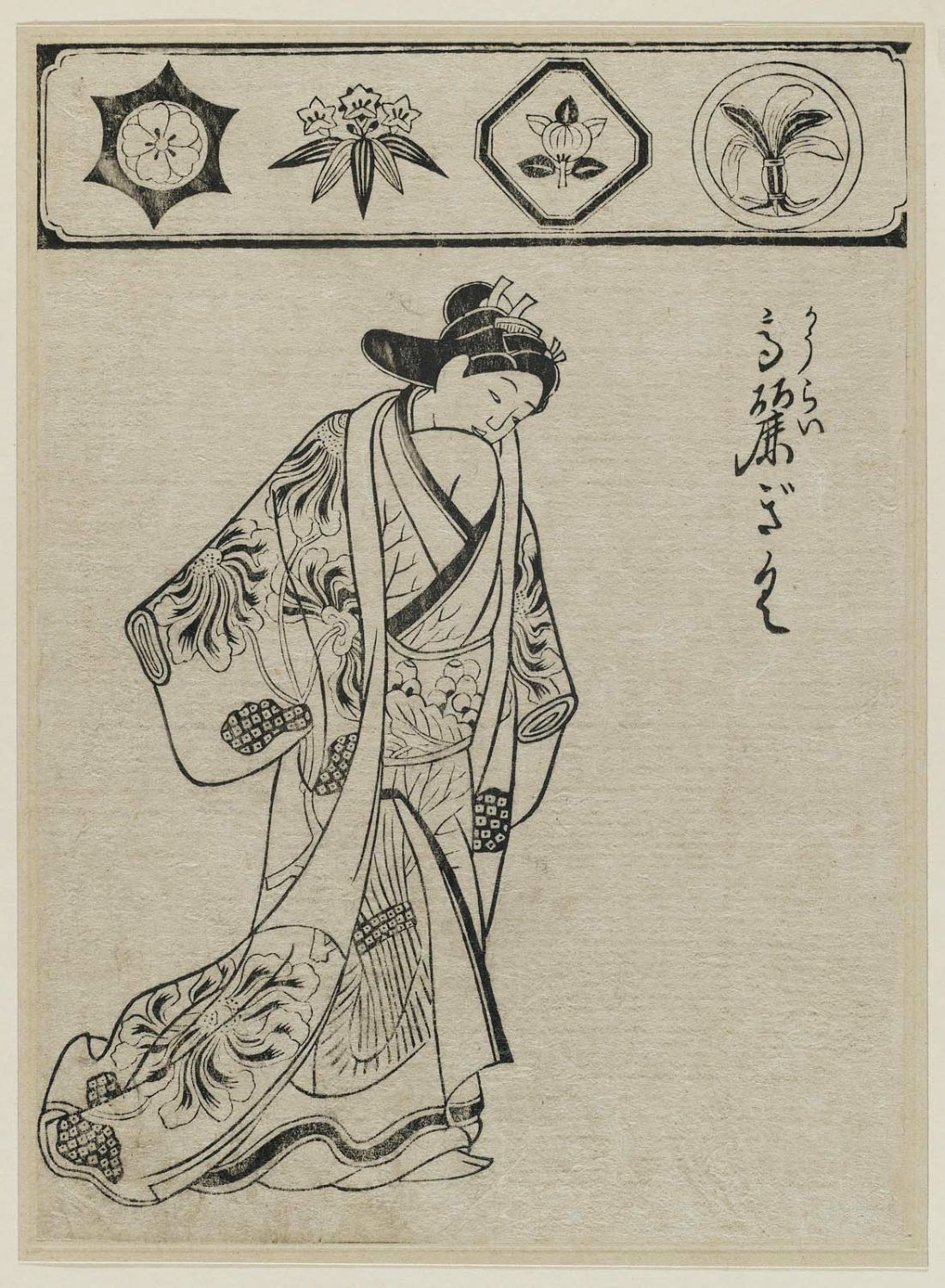
Korean Chrysanthemum Pattern (Koraigiku), from the book Illustrated Encyclopedia for Women (Joyo kinmo zui)
女用訓蒙図彙・高麗菊
1687
Woodblock-printed book; ink on paper
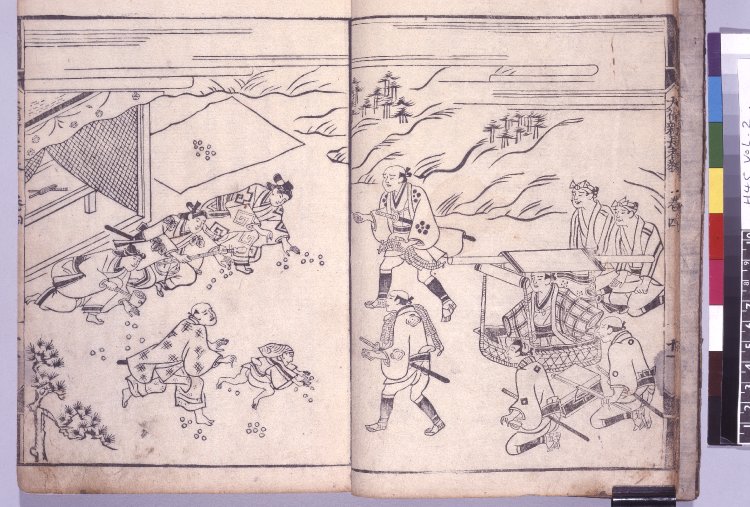
Nihon eitai-gura (Japan's Treasury for the Ages)
日本永代蔵
1688
Woodblock-printed book; ink on paper
Frequently Asked Questions
Edo Period Hairstyles for Wakashū, Adult Men, and Women, from Kōshoku kinmōzui (Illustrated Encyclopedia of Love) (好色訓蒙図彙) was created by Yoshida Hambei (吉田半兵衛) in c. 1664-1689.